Archive for February, 2009

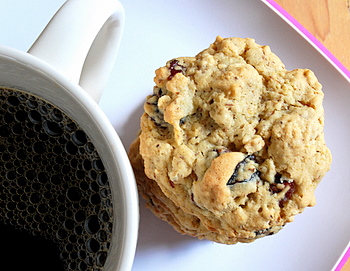
Oatmeal Cranberry Flaxseed Cookies

Oatmeal Cranberry Flaxseed Cookies

Flaxseed is one of those healthy ingredients that is easy to sneak into foods, increasing the nutritional value by at least a little bit without really changing the taste or texture of what you’re making. The tiny seeds – about the size of sesame seeds – are slightly crunchy and have a very subtle nutty flavor. They’re best used when they have been ground into a fine meal, as that is when their nutrients are most easily absorbed by the body. They are very high in Omega-3 fatty acids, are fairly low in calories (about 65 per 2 tbsp, ground) and contain a good amount of fiber, as well as other nutrients.

These cookies were inspired by some cookies I spotted on the shelf at Trader Joe’s, and do include some ground flaxseeds to up their nutritional content. That said, they’re still cookies, but with oatmeal, cranberries and flaxseeds, you can probably feel pretty good about eating them. And they taste good, too.

The cookies have a very subtle nuttiness from the ground flaxseed, but are otherwise fairly typical oatmeal cookies. Fresh out of the oven, they have a crispy exterior and an moist interior. The get a bit softer and chewier once they are stored. Instead of defaulting to cinnamon to flavor the cookies, as many oatmeal cookie recipes do, I opted to leave these fairly plain. As a result, you get to taste the flavor of oats, butter, vanilla and nutty flaxseeds in the cookies, as well as the bright sweet-tart flavor of the dried cranberries. If you want to mix things up a bit, feel free to use your favorite dried fruit instead of the cranberries, or to spice this up with cardamom or cinnamon for a little variety.

+Continue Reading

What are blood oranges?
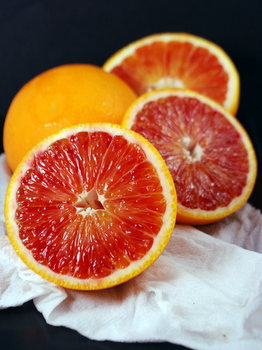
Blood Oranges

Blood oranges are a very unique-looking fruit. When you cut into an orange, you expect it to be, well, orange. Blood oranges are red inside, and can range from having a handful of red streaks inside to being so dark that they appear to be purple.

Blood oranges have been cultivated for centuries, primarily in Sicily, Italy, and are grown in many Mediterranean countries. The oranges were introduced to the US in the 1930s and are grown in much of the Southwestern US, from California to Texas. The season lasts from November to May, with the peak coming between December and March. There are a few varieties of blood orange. Moro are the darkest blood oranges, and have the sweetest flavor, with berry tones. Sanginello is of medium sweetness with a medium amount of color, and is from Spain. Tarocco is the most popular variety on Italy and is considered to be the sweetest of the blood oranges. Type aside, as a general rule all blood oranges are quite sweet – sweeter than many regular varieties of orange – and have floral notes to them.

If you see a recipe that calls for blood oranges, you can easily substitute regular (non-blood) oranges or orange juice in that recipe. You might end up missing out on some of the lovely pink color that blood oranges can infuse, but the recipe will work just fine.

Silicups Silicone Baking Cups, reviewed
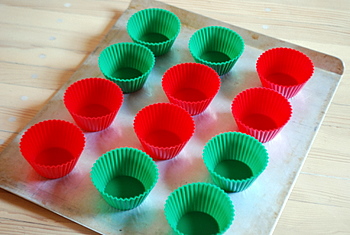
Silicups Silicone Baking Cups

Silicups Silicone Baking Cups are just what they sound like: baking cups/cupcake wrappers/muffin wrappers that are made of silicone. They look just like the “real thing” down to the little ribs on the side of the cup. They’re offered as an alternative to the traditional paper wrappers on the grounds that they are nonstick and reusable, and because they can stand on their own, there is no need to use a muffin tin when you have a sheet pan around. I happen to have a set and baked up a batch of muffins in half silicone and half paper to see what the results where, and whether the Silicups offered equal or better performance.

The short answer is that, yes, they work just as well as the paper wrappers. The muffins cooked evenly and took the same amount of time in the oven.

The longer story is that there are a few little drawbacks to using these things. First, they are hard to clean and even though they are dishwasher safe, they might move around in there and need to be washed by hand anyway. Second, they don’t come with directions. This might not seem like a problem, but silicone, unlike paper, doesn’t breathe and it was difficult to tell whether the muffins should be cooled inside the pan or out of it. The muffins cooled outside of the cups became very slightly dry at the edges; those cooled inside the cups were slightly gummy, but became firmer as they were exposed to the air. Regular muffin wrappers are just so much more self-explanatory, and do a good job of keeping the muffins moist until they’re going to be eaten. Finally, if you want to make cupcakes, it is much easier to handle and frost the cakes if there is a wrapper on the cupcake (the silicone needs to be removed before serving unless you want to risk losing them when they are set randomly around the room after serving).

+Continue Reading

Waffle Pancake Pan

Waffle Pancake Pan

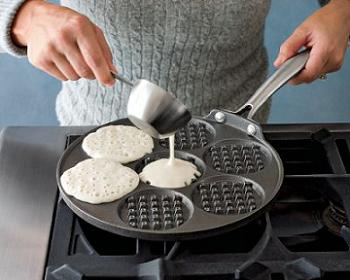
It’s a few days too late for Pancake Day, but since I’m willing to make pancakes for breakfast just about any day of the year, Nordicware’s Waffle Pancake Pan is still worth a mention. This pan is made of heavy cast aluminum and is molded to have seven pancake-sized impressions in its surface. It works in basically the same way that an aebleskiver pan does: batter is poured into each one of the depressions, which embeds waffle marks into the pancake batter poured into it, and then it is flipped over to do the same to the other side.

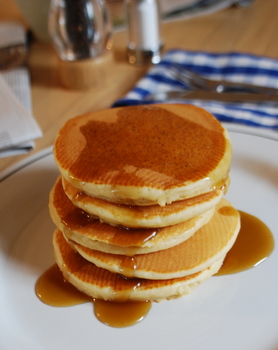
The resulting pancakes are very cute and the waffle marks are great for catching syrup and butter, holding all that extra flavor on the pancakes. They’re not going to replace regular waffles, but it is a little bit easier to pull this out in the morning and make a stack of waffle-pancakes than it is to get out the waffle iron and have to clean it up later.

Apricot Oat Scones

Apricot Oat Scones

Scones are one food that can illicit surprisingly strong reactions from people. Some people love them (usually people who have had good scones) and others hate them (usually people who have had bad scones. Some like a traditional scone that wants to be topped with jam and cream, others want something more tender, moist and sweet on its own, a cross between a muffin and a cookie. I like them all, but made it a point to experiment with scones a bit to see if I could come up with one that would satisfy both the traditionalists and those who prefer the latter type of scone.

The traditional method for making a scone is to cut cold butter into a flour mixture, much like making biscuits or pie crust. Instead of doing this, I blended softened butter into the flour mixture for the scones, as I often do when making shortbread. This serves to make them more tender and a bit less flaky or biscuit-like because a lot of the butter ends up in very tiny pieces, moreso than cold butter would.

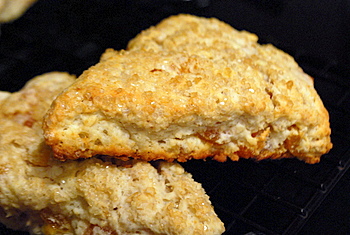
This method works extremely well for these scones. They bake up to have a crisp, sugar-topped crust and a fairly moist interior. They’re quite light and very tender, thanks both to the method of mixing in the butter and the inclusion of oats. I used dried apricots and cut them into fairly large chunks to make sure that you get lots of apricot flavor in each bite.
+Continue Reading