Strawberry Sunrise Scones

Strawberry Sunrise Scones

These scones weren’t winners in any Pillsbury Bake-Off competition, but still have a tie-in to the contest (like my other recipes this week). They were made with a recipe that I was working on for that last Pillsbury Bake Off competition, the one that Anna won. Although I met the criteria for ingredients, it may not have been “original” enough to become a finalist recipe. Did you know that they compare entered recipes to a huge library of recipes that have been entered in the past to check for originality?

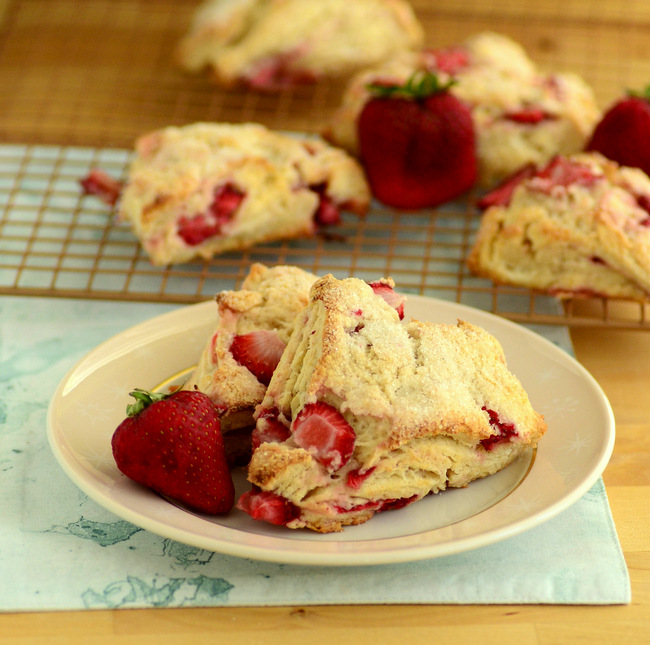
While this may not be a winning recipe, it’s still a very good one. The scones are perfect for spring with the bright flavors of strawberries and orange. The scones are a bit more moist than what I’ll call a “traditional”, plain scone thanks to the addition of yogurt. They also keep a bit better than some other scones, making them ideal for serving at a large brunch or party when you can’t eat then right out of the oven.

Since I was trying to use contest-approved ingredients when I wrote the recipe, I originally used both frozen strawberries and orange-flavored yogurt. Plain and vanilla yogurt are in my fridge much more often than orange is, and a good - possible better - substitution is to use either plain or vanilla yogurt with some fresh orange zest mixed in to it. This will give the orange flavor a bit of a boost and should make the scones much brighter than the orange-flavored yogurt did.

If you can find fresh strawberries - they’re in season right now - you can easily chop some up and use those in the scones. If not, frozen strawberries will work well. They don’t need to be thawed before using, as long as you are able to give them a quick chop with a sharp knife before stirring them in.

(more…)

Blueberry Drop Scones

Blueberry Drop Scones

When it comes to scones, it’s hard to beat a perfectly made plain one, served with fresh preserves and butter (or clotted cream or whipped cream, if you prefer). But while a plain scone might epitomize the category, I have to say that they’re not really my go-to scone for a couple of reasons. First, it’s hard to find a good one, let alone to find a shop - at least here in the US - that carries them on a regular basis. Most bakeries and coffee shops stock scones that are studded with fruit, glazed with frostings or otherwise spiced up. Second, I really like the scones that come with add-ins - provided that they’re quality scones, of course.

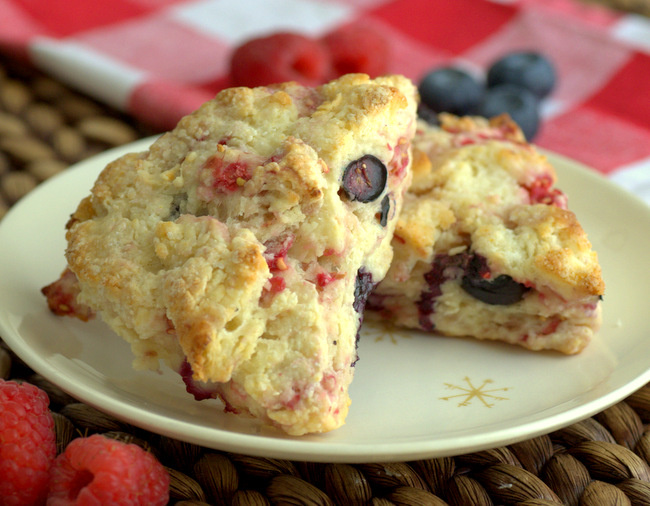
Blueberry is my top choice, just as blueberry muffins are generally in the muffin category. When I make scones at home, I will almost always use dried berries. Fresh berries have a lot of flavor, but they also have a lot of moisture and I feel that this excess juice really interferes with the light and tender texture of the scone. Dried berries pack just as much flavor and sweetness, but in a smaller and more baker-friendly package.

The ultimate goal with a scone is to make sure it is not heavy and dense. The method for making the scones to this specification is a simple one: rub the butter into the flour with your fingertips. It’s not really necessary for the scone to be flaky in the same way that, for example, a pie crust is. This means that you don’t really need to hem and haw over whether your butter is cut in enough or too much; as long as you cube the chilled butter and mix it in halfway decently (and I’m sure you’ll do better than that!), you’re going to get a good result.

I mix the batter and drop it in dollops onto a baking sheet. They might not be as pretty as scones that are rolled out and cut, but they’re much easier and there are more peaks and valleys on top for the dusting of sugar to adhere to, anyway.

(more…)

Apple and Granola Scones

Apple and Granola Scones

Scones are a great breakfast or tea time snack food. They’re easy to make, delicious and can be subject to what seems like an almost infinite number of variations. Plain scones - served with jam and butter or clotted cream - are always a popular option, but I have a soft spot for a scone with something added into it. Currents, chocolate chips, fresh fruit or simply citrus zest all make a scone a lot more interesting. I’m always looking for new things to add into my scones to expand my repertoire.

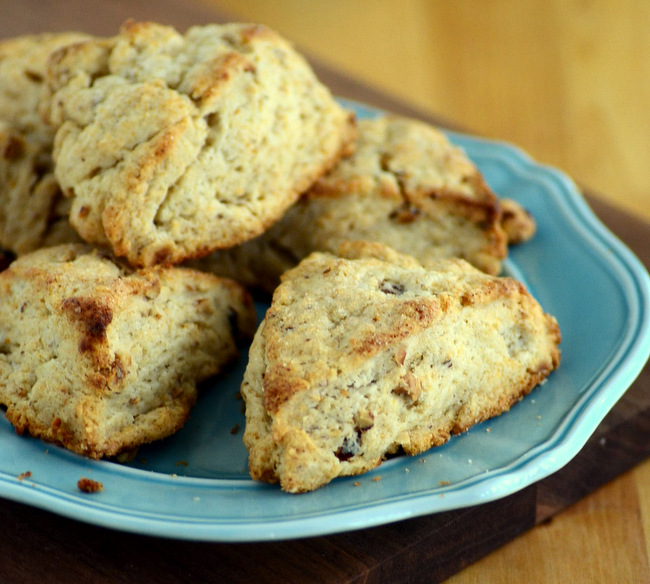
For this batch, I decided that apples were the way to go. I always have apples around the house and, as fall really seems to be apple season, they seemed like a natural match for a scone on a cool morning. I diced up the apples after peeling them hastily, purposely leaving small bits of skin on for additional color. I stirred them into a buttermilk batter and realized that I wanted more from this batch of scones. Something crunchy. A box of almond granola in my pantry caught my eye and I mixed a handful of the crispy cereal into the scones just before baking.

The scones turned out perfectly. The bready parts were tender and buttery, with an excellent flavor from the buttermilk that I used. Fresh out of the oven, each scone had a slightly crispy top and a very moist interior; they softened somewhat after storage, but were no less delicious. The apples lent a good flavor and the granola really gave them an interesting feel, adding a small amount of crunch and a nuttiness (from both oats and almonds) that worked extremely well with the fruit. Any flavor of granola will work well in this recipe. I had good results with almond (I used a Trader Joe’s brand) and would try for a pecan granola next time for a little twist.

I topped my scones off with a sprinkling of brown sugar for additional sweetness, but a dusting of cinnamon or of cinnamon-sugar would do just as well here. You could also leave yours plain and give them a brush of melted butter or lightly beaten egg just before baking if you want a really shiny, finished look.

(more…)

The Cheeseboard’s Currant Scones

It’s not really possible to eat low fat all the time, not without missing out on something really tasty every once in a while, so even if your New Year’s resolution is to eat healthier, just keep in mind that eating healthier doesn’t have to mean excluding everything that could be described as “decadent.” It just means eating less of those items. Really good scones usually get that way because of the liberal use of butter and cream, so it is best to eat just one, but do take that one because you’ll be missing out if you’re never had a really good scone.This recipe is from the The Cheeseboard in Berkeley, easily one of the best - not to mention one of the most interesting - bakeries in the SF bay area. It is a collective, so all the workers are part owners of the bakery and basically seem like one big family. The Cheeseboard sells everything from baguettes to sticky buns depending on what day of the week and time of day it is, but everything they sell is excellent. This scone, although fairly simple, is one of their best sellers. It was their “original” scone and on a busy Saturday, the tiny shop can sell through over 500 of them.
The scones are moist, flavorful and tender, with a nice, but slight, crispness to the outside. Dried currants are more easily found at natural foods and gourmet stores, but if you cannot find them at all, use small, dark raisins.

Oh, and Happy New Year, everyone!

(more…)

Meyer Lemon Scones

Meyer lemons, as I have mentioned before, are a type of lemon that is actually a hybrid between a tangerine or mandarin orange and a lemon. As a result, the fruit is slightly smaller than your average lemon and significantly sweeter, although it still has a very lemony flavor. Tasting a meyer lemon is more like tasting lemonade - albeit tart lemonade - than a regular lemon, as it lacks some of the bitterness that the ordinary lemons have.

Meyer lemons can be used in the same way as regular lemons, but will often impart a greater lemon flavor, since it does not have to be tempered by extra sugar. This is why meyer lemons work perfectly in these scones. They have a nice fresh lemon flavor that is not aggressive, and they are not very sweet, so you can taste the butteriness that makes scones so delicious in the first place.

The technique for scone making is very easy, since everything goes into one bowl. You do need to practice rubbing the butter into the flour, working it into a coarse, sandy mixture, but you can always cheat by pulsing the mixture in the food processor 5 or 6 times.

These scones are crisp on the outside, soft in the midde and not too dry. The lemon “glaze” must be added when the scones are hot out of the oven so it can set up without softening the “crust” on the top of the scone.

I suggest having a couple extra lemons on hand in case you need extra juice, although you could always try adding in a regular lemon if you have to.

(more…)

Nectarine Scones

Normally, I’m not a huge fan of fresh fruit in a scone. Dried fruits are easier to control and produce consistent, flavorful results. I feel like the fresh fruits release too much moisture and have a negative effect on the texture of the final product. This is especially true of berries, but the firmer the fruits get, the better the scone. Apples work fairly well and, as far as stone fruits go, nectarines aren’t too bad, either.

Nectarines are sweet without getting as soft as most other stone fruits as they ripen. I prefer to cut the fruit into medium-sized chunks, but a finer dice could easily be used and still produce good results. Thrown into a scone, they maintain their shape as they soften and still leave the crumb of the scone fluffy and light, not soggy. You could use peaches or plums, but I think that nectarines will give you the best result.

There is a lot of vanilla relative to the size of this recipe, but it really brings out the flavor of the nectarines. These are a light, lovely change from a plainer scone and a great way to use up a nectarine. The scone tastes very like a cobbler, and if you really go for the slightly crispy top of the cobber (like I do) you’ll probably love these.

(more…)