
Archive for the ‘Sweet Stuff’ Category

Tempered chocolate is very glossy, has a firm finish and melts smoothly at around body temperature. Simply melting the chocolate before you use it to dip berries, truffles or other goodies does not temper it. The process of tempering involves raising and lowering the temperature of the chocolate to encourage strong, organized crystallization of the cocoa butter so that the finished chocolate will have that glossy look, a sharp snap and will be resistant to chocolate bloom. In short, tempering chocolate makes it last longer and look better, and if you are serious about using chocolate in your kitchen, it is good to know how to do it.
There are several ways to temper chocolate and this method is known as seeding. It is very simple and it is very easy to do at home, both with small and large quantities of chocolate. For this demonstration, I am working with dark chocolate. Milk and white chocolates also need to be tempered and can be tempered in the exact same way as this dark chocolate, but the tempering process happens at a slightly lower temperature.

+Continue Reading

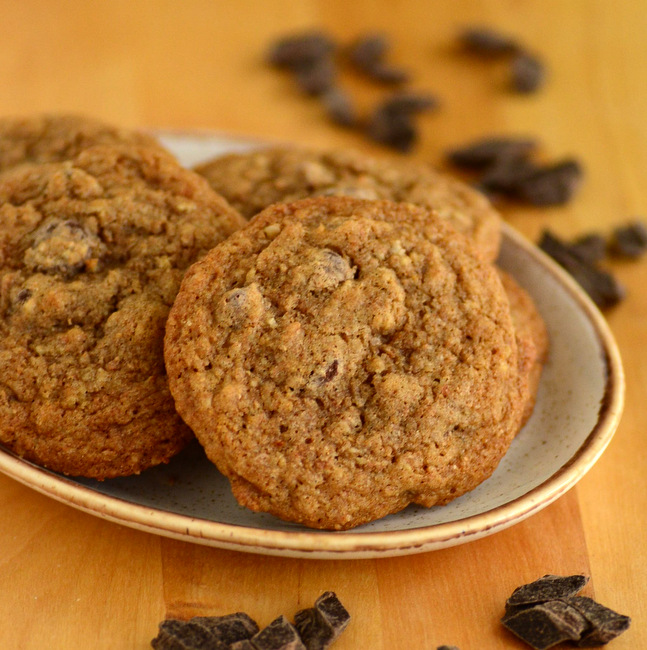
Semisweet chocolate chips are the default mix-in for most chocolate chip cookie recipes. Over the past several years, consumers have seen a huge increase in the variety of chocolate chips (and chocolate chunks) available at the grocery store as options for baking. One question I get asked frequently is whether it is ok to substitute one type of chocolate chips for another, and what difference it will make in the final recipe.
The short answer is that it is perfectly fine to substitute one type of chocolate chips for another in a recipe that calls for them. This is true for cookies, cakes, brownies and other recipes that call for mixing-in a quantity of chocolate chips. Most recipes call for semisweet chocolate by default, as those are still the most common type of chocolate chip, but some will make recommendations for milk or dark chocolate chips based on what the recipe author thinks tastes best in that recipe.
All chocolate is made up of cocoa solids – cocoa butter and cocoa powder – and typically includes sugar, an emulsifier and vanilla. Milk chocolate has milk solids added to it as well, while dark chocolate does not. Semisweet chocolate is not strictly defined (there is no exact amount of sugar to be called “semisweet”, though it generally means no more than 50% of the mass of the chocolate is sugar as opposed to “sweet” chocolates, where there is even more sugar) but it is essentially dark chocolate because it does not contain milk solids. Semisweet chocolates are not typically very sweet, but they are sweeter, not as intensely flavored and lack the bitter notes that some “ultra-dark” chocolates have. Semisweet chocolate gives a balanced flavor to most chocolate chip cookie recipes, adding just the right amount of sweetness and chocolate flavor. A darker chocolate, with more bitter cocoa notes than semisweet, will have a stronger presence in a cookie or cake and may overwhelm some of the subtle flavors in that recipe. Milk chocolate is typically much sweeter than either of these and can actually taste too sweet in a cookie or cake, as it does not add enough contrasting chocolate flavor.

Imagine that you pull an unopened bar of your favorite chocolate out of the pantry, eager to take a bite, only to discover a whitish film discoloring the surface of your treat. This is a common occurrence and brings up many questions. What is the white layer? Is the chocolate still safe to eat? Can I still bake with it?
The whitish layer is what is known as “chocolate bloom.” There are two types of chocolate bloom: fat bloom and sugar bloom. The chocolate bar in the photo above shows only a very slight bloom: the dusty areas of what should be a shiny milk chocolate bar are patches of cocoa butter. Chocolate bloom can also look quite dramatic and the whole bar will be discolored.
Fat bloom is by far the most common type of bloom. It is usually caused when the chocolate is exposed to high temperatures – such as being left in your car on a sunny day – and then allowed to re-set. A warm environment will cause the cocoa butter to melt and separate from the rest of the ingredients in your chocolate, then rise to the surface of the bar creating an off-white “bloom.” Fat bloom can also be the result of improperly tempered chocolate. The best way to avoid fat bloom is by storing your chocolates in a cool place, preferably one where the temperature is consistent.
The second type of bloom is sugar bloom. This can be seen in chocolates that have a speckled appearance, rather than an even layer of white on their surface. It is caused by an excess of moisture that actually causes the sugar in the chocolate to crystallize. This is less common than fat bloom and can usually be avoided by storing your chocolates in a cool, dry place.
Chocolate that has bloomed is still safe to eat and still safe to bake with. It may not have the “snap” and silky-smooth texture of well-tempered chocolate, but the flavor will be just fine. I prefer to bake with chocolate that has bloomed because once you melt it down, it returns to its original condition and texture and you will never be able to tell that your cake, cookies or brownies started with a bar of bloomed chocolate.

Tempering is a word that means improving the consistency, durability or hardness of a substance by heating and cooling it. Many substances, including metals, are tempered but the most important one might be chocolate. Tempered chocolate is very glossy, has a firm finish and melts smoothly at around body temperature. It is chocolate at its very best, and tempered chocolate is what most good quality chocolate candies, candy bars and bon bons are made out of.
Tempering is done by melting solid chocolate to a temperature high enough that the crystals in the cocoa butter (yes, there are tiny crystals in your chocolate) break down. This temperature is between 110-120F. Once the chocolate is fully melted, it must be cooled to about 82F, a temperature at which crystals will start to form again so that the chocolate can eventually re-solidify. The chocolate’s temperature is then raised back to about 90F, where it is very fluid and can be poured into chocolate molds and used for other applications. All chocolate – white, milk and dark - can be tempered.
The crystals that start to form when the chocolate is cool (Beta 5 crystals, if you want to get specific) are stable crystals contained in the cocoa butter of chocolate. They provide the necessary structure for the chocolate to become shiny, smooth and have a good “snap” when it is set. Chocolate that has not been tempered or that has been improperly tempered will look flat or discolored. It will lack the sharp “snap” of tempered chocolate and will typically not be as smooth as it melts.

+Continue Reading

When you think of Nestle Toll House, you probably think of their chocolate chips and classic chocolate chip cookies. The company makes a wide variety of chocolate chips, including seasonal Mint Chocolate Chips and fancy-looking Peanut Butter Swirled Chips. Due to the ever-increasing popularity of dark chocolate (and to more consumers interested in quality chocolate), Dark Chocolate Morsels with 53% cacao content were introduced to the Toll House family. They’ve followed this up with a Nestle Toll House Dark Chocolate Baking Bar.
The baking bar is made with 62% cacao and, while its wrapping matches the signature chocolate chips of the brand, it has the exact same ingredient list as many higher end chocolates. The bar is relatively thin and is divided into eight half-ounce squares that break up easily when you need a portion of the bar for a recipe. The chocolate itself is very smooth, with fruity notes and a rich cocoa flavor. It is slightly sweeter and has fewer bitter notes than some similar dark chocolates, but it is definitely a tasty bar and worth eating on its own as well as using in a recipe.
This chocolate bar can be used in most recipes that call for dark chocolate, including chocolate mousses and chocolate puddings, as well as cookies, brownies and cakes that use dark chocolate. The thin bar chops up easily and melts down quickly. If you prefer, you can even cut it into chunks and add them to your chocolate chip cookies, though you might want to stick with the dark chocolate chips for convenience (and price, since this bar is only 4-oz and you would need a couple to replace the chips in most chocolate chip cookie recipes) and save the bar for other occasions.