Filed under Recipes, Breads - Yeast Breads, Baking by Nicole | 28 comments

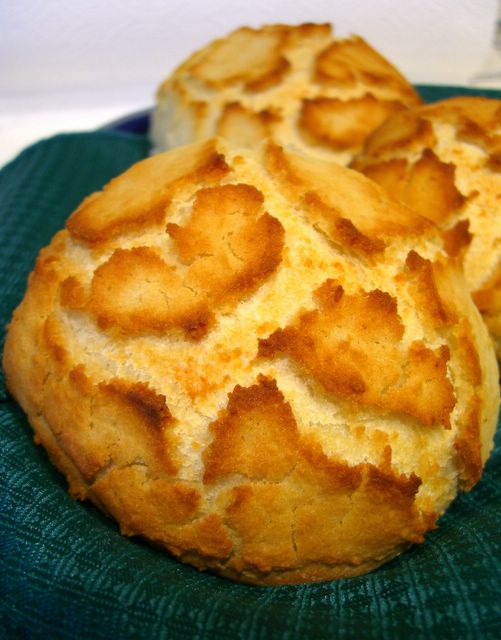
I mentioned Dutch Crunch Bread on my list of five things to eat before you die. The name comes from the distinct and unusual topping on the bread, which is made with rice flour, yeast and a little bit of oil, salt and sugar. On its own, the topping is pleasant, but when paired with some good bread, the contrast is amazing.
Thanks to some of my commenters, we know that this bread is called Tijgerbrood, or “tigerbread” in Holland, named after its striped and textured appearence. I didn’t stripe mine, which I suppose you could do by running a fork through the mixture before baking, but appearace doesn’t take anything away from the fantastically crunchy texture and the ever so slightly yeasty taste that complements so many sandwich fillings. It also makes excellent toast.
Sandwiches are my favorite things to make with this type of bread and if I’m at a deli (only in the SF Bay area, the only places I’ve seen them) that sells them, I will always get it. So, when I make the rolls at home, I like to make them big so that they make hearty, filling sandwiches. The size also provides enough bread to not make the topping overwhelming. The topping can be used on other types of bread, including as a topping for regular sandwich loaves, if you only want a little bit of the “crunch” per serving.
By the way, if you have leftover rice flour at the end of this, just go ahead and make another batch. I usually do. Alternatively, you could use it to make some gluten-free crepes instead.
(more…)
Filed under Recipes, Cakes, Cakes - Frosting, Chocolate by Nicole | 12 comments

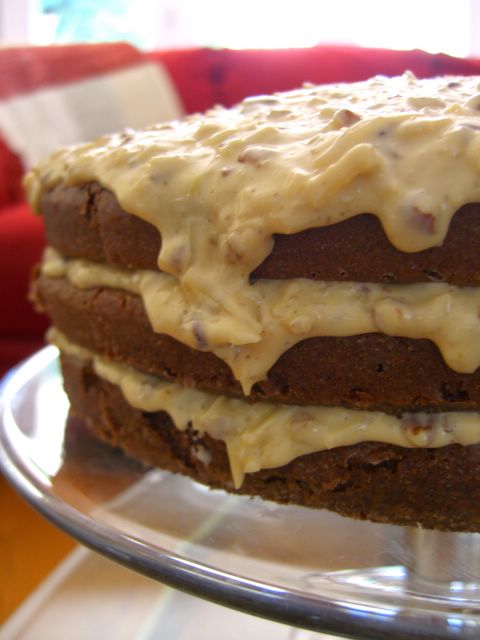
I hesitated about running the same picture twice in a row, but I promised to deliver the recipe, so there’s not much I can do about it. Besides, at the risk of sounding terribly immodest, I really like this picture.
As many of you guessed, this is indeed a German Chocolate Cake. Despite the name, the cake is thoroughly American and was invented in Texas, or at least, that is where the recipe was first published. The name comes from the fact that the chocolate cake made with a type of chocolate sold by Baker’s Chocolate Company called German’s Sweet Chocolate, named after an employee named Sam German in 1852. The cake recipe didn’t appear in print until 1957, but it has been a favorite ever since.
Eventually, the “’s” was dropped and the cake simple became German Chocolate Cake. There is pretty much just one standard recipe for it, with slight variations. All produce a relatively mild chocolate-buttermilk cake with a really gooey, rich frosting that is thick with coconuts and pecans. The frosting is really too rich to eat on its own, so even though it seems like there is only just enough to fill and top the cake, as you eat you’ll discover that the amount is just right.
The cake is quite easy to make and very impressive to look at. The only tricky part is dividing the batter evenly into 3 pans. Instead of pouring directly into one pan, use a spoon of some kind to ladle out the batter until they are even, ensuring an even baking time. In my experience, no serious damage will be done to the third layer if it has to wait for the first two to be baked, if you have a small oven and cannot fit them all at once.
(more…)
Filed under Uncategorized by Nicole | 14 comments

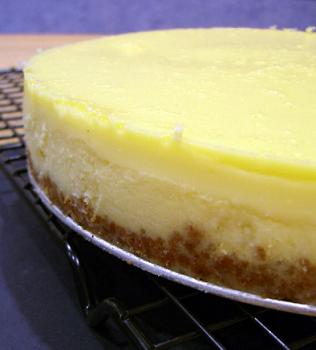
Hi everyone. I’m taking a couple of days off, so I’ll leave you with this picture to hold you over until I get back. I’ll update with the recipe soon. Promise.
Filed under Recipes, Breakfasts, Scones by Nicole | 7 comments

Normally, I’m not a huge fan of fresh fruit in a scone. Dried fruits are easier to control and produce consistent, flavorful results. I feel like the fresh fruits release too much moisture and have a negative effect on the texture of the final product. This is especially true of berries, but the firmer the fruits get, the better the scone. Apples work fairly well and, as far as stone fruits go, nectarines aren’t too bad, either.
Nectarines are sweet without getting as soft as most other stone fruits as they ripen. I prefer to cut the fruit into medium-sized chunks, but a finer dice could easily be used and still produce good results. Thrown into a scone, they maintain their shape as they soften and still leave the crumb of the scone fluffy and light, not soggy. You could use peaches or plums, but I think that nectarines will give you the best result.
There is a lot of vanilla relative to the size of this recipe, but it really brings out the flavor of the nectarines. These are a light, lovely change from a plainer scone and a great way to use up a nectarine. The scone tastes very like a cobbler, and if you really go for the slightly crispy top of the cobber (like I do) you’ll probably love these.
(more…)
Filed under Recipes, Cookies by Nicole | 7 comments

It has been a while since I made peanut butter cookies. They’re a great cookie to have in a basic baker’s repertoire because they are almost universally popular (except to those with peanut allergies), even if you’re not a fan of the nuts themselves. Basic peanut butter cookies have a slight chew to them, but you can really do a lot of different things with cookies that use it.
This variation on the classic peanut butter cookies comes from Maida Heatter’s Cookies and makes a light, crispy cookie. They use whole wheat pastry flour, which is a finely ground whole wheat flour that can usually be used interchangeably with regular all-purpose flour, unlike the coarser regular whole wheat flour. If you cannot find whole wheat pastry flour, you can substitute 3/4 cup all purpose and 1/2 cup regular whole wheat to make up the total 1 1/4 cups needed. The cookies also use raw sugar, which is much coarser than regular sugar and, according to Maida, contributes to the texture.
Because they taste so light, these cookies are very addictive and definitely need a glass of milk to go with them. They have a good peanut butter flavor and you can’t really taste anything “healthy” (they’re not really all that healthy) about them, despite the use of whole wheat flour.
Judging from the differences between my batch and Cathy’s batch, I would say that using a mainstream peanut butter (like Jif or Skippy) is better than using a natural one. I didn’t have any problems handling or slicing the dough once it was cold, though the dough does have to be sliced quickly before it thaws. I completely agree with Cathy’s comment that the cookies end up in perfect circles even if you slice them imperfectly. They spread a lot, and the spread covers up any flaws.
(more…)
Filed under Recipes, Cakes, Puddings, Custards and Mousses by Nicole | 9 comments

This isn’t the first time I’ve worked with this recipe. I’ve made lemon and orange pudding cakes before, and limes falling off the tree from over-ripeness seemed like the perfect excuse to trot out one of my favorite easy recipes again. I usually make one large pudding, but this time I decided to divide it up and make individual puddings.
The method is exactly the same: wet ingredients plus dry ingredients, then fold in egg whites. At this point, it is divided into five greased ramekins. Since the pudding does not really rise, but separates to create a pudding and a cake, it is not necessary to coat the ramekins with sugar or flour, as you might with a souffle.
You could divide this in to six ramekins, rather than just filling five all the way to the top, but the puddings don’t really puff up, so it isn’t necessary. And I don’t know about you, but I’d rather have a slightly larger dessert.
If you find that you only need four desserts, you can either have seconds or keep one overnight for breakfast. They’re best hot, but good the next day, too.
(more…)