Archive for the ‘Fruits and Veggies’ Category

Trader Joe’s recently added a new product to their ever popular “Baker Josef’s” line of baking products: Shredded Sweetened Coconut. Shredded coconut is a product that I like to use a lot in baking, from muffins to pies, and I typically stock up on it at a regular market, where there are usually two brands or so to choose from. I’ve seen this product on shelves for at least a few weeks now, but hesitated to try it because the package is a lot smaller than the ones sold at the regular market. Of course, most recipes using coconut only call for a cup or so, so their relatively small 6-ounce package is something that you could pick up and use in one recipe, rather than opening a large bag and having to store (and possible throw away) leftovers.
Baker Josef’s coconut comes in a small, airtight pouch that keeps the coconut as fresh as possible, so you get a nice little burst of coconut smell when you open the package. The other thing that you’ll notice right away is that the coconut has a faintly golden, toasty color to it even though this isn’t sold as a toasted coconut product. Indeed, the coconut has been partially dried before packaging. This means that the coconut is less moist and chewy, but that it also toasts much, much faster if you are looking to use toasted coconut in a recipe. It has a fresh flavor and is less sweet than many other sweetened coconut brands, which makes it a good option for those who generally reach for unsweetened coconut for their baking. The shreds are rather long, so I found that it helped to give the coconut a quick chop before using, especially when I was folding it in to baked goods instead of using it as garnish.

One last thing I liked was the list of coconut recipe ideas on the back. It never hurts to have a little inspiration for doing some baking – and I would definitely reach for a bag of this again when I’m looking to use some coconut and don’t need the larger sizes sold at the regular market.


Chia seeds have been popping up in grocery stores all over the place – and they’re not always confined to the health food section anymore. Chia seeds are the same seeds that you could mix with water and spread over a small, terracotta animal to make a trendy “chia pet” back in the 1980s, but today they are gaining popularity for nutritional benefits, as well.
Chia seeds are the seeds from the salvia hispanica plant, or chia plant, a flowering herb that is in the mint family. The seeds are very rich in omega-3 fatty acids, which is primarily what makes them popular as a nutritional supplement, though they are also high in fiber, protein and other nutrients, as well. The seeds are quite small – usually no larger than a millimeter in diameter – and have a mottled greyish color to them.
Unlike flax seeds, which are also a popular source of omega-3 fatty acids, chia seeds are much more easily digestible and do not have to be ground for their nutrients to be absorbed by the body. They also have a longer shelf life and are less likely to become rancid than flax seeds are.

The term “squash” refers to all members of the gourd family – a family that includes a large number of different vegetables. Squash are generally broken down into two types: summer squash and winter squash. Summer squash include zucchini and pattypan squash, squashes where the entire thing (except for the stem) is edible. Winter squashes have hard, inedible rinds and are much heartier, so they’ll keep for longer periods of time. Winter squash are a little intimidating to many cooks because they vary wildly in appearance and seem more mysterious when it comes to cooking them.
The winter squash that is the most easily recognizable is the bright orange pumpkin that is popular for Halloween carving. Varieties like butternut, acorn and spaghetti squash are also widely available in most stores. Farmers markets tend to carry more unusual squash varieties, as well. The flavor and texture will vary from squash to squash, but, in general, they tend to have a firm flesh that needs to be roasted or steamed to make it tender. They tend to be sweet, ranging from only slightly sweet to a honeyed sweet potato-like sweetness in some varieties. It can be fun to try a variety – even ones you’ve never heard of – just to see some of the differences and to find some new favorites.
I prefer to roast squash most of the time before I serve it, as it gets a nice richness and a bit of caramelization when cooked in the oven. Roasting a large butternut squash, for instance, will make your house smell amazing. Squash can also easily be steamed in the microwave, by placing a cleaned, halved squash cut-side down on a microwave-safe plate and cooking it on high until it is tender.

Many baking recipes call for frozen fruit instead of fresh fruit in recipes from muffins to pies. This is because frozen fruit is readily available regardless of season, it is consistent and easy to use. With an increased focus on seasonality, however, many bakers prefer to use fresh, in-season fruits over frozen, both to make good use of the ingredients they can find at their local markets and to highlight exceptionally delicious fruits when they are at their peak.
Both fresh and frozen fruits make great additions to baked goods, and many recipes out there can be made with either fresh or frozen products. Commercially frozen fruit is flash frozen at a very low temperature, a process that helps to preserve the texture of the fruit after defrosting. Frozen fruit will still not have the same firm texture as fresh when it is defrosted, but it will have just about the same texture after baking. Frozen fruits are not typically defrosted before being stirred into a batter or even cooked down into a sauce. Fruit only very occasionally needs to be defrosted before being incorporated into a recipe and a recipe will always state when this is necessary. When substituting fresh fruit for frozen fruit – fresh blueberries, for instance, in place of frozen blueberries – you will need to be more careful about incorporating the berries so that the tender, fresh berries don’t get smashed as you mix them in. Your baking time also may need to be reduced slightly, as frozen fruit lowers the temperature of cake batters and pie fillings, which can result in a longer baking time.
In recipes that call for fresh fruit to be stirred into the batter or used as a filling, you can usually substitute the same amount of frozen fruit that has not be defrosted without any problems. The baking time may need to be extended slightly when using frozen fruit in a recipe, and when frozen fruit is used in a filling, you may need a little extra thickener because frozen fruit can release more liquid than fresh (usually from water/ice crystals that collect in the bags). In some recipes, it is not recommended to substitute frozen fruit. Recipes will generally indicate when this is the case, and it is usually because they want the fruit to have a specific texture after baking or because a recipe has a very specific baking time and a few degrees may thrown things off. For instance, many baked fruit tarts really require fresh fruit to get a good result.
Overall, frozen fruit is something you can always count on and always have on hand so you can bake your favorite treats year round. But it is worth noting that fresh fruit can always be a good choice when it comes to baking, even if you have to treat it a little more carefully to incorporate it into your batter or dough while you work with it, and it is worth opting for fresh fruit when it is at is peak.

Heirloom tomatoes are non-hybrid tomatoes that come in a wide variety of colors, shapes and sizes. Heirloom tomatoes are no longer something that you only find at farmers’ markets – although you will definitely be able to find top quality heirlooms at your local markets during the summer – because they’ve been gaining popularity over the past several years and demand for them has increased to the point where most regular grocery stores will stock a variety of them.
“Heirloom” or “heritage” is really the name of a whole category of unique tomato varieties, rather than referring to one type of tomato that happens to come in different shapes. Hybrid tomatoes (the most common, standard “red tomato”) are still popular with growers and restaurants because they’ve been selected to be hardy and disease-resistant, producing a consistent crop that food suppliers count on. Heirloom varieties tend to have a shorter shelf-life than the hybrid tomatoes, but they have a whole lot more flavor. The variety of flavors in heirloom tomatoes tends to surprise many people – some are much sweeter or more citrusy, for instance – and their distinct flavors are what leads many restaurants to showcase them in very simple salads, rather than cooking them down into sauces. The tomatoes pictured above are from my garden and they include Brandywine, Kellogg’s Breakfast and Celebrity, among others.
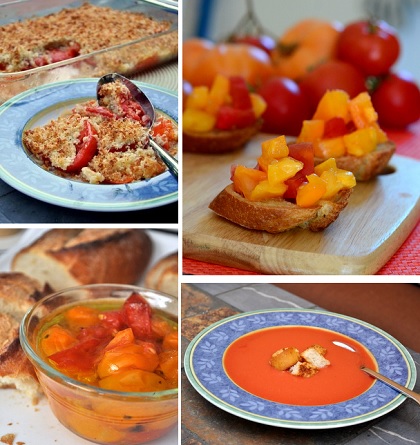
These tomatoes can still be used in any way you would normally use tomatoes. They make great salads, and are the perfect addition to BLTs and burgers. I like to roast them with olive oil and serve them with a fresh baguette, and a new favorite is my Summer Tomato Gratin. Whether your tomatoes are red, yellow, green, purple or striped, let their colors and their flavors shine in any dish you use them in and you can’t go wrong.