Archive for October, 2011

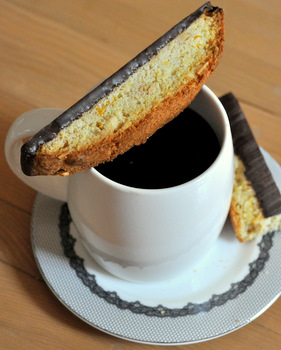
One or two biscotti are a terrific compliment to a cup of coffee or a mug of tea. Just about any flavor will do, whether you like anise flavoring or you prefer your biscotti dunked in chocolate. These Orange Almond Biscotti are certainly a good option. Biscotti are twice baked cookies that are known for being dry, crisp and having a long shelf life. These biscotti are richer than most biscotti recipes and use a fair amount of butter, and so they have a more tender texture and are a little less “hard” than some other biscotti. They still go extremely well with coffee, of course, they just don’t need to be dunked into the cup to be edible.
The primary flavor in these biscotti is orange, and the flavor all comes from fresh orange zest. I used about three tablespoons of orange zest from two large oranges just to flavor the batch – and it comes through in a wonderfully fragrant batter and very flavorful cookies. Sliced almonds are added to the batter, as well, adding a very subtle almond flavor and a lot of crunch.
Dip these biscotti into some melted dark or semisweet chocolate to dress them up after baking, especially if you are planning to serve these as dessert with coffee or intend to pack them up to send off as a gift for the holidays. Chocolate and orange blend together perfectly. The biscotti keep well when stored in an airtight container, so the biscotti make a treat that will last around the house all week long, as well as one that ships well to family and friends.
+Continue Reading
I am always on the lookout for a great new pizza place, but nothing beats making a pizza at home where you have completely control of the crust and the toppings, making your pizza as thick or thin as you like and piling on all your favorite toppings. That said, making a pizza at home takes a little practice because you need a good crust recipe to start off with. Artisan Pizza and Flatbread in Five Minutes a Day is a fine place to start, a book dedicated to making good quality pizza crust easy and accessible. The book comes from Jeff Hertzberg and Zoe Francois, who are behind other bread books, such as Healthy Bread in Five Minutes A Day, that similarly seek to make artisan style breads accessible to home bakers – even those pressed for time. The overall concept is simple: spend a few minutes mixing up a big batch of dough, using part to bake right away and storing the rest in the fridge or freezer to be ready at a moment’s notice.
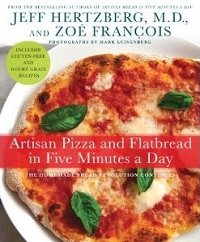
The introduction starts out with an excellent overview of ingredients, including detailed information on flours, cheeses and various toppings. There is also some good information about the equipment needed to bake top quality pizza and how to best utilize your oven. This section, according to many pizza lovers, is worth paying special attention to because preparing your oven well can make the difference between an okay pizza and a great one. The final portion of the introduction – which is really a second introductory chapter – is done in a question and answer format to answer any anticipated pizza-making questions that readers might have so that you feel well prepared to start the process.
From there, the book gets into the dough and sauces recipes, setting the foundation for all of the pizzas in the book. Once you have those two elements mastered, you’re ready to take on any type of pizza, thick or thin, heavily topped with meat or simply dressed with cheese. The flatbread recipes are equally delicious, offering readers a lot of variety from relatively few doughs. There is even a chapter on dessert pizzas and tarts using en enriched pizza dough that is a little sweeter than what you’d use for the book’s other recipes. There is a tremendous amount of detail in the recipes and the instructions, so bakers of all skill levels will find them easy to follow and are definitely set up for success when trying a new recipe. The recipes seem to speak for themselves when you read the toppings that accompany any bread dough in the book, but the photos that are included are mouthwatering.

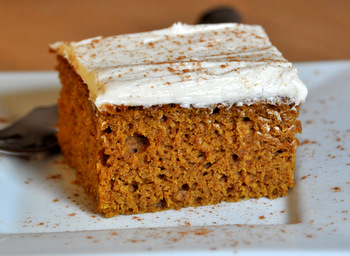
You know you’re on the right track with a cake recipe when the kitchen smells fantastic while your cake is in the oven. In fairness, not everything that smells great will turn out perfectly, but I tend to think that it increases the odds. This pumpkin cake is one that will fill your kitchen up with the fantastic scents of cinnamon, ginger, cloves and nutmeg while baking. It’ll put you into a fall holiday spirit, inspire you to bake more and – of course – make you very hungry for that first slice of cake.
The cake is extremely moist and tender, with a fluffy crumb that melts away on your tongue and only leaves pumpkin and spice behind. Most of the spice comes from my homemade pumpkin pie spice mixture, although there is vanilla and a generous splash of brandy in the cake. I think that sweet and spicy brandy (bourbon is a good substitute) works well with with the pumpkin in both the cake and the frosting, although you get a much more generous dose of the brandy in the frosting than you do in the cake!
Like many other recipes that use a small amount of alcohol for flavoring, you’re not going to get much alcohol in the finished product. I can guarantee that no one is going to get drunk on this even if they eat the entire cake (I suspect that you might get sick if you try, though). That said, if you prefer to leave out the brandy because you intend to serve the cake to kids, you can substitute water or orange juice. Alternatively, you might just opt to take the brandy out of the frosting, where its flavor is much more distinct, and simply add milk and vanilla extract to the buttercream that tops the cake.
Any way you slice it – and hopefully you’re slicing this in large pieces – this is a delicious fall cake that is perfect for serving a crowd. As a sheet cake, it’s not too fussy to make or to serve, and it is very easy to enjoy. The cake will stay moist for several days when well wrapped, too.
+Continue Reading

Carving a big pumpkin into a jack o’ lantern is one of those Halloween traditions that no one should ever grow out of. The spooky faces of those pumpkins generally indicate to kids that there is candy to be had nearby. For adults, carving those faces is a fun way to get into the Halloween spirit and get a lot more creative than you were as a kid. And having the opportunity to to toast a bunch of fresh pumpkin seeds while you’re carving doesn’t hurt either. I like to put a foodie twist on my pumpkins these days, rather than just sticking with the classic grinning jack o’ lantern face. Whether you start with a commercial pumpkin carving kit or are just relying on your arsenal of kitchen knifes, here are a few Foodie Jack o’ Lantern ideas to inspire you:
The first is the Skeleton Chef Pumpkin, pictured above. This pumpkin features a skull topped with a chef’s hat, ready to serve up a variety of tricks and treats to anyone who approaches. It’s a simple design, but it never fails to catch the attention of anyone who sees it.
Another skeletal design comes in the form of this skeleton hand reaching for a cupcake. The design is a little more detailed, with many small cutouts to represent the bones of the hand. Fortunately, you can take plenty of anatomical liberties when working with Halloween designs. Carve a little sleeve underneath the hand and it can double as a zombie arm!

+Continue Reading

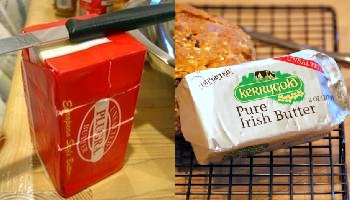
Butter is a staple in the the kitchens of every baker and is a crucial building block for all kinds of recipes, from simple chocolate chip cookies to flaky croissants. Most baking is done with plain, simple unsalted butter. This type of butter is labeled “sweet cream” butter and is available in every supermarket in the US. Over the past few years, European style cultured butters have been joining sweet cream butter on market shelves, boasting a richer texture, more flavor and double or triple the price of sweet cream. European style butters have a higher fat content than sweet cream butter (83-86% compared to 81-82%) and they are inoculated with bacterial cultures and allow to “ripen” before churning, giving them a more complex flavor.
In a recent issue (Nov/Dec 2011), Cook’s Illustrated set out to find The Best Butter in a taste test of seven cultured European-style butters and three regular sweet cream butters. They tasted the butters alone, when spread on plain crackers, and when baked into their recipe for French butter cookies to see how the butters stacked up when baking. The results were somewhat surprising, as the Cook’s Illustrated team learned that one type of butter was not better than another across the board.
+Continue Reading