Archive for August, 2009

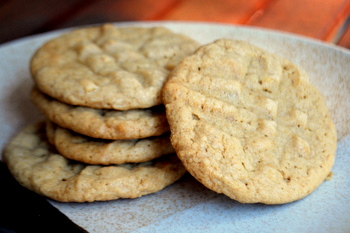
When you’re talking about cookies, it is often said that using brown sugar will result in a chewier cookie. This is partially true, as brown sugar does have a higher moisture content than regular sugar and that can help a cookie stay more moist – and therefore, chewier. It is not the only thing that can make a cookie chewy, however, as the amount of sugar, number of eggs, amount of butter and/or other fats and ratios of various other ingredients can also come into play. In other words, it helps but it’s not the only way to get there.
This peanut butter cookie happens to use brown sugar and bake up to be nice and chewy. It uses brown sugar to help with the chew and add a little bit of a molasses flavor to the cookies. What really makes them chewy, however, is the baking time and temperature. They are baked at a lower temperature than many other peanut butter cookie recipes (at least, most of those that I make) and are baked until just set, not until browned. The cookies turn out with a nice chew to them. Don’t worry if you overbake them, however, as they shouldn’t turn out hard, though they might be a little on the crisp side.
I used dark brown sugar to get the most molasses flavor into the cookies and a national brand of crunchy peanut butter (Jif extra crunchy). I like the crunch that some pieces of peanut add to the cookies. If you don’t have dark brown sugar, any type of brown sugar is a fine substitution.
+Continue Reading
The name “pot pie” may inspire thoughts of heavy, hearty comfort food. The comfort food part certainly applies to all iterations of this dish, but pot pies don’t need to be heavy dishes that you save for the winter time. in Pot Pies: Yumminess in a Dish, all kinds of pot pies are put together, from the heavy dishes that you want to eat on the coldest winter days to lighter and more elegant – but still one-dish – meals that you could easily enjoy on a summer night. The selling point is not just flavor, but how easy the dish is to prepare and the fact that it comes out of the oven as a complete meal.
The cookbook is beautifully presented with full-color photos of all of the recipes in it. I’ve heard that it is difficult to photograph pot pies since you need to see the not-always-pretty filling in the photos, but you would never know that looking at the beautifully styled pictures in this book. The recipes range from the fairly familiar to the more exotic, with things like Beef & Vegetable Pot Pie on one end of the spectrum and Lobster Pie Pie and Thai Chicken Pot Pie on the other. Three different, all equally easy to put together, pie crust recipes are given at the beginning of the book for reference. You can also use these pie crusts for other pie recipes.
Overall, the book is well laid out and easy to follow. The recipes are clearly explained and, although the ingredients lists can sometimes get long with all the veggies and spices, everything used in the book should be easy to find in the grocery store. It’s a great volume if you already like pot pies, but it’s even better if you’re not too familiar with them and really want to see how good a one-dish meal made of a juicy, flavorful filling and topped with a flaky, tender crust can be.

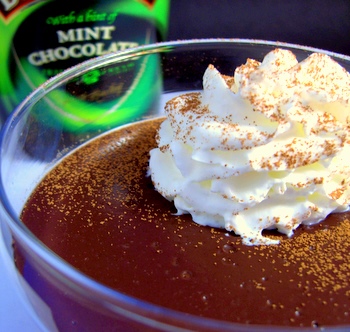
I was watching a TV series on DVD recently, and in one episode, the characters ate a heck of a lot of chocolate pudding. They are so much that it kind of put me off of it. Now, don’t get me wrong because I do like chocolate pudding – I was just glad that had already eaten the chocolate chocolate pudding that I had made earlier in the week!
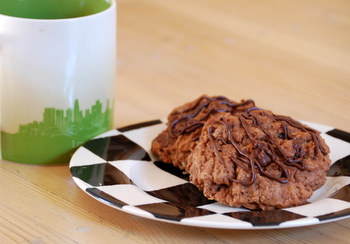
This pudding is just a little bit of a twist on a simple chocolate pudding recipe that I use as a go-to recipe. The pudding is made with milk and thickened with a little bit of cornstarch, instead of eggs. This means it is less fussy than some pudding recipes – no tempering of eggs required – and has a slightly lighter texture than some very heavy puddings that load up on egg yolks. It still has a good chocolate flavor, thanks to some cocoa powder and some melted chocolate that is incorporated into it. I’ve used it before in homemade Chocolate and Vanilla Pudding Cups. In this instance, the twist I’ve given it is a twist of mint. I added Chocolate Mint Bailey’s liqueur and a little bit of peppermint extract. The pudding is as chocolaty as ever, but has a refreshing note to the finish, as well as a hint of rich Irish Creme liqueur.
If you don’t have the Mint Bailey’s, you can substitute another chocolate liqueur, regular Bailey’s Irish Cream or just swap in some extra milk. The liqueur acts like a combination of chocolate extract and mint extract, in terms of the flavor it lends to the pudding, but a bit extra mint extract will help get the pudding to just the right level if necessary.
+Continue Reading

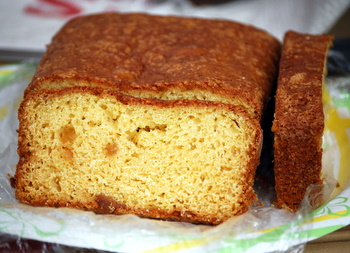
This is another one of those recipes that manages to use grapefruit juice instead of lemon or orange juice, both of which appear far more commonly in quickbread recipes, just like the Grapefruit Meringue PieI put together recently. The sweet, cake-like quickbread is very similar to recipes for Meyer Lemon and Blueberry Bread and Orange Cranberry Bread, but uses fresh grapefruit juice and candied ginger as a flavor base. Spicy-sweet candied ginger is a nice match for the tart, and sometimes bitter, grapefruit juice. The two make for a loaf that tastes really fresh, sweet and citrusy.
Fresh grapefruit juice works the best for this recipe, since it gives you access to extra zest to stir into the batter, but a pure-juice packaged grapefruit juice will work well, too. If you aren’t using grapefruit zest, I’d add in some orange zest to give the bread a little more flavor. For the candied ginger, I’d recommend using ginger chips if you can find them because they’re so easy to use. If you’re buying your candied ginger in larger pieces, chop it up with a sharp knife. Leave some of the pieces a little larger and some a little smaller so there will be a good variety throughout the loaf.
This bread has a fairly open crumb and a tender, slightly crumbly texture. It goes well with butter and some types of jam, like marmelade if you’re a fan of it. It is also good just on its own and is sweet enough to serve as a sort of coffee cake. The candied ginger doesn’t make this bread ideal for putting it into a standard toaster, but it is good toasted if you haver a toaster oven to work with.
+Continue Reading

The tagline for the museum is “The Most Explosive Museum in the World” – and it’s a museum about flour milling. This might not make sense unless you know that flour is 70 times more explosive than gunpowder, making it extremely combustible and a pretty dangerous thing to have a factory full of. Now, in full disclosure, I should say that I didn’t really know this until I visited the Mill City Museum in Minneapolis, a museum built on the site of one of the oldest flour mills in America.
The old mill was once know as the Washburn A Mill and opened in 1874 in a city known for its flour million. It was producing somewhere in the neighborhood of 2 million pounds of flour per day at its peak during the 1870s. In 1878, however, a spark set off a massive explosion, destrying the factory, destroying two neighboring factories, killing 18 workers and setting a huge fire in the city. The mill was rebuilt into the largest flour mill in the world in 1880 and Washburn merged with a man named John Crosby to turn the mill into General Mills (yes, the founding of the huge brand we all know today). It remained the largest mill in the world until The Pillsbury A Mill opened across the river in 1881.
+Continue Reading