Filed under Sweet Stuff by Nicole | 12 comments

Marshmallow creme is scoopable, spreadable marshmallow confection. Packaged in jars, the semi-liquid marshmallow is much softer than a regular marshmallow, and both creamy and sticky at the same time. I tend to always call this confection “marshmallow fluff,” although the name might not be familiar to all consumers, as it is actually a trademark for a single product. When produced by other companies, the marshmallow goo is labeled as “marshmallow creme” and you’re much more likely to see it on store shelves that way.
Marshmallow creme was invented in the early 20th century, after “regular” marshmallows had been in production for a number of years. It is made using some of the same ingredients that come into play in most marshmallow recipes - sugar, corn syrup, vanilla - but creme usually uses egg whites (often in powdered form) while regular marshmallows tend to use gelatin as a stabilizer. The reason that marshmallows usually use gelatin is to give them some firmness, allowing them to be sliced and packaged in pieces. Marshmallow cream does not firm up and remains soft, even when it sits out for a while.
There are plenty of recipes that use marshmallow creme, including Fluffernutters and S’mores Cookie Bars. You can make a great cream cheese frosting with the fluff, too. You can’t however, substitute regular marshmallows for fluff even if you melt them down. Fluff keeps for a very long time in the cupboard, so it’s something to keep on hand for a time when you might need it even if its not on your regular grocery list.
Filed under Gear and Gadgets by Nicole | 6 comments

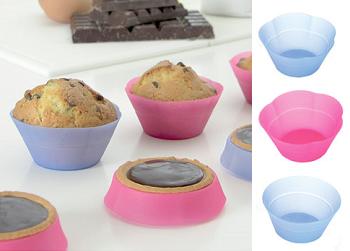
Even though silicone muffin cups aren’t something I would choose over a regular muffin tin, they do have some advantages thanks to their flexibility. These Tulip-Shaped Muffin Cups, for instance, double as miniature tart molds when they’re not being used for muffins or cupcakes. Each one has a crease about halfway down the side that allows you to fold over the muffin cup and create a stand-alone tart mold. The doubled over edge gives the molds some extra stability when you’re handling them. And even though you can use a regular muffin tin for small tarts, you often have to slide a knife underneath the tart to try and pry it up without breaking the crust; here, shorter sides and nonstick silicone make it very easy to get the finished tart out of the mold.
The name of the cup comes from the fact that they have scalloped edges, which gives them a look that is a little more floral and a little less plain than your standard muffin cup.The cups are 2.75-inches in diameter (standard muffin cup size) and are sold in sets of six, with three each of blue and red cups.
Filed under Recipes, Holidays, Cakes, Cakes - Cupcakes, Cakes - Frosting by Nicole | 21 comments

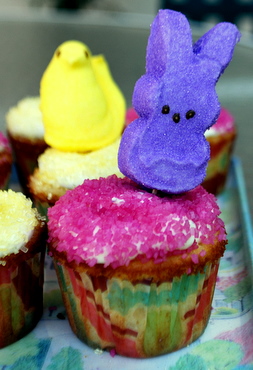
Colorful, sugar-coated marshmallow Peeps are synonymous with Easter. They’re simple and loved by most kids. A great way to take advantage of their colorful look is to use them as a decoration for cakes and other baked goods. I’ve taken that one step further here by making Peeps-inspired cupcakes for Easter!
These cupcakes have a vanilla butter cake base and are topped with a marshmallow cream cheese frosting that is coated in colorful sugar - just like Peeps are. The vanilla cake base is easy to make and is just a great cake for a spring gathering, as it is somewhat lighter in flavor than a chocolate cupcake. The white cake also blends in with the white frosting, giving the cupcakes a more spring-like look than a darker color cupcake would. Since the major complaint of those who don’t care for Peeps straight is that the marshmallow critters are too sweet, I opted for a fluffy cream cheese frosting that incorporates marshmallow fluff. This adds a great flavor to the cupcake as a whole and does prevent the frosting from seeming too sweet when it is covered in sugar.
I’d recommend sprinkling the frosting with sugar over the sink, rather than trying to dip the frosting into a bowl of sugar. It’s easier to control where the sugar goes this way, and the frosting won’t get smushed down while you work. Peeps generally come in yellow, green and purple, so try to stick to those colors for the sugar. Use a toothpick to prop each of the Peeps up on top of the cupcakes to finish off the presentation. Leftover Peeps make great s’mores, but you can always save any leftovers for another batch of cupcakes.
(more…)
Filed under Magazines & Cookbooks by Nicole | 4 comments
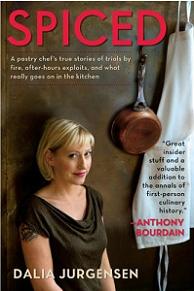
I don’t know too many foodies who haven’t read at least a portion of Anthony Bourdain’s Kitchen Confidential to get an inside look at the goings on in professional kitchens. Spiced: A Pastry Chef’s True Stories of Trials By Fire gives a similar kind of look into a different type of culinary environment.
Author Dalia Jurgensen recounts her own story of becoming a pastry chef, starting with the day that she decided to put in her two weeks notice at her regular job and enroll in culinary school. Her first restaurant job was at Nobu working as a pastry person, and from there she moved around New York City on a quest to become not just a pastry chef - but a good pastry chef.
While the “insider’s look” from the cook’s perspective is becoming pretty common, it’s not too often that we get to see the pastry perspective of things. The production is still intense, and the need for perfection (or something close to it) even moreso. The book is well written and fun to read, with great little stories of characters that Jurgensen met and became friends with along the way. Even so, it still manages to convey some of the intensity of working in the field, as well as the passionate enthusiasm that Jurgensen, like so many others, has for it.
The book doesn’t include any recipes, but it still made me want to cook. I’ll stick to the safety of my own kitchen for now, though, rather than jumping in head first like the author did.
Filed under Cooking by Nicole | 4 comments
Summer camp often means sports, swimming, insect repellent, campfire s’mores and cafeteria-style food - at least, it did before the rise of all kinds of specialty camps and specialty cooking camps for kids are joining the lineup this year. Sur La Table, in conjunction with Bon Appetit magazine, has planned out 5-day culinary camps for kids and teens, where young would-be chefs (and foodies) can go to get some serious, but fun, training.
There are four camps offered: cooking for kids, cooking for teens, pastry for kids and pastry for teens. The Kids Cooking Class, for ages 8 to 12, is slightly more simple than the teens class, but still covers a lot. It starts with breakfast, and covers snacks/lunches, baked goods, light meals and dinners. It’s very hands-on, but with plenty of supervision to make sure everything is done safely and correctly. The Teens Cooking Class, for ages 13-18 has a little more emphasis on technique, and sauteeing, roasting and grilling are all covered, along with basic knife skills. The Pastry Classes for Kids include cookies, bar cookies, yeast breads, pies, cobblers, cakes and souffles.For Teens, the Pastry Classes cover the same elements, but include some more complex and challenging recipes.
These classes are offered at many Sur La Table stores and are $350 for 5 days. If there isn’t a Sur La Table in your area, you might take a look at local summer camp listings or neighborhood offerings (like at a community center) to see if you can find alternatives in your area that offer similar culinary programs for kids.
Filed under Recipes, Breads - Quick Breads, Savory Side Dishes and Salads by Nicole | 8 comments

A simple biscuit is such a great addition to any breakfast or dinner. Most biscuits I come across are made with white flour, either an all purpose flour or a cake flour (or other low-protein flour) in the hopes of producing the most tender biscuit. While I would never turn down a perfectly made biscuit, it is nice to know that you can still make delicious biscuits using whole grain flour without sacrificing taste or texture.
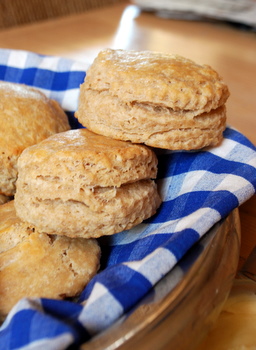
I used white whole wheat flour for these biscuits. It is much closer to all purpose flour than regular whole wheat flour, which tends to produce heavy and somewhat crumbly biscuits. I used plenty of butter and buttermilk, and came out with a biscuit that had a great buttery flavor and lots of flaky layers. It was still a little bit heartier than a plain biscuit might be, but the fact that it is made up of whole grains makes up for it.
The best way to make biscuits is to rub in the butter by hand, using your fingertips. This gives you lots of control over the size of the chunks of butter. Aim to have most of them around the size of large peas. Larger butter pieces (not huge, of course, but quite a bit larger than “wet sand”) result in a flakier biscuit. After you stir in the buttermilk, knead the dough on a floured surface a few times to allow some gluten to develop. This helps the biscuit to rise up nicely. And finally, don’t forget to add a bit of sugar into the mix. All whole wheat flour, including white whole wheat, can have a very slightly bitter taste that makes the biscuits taste a little bit too healthy, even with all that butter. Brush the biscuits with a little milk or melted butter before baking to give them a nice golden brown color.
(more…)