Archive for May, 2007
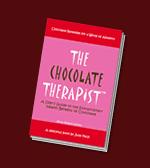
Are you a chocoholic? What would your dream job – a chocolate related one – be? Working as a chocolate-taster is one possibility that springs to mind, although crafting exotic truffles at a high-end chocolate shop sounds quite appealing as well. Julie Pech is a woman who just might have the most intriguing chocolate-related job of all. She is a chocolate therapist.
There are many health benefits attributed to chocolate and cacao’s high antioxident content. Julie’s theory, on which she has written a book, The Chocolate Therapist, is that you can improve your health by getting the maximum nutritional benefit from the chocolate you eat. The bonus is that, in the process of getting healthier, you will eat a substantial amount of chocolate. Pech’s regime includes roughly 2-oz per day of dark chocolate, cacao nibs and other chocolate products, along with a number of cocoa butter body products for skin health. She travels around the world (with a standing engagment on Norwegian Cruise Lines) to promote the health benefits of chocolate and also teaches a course on it at the Colorado Free University in Denver.
If therapists, chocolate or otherwise, aren’t your thing, but you still find chocolate to be theraputic, you might want to head to a local Ben & Jerry’s to see if they have the limited edition Chocolate Therapy ice cream available.

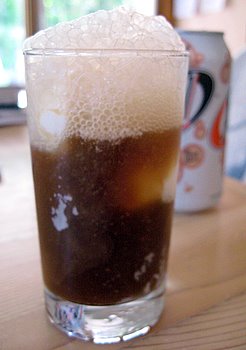
Although it was nothing in size compared to the record-setting Coke float, I guess you could say that I was just a little inspired by the giant ice cream soda because I decided to make myself a – much smaller – root beer float. Floats, and ones made with root beer in particular, pair perfectly with hot dogs, hamburgers and just about any other summer day when you feel like a regular soda isn’t quite indulgent enough.
Making soda into a float is not rocket science: start with a big glass, add a scoop or two (or three) of your favorite vanilla ice cream and pour over the root beer. There are a few tricks to making a good one, however. First, it is important to spring for a good quality ice cream, or even a gelato. The richer ice creams hold up to the soda, while cheap, over-aerated brands will dissipate quickly in the carbonation. Lower fat ice creams often contain water or ice and can even dilute the drink. Second, while it is nice to get a good head on top of the float, pouring technique is crucial to avoid getting a glass of foam. Put the ice cream in first, then pour the root beer gently down the side of the glass. As it fills up, pour straight down, allowing foam to form and top off the drink.
Finally, don’t forget to serve your float with both a straw and a spoon to get the most out of the treat!

One of the beautiful things about birthday cakes is that they appeal to everyone, adults and kids alike. This probably has something to do with the fact that birthday cakes are likely to be relatively plain affairs, and flavors like chocolate and vanilla are unlikely to offend anyone. But just because most cakes will fit into the “please everyone” category, doesn’t mean that every birthday cake has to be kid-appropriate. After all, grown-ups have birthdays, too.
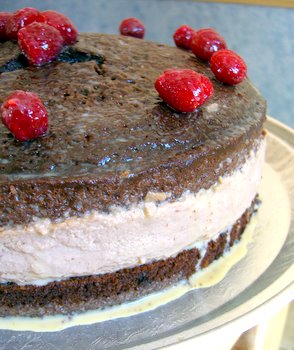
This Chocolate Tres Leches Cake is a fantastic example of a “grown up” birthday cake, as well as a unique variation on a tres leches cake. The standard tres leches cake is a light single-layer cake soaked in a combination of three milks: evaporated milk, condensed milk, and cream/whole milk. This chocolate version is a layer cake, made with an intensely chocolate cake that sandwiches a flan-like custard filling. The whole thing gets soaked in a rum-spiked tres leches sauce before serving. I topped this one with Bailey’s Raspberries. This is the kind of cake that you’ll be talking about for weeks after the big day, in addition to being one that (thanks to the booze) fuels the festive atmosphere of a party.
The recipe for this cake comes from Godiva, although I made a few changes and didn’t end up using Godiva chocolate in the finished product. The cake is not one that comes together quickly because it must be prepared in stages. The advantage to this is that the cake can be made well in advance over the course of a day or two, leaving you plenty of time (and no prep work) on the actual day of the party/event/etc. The flan-like center must be pre-baked and frozen before the chocolate cake is made. Freezing the center makes the otherwise delicate custard easy to handle when it comes time for assembly. For the cake, I used a 72% dark Callebaut chocolate, which is deeply flavored but still sweet. Any kind of dark chocolate will do, but don’t go too far over the top into unsweetened territory; the cake should still be sweet. Aim for 65%-85%.
I like to think of this as a sophisticated ice cream cake and after making this, I would consider playing around with custard centers for other cakes in the future.
+Continue Reading
Ice cream is definitely an indulgence, which means that it’s not a bad idea to find out exactly how much a serving size is if you like to have it on a regular basis. Generally, a serving is 1/2 cup, according to the carton. According to Hungry Girl, a serving is a lightly packed 1/2 cup and not the full measure.
The only question is what exactly a lightly packed half-cup of ice cream looks like. The term is often used to describe baking ingredients like flour and brown sugar, both of which will either “settle” into a cup or remain “lightly packed.” Solid things, such as chocolate chips, don’t exactly “pack” – they either fill the cup or they don’t - and this category includes unmelted ice cream. Wouldn’t it be easier just to say that a serving size was a full 1/3 cup, rather than leaving consumers to estimate exactly how much less than 1/2 cup their serving should be?
I’m not about to break out my kitchen scale to weigh ice cream, so I’ll try to stick to the scoop rule where one normal-sized scoop is a serving and you have plenty of room, both size-wise and calorie-wise, for a cone and toppings.

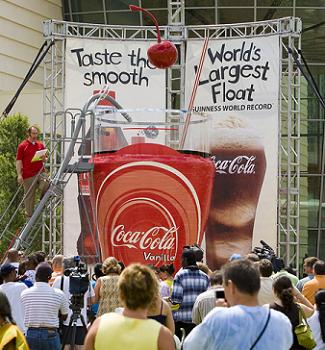
On May 25th, Coke officially relaunched Vanilla Coke – now renamed Coke Vanilla – by making the world’s largest ice cream float at the World of Coca-Cola Museum in Atlanta, Georgia. The record-setting float used more than 2,850 gallons of soda and 7,200 scoops of ice cream. All totaled, it weighed in at about 10 tons!
Hopefully after the main event was completed, the guys at Coke decided to share the weath and give out (smaller) glasses to all the visitors on hand at the museum that day.