Whole Grain Blueberry Buckle

Whole Grain Blueberry Buckle

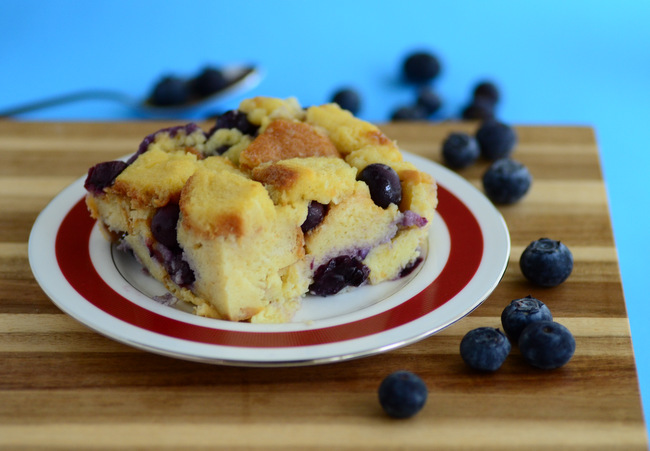
Crisps and cobblers are fairly common fruit desserts and, when you hear either one mentioned you probably have a clear idea of what to expect. Buckles fall into the same general category, but get a lot more questioning looks when mentioned than some other fruity desserts. A “buckle” is a fruit-laden cake that gets its name from the fact that the added moisture from all the fruit can actually cause the cake to “buckle” a bit in the center. While cake batter is what gives the cake substance and structure, the dessert should have a very high fruit content. Buckles also often have a slightly crispy topping of sugar or a thin layer of streusel.

Sill loaded with fresh blueberries after making my bluberry tart, juicy blueberries were my fruit of choice for this buckle. Fresh or frozen will work equally well here. The only thing to look out for with frozen berries is that you might need an extra minute or two of baking time since there are quite a lot included in the batter and, as a result, it will go into the oven quite cold.

I also opted to give this a healthier twist by using some whole wheat flour in the batter. The slightly nutty flavor of the whole grain goes quite well with the blueberries, and the tender/grainy texture that can sometimes be associated with whole grain flour works well in a dessert that should be tender and fruit-filled anyway. Still, I did use part all purpose flour in my batter to balance everything out. If you have white whole wheat flour, you can use that in place of the whole wheat-all purpose combination that I used. I also used all purpose in the streusel topping. Whole where will work there, as well.

Everything came together well, a good balance of fruit and enough batter to hold it together and make it slice-able. It had a good whole grain flavor, but still had a light texture. The buckle isn’t too sweet, thanks to the very slight natural tartness of the blueberries - and I have to admit that I love how many berries are in this dessert. This is a good dessert when it is served warm with ice cream, but makes a great coffee cake, as well.

(more…)

Bites from other Blogs

I actually have more than one cookbook with recipes for Joe Froggers in them, but most don’t really go into what the cookie is or how it got its name. Fortunately, Cake Spy did. They’re crispy molasses cookies that are rich in flavor and keep for a long time - making them great cookies to keep around the house and munch on from time to time, and even better cookies to pack up and ship to a friend.

Pistachios are a wonderful addition to brownies, especially dark chocolate brownies, and it looks like they are an equally good addition to blondies, the fudgy cookie equivalent to brownies. The Pistachio Chocolate Chip Blondies at use real butter are just beautiful. The green color of the nuts really stands out in the blondies and, in addition to adding flavor, really enhances their overall look. The recipe is way down at the bottom of the post, so keep scrolling to find it!

With the Olympics still going strong, I’m sure that we’ve all been watching at least a few more sporting events than usual. WWF style wrestling won’t make it to the games, but it did serve as the sporty inspiration for the Urban Housewife’s British Bulldog’s Custard Berry Tart. Actually, wrestling and a trip to London both equally inspired the dessert. The tart has a crust made with biscuit (cookie) crumbs, a silky custard made with soy milk, and is topped with a Union Jack of berries.

If you haven’t eaten breakfast yet, you might not want to click through to Vegan Visitor’s Cherry Streusel Muffins. They look mouthwatering, and aside from one twist ingredient in the topping, there really isn’t much to separate them from “traditional” muffins, so don’t be put off if the idea of vegan baking seems difficult. This recipe actually uses Earth Balance butter (a non-dairy butter) in the topping, but this is the type of recipe where you could easily substitute in real butter if that’s what you prefer to bake with and still get great results.

How many twists can there be on peanut butter cookies? Fill them with chocolate,  add chocolate chips, and that’s about it, right? Cookie Madness definitely takes home the prize for most unique variation on a classic with Peanut Butter and Chipotle Cookies. The spicy-sweet combination works just as well here as it does anywhere else - only you get the addition of a surprise factor, since no one would suspect these plain seeming cookies to pack such a big flavor punch.

Wrapping up this week’s Bites is the mouthwatering  Chocolate Macadamia Coconut Cream Pie from Sugar Plum. It is over-the-top indulgence and it is a no-bake pie, so you don’t even have to work very hard for excellent results. The crust is made with crushed oreos and macadamia nuts, and a creamy chocolate pudding with loads of coconut is poured on top. The whole thing is finished with whipped cream, more coconut and a drizzle of chocolate. Yum!

How to pour honey and other sticky things

Pouring honey

Honey, molasses, maple syrup, agave syrup and other similarly thick, sticky and sweet liquids can be great to bake with. They all add moisture and lots of subtle flavors to a baked good, moreso than you can get with sugar alone. Unfortunately, they’re not all that easy to work with because it’s hard to measure them - or more accurately, it’s hard to get the amount you just measured into your mixing bowl. More often than not, a good amount of the honey sticks to the sides of the measuring cup and refuses to come out no matter how long you try to coax it out.

My solution to this problem is to use a bit of cooking spray to coat the inside of my measuring cup (for both liquid and dry measuring cups) before I pour in the honey/molasses/etc. The oil keeps the liquids from sticking and helps them pour out quickly. If you have a recipe that calls for oil or melted butter, it helps to pour the honey into the same measure after you add the oil/butter to your batter. When the recipe calls for only a small amount of honey, I just don’t bother to measure it. A tablespoon or two - especially in a bread dough where I can always add some extra flour - goes straight from my honey jar to my mixing bowl.

While this works great for me, you should also keep in mind that there are plunger-style adjustable measuring cups that actually force sticky/wet ingredients right out. If you’re looking to expand your kitchen tool collection, these can be a good way to go, too.

Sushi Wedding Cake

Sushi Wedding Cake

There are some very unusual wedding cake designs that are out there. No matter how crazy the design, wedding cakes all tend to have one thing in common: they’re dessert. I managed to stumble across one cake that broke the mold in a variety of ways. It’s cake-shaped, but it’s not a dessert and there is definitely no frosting involved. This is a sushi wedding cake. It’s not going to overshadow a good vanilla cake for me, but I love the colorful look of this “cake.”

The bulk of the cake is made up of sushi rice, as it is sturdy enough to form stable rounds. Regular cake pans served as molds. The huge quantities of salmon, yellowtail and ahi that adorn the cake are not simply dropped on top, but placed in the bottom of each cake pan, and the rice is packed in to hold them in place. Fortunately, this cake’s creator included a recipe for the cake along with the photos of the finished product that will guide you through the process of putting this masterpiece together if you want to attempt it for your next party or wedding (of course).

Pizza Bianca

Pizza Bianca

It’s great that more people are venturing into the exploration of homemade yeast breads these days. Yeast breads are really easy to make (if difficult to perfect) and it’s fun to play with the dough. It never fails to make me smile when I see a recipe for a “no knead” or “no roll” bread. While many of these recipes turn out fantastic breads, and I do enjoy a time-saver as much as the next person, I do find it a teeny bit amusing that the undertone of many of these breads is that they’re easier than “regular” breads. Yeast breads are almost all pretty easy - and besides, it’s fun to get your hands dirty once in a while!

That said, I had to try the recipe for a “No Roll Pizza” when I saw it in the latest issue of Cook’s Illustrated. Pizza bianca, or “white pizza” has long been a favorite of mine and this is what the tagline of the magazine referred to. I’ve seen it two ways: as a pizza with cheese and a minimal number toppings, but no tomato/red sauce, and also as a focaccia-like flatbread topped with olive oil and herbs. CI took the latter approach. Their recipe needs no rolling because it uses a very wet dough (a high water content to produce a chewy finished product) that simply pours into a rimmed baking sheet and is spread out there. Many focaccia recipes don’t call for rolling the dough either, so the “no roll” part isn’t the selling point of the recipe. The most important thing is a thin crispy crust and a tender, slightly chewy interior.

The prep for this recipe is very easy, although it needs a considerable amount of rising time and isn’t something that can just be done completely at the last minute. It’s worth the wait. The bread is very tasty and just about exactly as I described above: thin focaccia with a crispy crust and a chewy (albeit thin) center. I topped mine with some olive oil, although not as much as I might use on a focaccia, and a generous amount of sea salt. CI uses rosemary, which is traditional but not one of my very favorite herbs. This recipe works best with a stand mixer, otherwise the kneading is quite tiring, so keep that in mind.

Even though the discussion offered before the recipe was given in full was fairly comprehensive, I had some issues with the recipe instructions as given - largely, the fact that there was no pan size given (it was mentioned in the discussion, but never clarified). I used a 13×17-inch rimmed baking sheet. Thankfully, I lined the bottom with parchment paper before starting because the bread stuck like crazy and was actually fairly difficult to remove from the otherwise greased pan.

(more…)

The Big Book of Breakfast

The Big Book of BreakfastBreakfast is definitely my favorite meal of the day, and I am more than happy to eat things typically considered to be breakfast foods any time (although I should note that this is also true of most any leftover from any meal - lunch, dinner or dessert - that happens to be in my fridge when I’m hungry). As a result, breakfast-centric cookbooks actually get a lot of use in my house. They’re great go-to books, with sweet and savory dishes, many of which are easy to make and a great fit for any time of day. The Big Book of Breakfast certainly sounds like a book that is a good fit for those who love breakfasty foods. And it is.

The book has recipes in just about every breakfast category there is, from breakfast beverages and eggs to waffles, cereals and potatoes. It is fairly specific in its breakdown of the categories. For instance, [basic] eggs are a separate section from omelettes, which are separate from quiches and fritattas. While everything could have been crammed into one chapter, this organization allows each subject to be explored apart from similar dishes. Every section starts with a brief introduction to that type of dish, and is generously laced with tips and tricks that might help you troubleshoot any problems within that category.

The recipes are clearly written and easy to follow. Most are uncomplicated (or, at the very least, seem that way), so the book is never intimidating and is easy to pick up even before you’ve had your coffee. Where applicable, suggestions for variations are given, but from the way that the recipes are laid out in the book, coming up with your own ideas (fillings for omelettes, for instance) is almost inevitable. The only real minus here is the lack of pictures in the book. Fortunately, since breakfast foods are so well known, picturing the dishes isn’t too much of a problem and even picture-lovers will be a bit more forgiving of this fact than for books that specialize in more complex or unusual dishes.