Archive for: salt

Thin & Crispy Salted Oatmeal Cookies

Thin & Crispy Salted Oatmeal Cookies
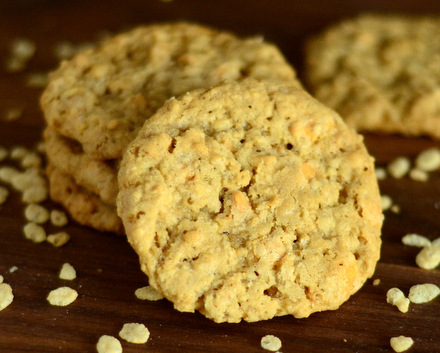
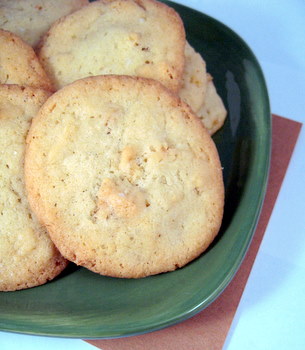
There are times when you want a thick, chewy cookie that you can really sink your teeth into. There are also times when you want a thin, crispy cookie that seems to almost melt in your mouth as you bite into it. Both types of cookies are delicious, it just depends on what kind of cookie you’re in the mood for. The next time you’re in the mood for a crisp, crunchy cookie, you should definitely bake up a batch of these Thin & Crispy Salted Oatmeal Cookies.

This recipe is a favorite of mine when it comes to crunchy cookies, and is adapted from an America’s Test Kitchen recipe. It has been featured on their TV show, in several books and in Cook’s Illustrated, too. The fact that it keeps making “favorite” and “top 10″ lists should be a clue that they’re addictive. The cookie dough is easy to put together. There are two things that makes these cookies thin. The first is that they have a relatively high butter content to the amount of flour in the recipe. The second is that they contain a generous amount – compared to the quantity of flour – of both baking powder and baking soda, which helps the cookies spread and rise just enough to take on a delicate, crispy texture as they bake. They’re also topped off with a generous sprinkling of coarse kosher or sea salt before baking, and those bits of salt make the sweet and oaty flavor of the cookies pop when you eat them.

I love the buttery flavor of the finished cookies and the way they almost melt in your mouth when you eat them. They also stay crispy- even after you store them – and are perfect for serving with tea or coffee. I use a little less butter and a little more salt in the batches I make than the test kitchen does, and I typically make my cookies a bit smaller so they’re a more snackable size.

Don’t skimp on the salt when finishing the cookies. A few grains can look like a lot when you’re putting them on the raw dough, but as the cookies spread out, so will the salt. I also really prefer using quick cooking oatmeal in these cookies. Quick cooking oatmeal is essentially rolled oats that have been coarsely chopped (say, in the food processor for a few pulses). It tends to get distributed throughout the cookie more evenly and gives the cookies a really attractive finished look.
+Continue Reading

Does salt make watermelon sweeter?

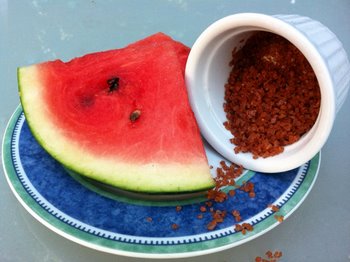
Watermelon with pink salt
The first time that I had a slice of watermelon with salt on it, I was skeptical. At the time, an acquaintance of mine insisted that it would make the watermelon sweeter, better. I gave it a try and I was an instant convert to salting my melon. I’ll eat watermelon (and other melons) without that pinch of salt, of course, but my friend was right: watermelon is better with salt.

Salt makes watermelon taste sweeter by creating a salty sweet contrast that allows the sweetness of the melon to stand out. Watermelon often has a subtle sweetness to it because so much of it is water, unlike a strawberry or other fruit where the flavor seems to be very concentrated and intense, so giving the sweetness a bit of salt to stand up against makes it seem much bolder. Salt also makes you salivate, which will make the watermelon seem even juicier than it is on its own. The trick to success is to only add a small pinch of salt and to evenly scatter it over the whole piece of melon. If you add too much salt, you’ll drown out the melon’s sweetness and you’ll have to start over with a fresh piece.

So, what kind of salt should you use? You can use any kind of salt, including table salt, but I prefer to use a coarser sea salt or kosher salt. It is easy to over salt the melon with table salt, and you get a greater salty-sweet contrast with the coarser salt while using less salt overall. I typically use Maldon salt or something like the pink Himalayan salt pictured above. You can also pair watermelon with feta cheese for a similar salty-sweet effect and a delicious side dish or snack on a hot summer day.

Salty Sweets

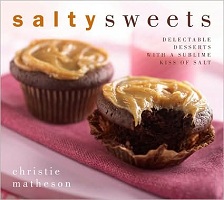
Salty Sweets: Delectable Desserts and Tempting Treats with a Sublime Kiss of Salt Pairing sweet and salty has only become a bigger trend over the past few years, and what was once a concept that you only saw in a small handful of products at just a few shops, is now something you see in products. Salted caramels and cookies with a sprinkle of salt are a good start, but there are all kinds of desserts that can benefit from a good sprinkling of salt and Salty Sweets: Delectable Desserts and Tempting Treats with a Sublime Kiss of Salt is a book that explores many of the possibilities.

Salt – especially a coarse salt that stands out clearly from whatever food it is added to – makes desserts even more mouthwatering for a couple of reasons. First, the salt literally makes your mouth start to water when you taste it. Second, the salt adds a contrasting flavor to something sweet, which makes it actually seem sweeter (without letting it get too sweet) and brings out some of the other flavors in the dessert more. You can experiment with the salty-sweet idea by adding salt to your own baked goods, but it is easy to start with the recipes suggested in this cookbook to give you some ideas of how to use that salt and what types of recipes the salty-sweet combination works well in.

The book is full of beautiful photos of recipes that you would probably be tempted to bake even if they didn’t have a salty-sweet them going for them. The recipes are clearly written and easy to make, and many of the recipes are variations on things that will already be familiar to you, so it is easy to see where and how the salt comes into play. There is a good introduction to the different types of salt and how they can be used at the beginning of the book. The chapters include cookies, cakes, puddings, ice creams, fruit desserts and more, with a total of 70 recipes in all.

Salted Butterscotch Pecan Cookies

Salted Butterscotch Pecan Cookies
Butterscotch is a great flavor and consists primarily of brown sugar and butter. As one of the primary flavor components is sugar, butterscotch can be fairly sweet on its own. This makes it a great candidate for salting – by which I mean adding a few extra pinches of salt to a recipe to give it a savory edge on top of all that sweetness. It works with caramel, and it works with butterscotch.

These cookies have a nice butterscotch flavor to them thanks to both butter and brown sugar in the cookie dough. They get another butterscotch kick from the addition of butterscotch chips, as well as a crunch from crispy, toasted pecans. They’re good as-is – slightly chewy and with a great combination of flavors – and aren’t too sweet in spite of all that butterscotch. That said, they’re even better if you take a pinch of coarse salt and sprinkle it on top of the cookies before you bake them. This trick adds salt in little bursts of flavor that melt on your tongue, giving the cookies an addictive quality without making them simply seem oversalted.

I simply designated the amount of salt to use below as “a pinch.” I used about 1 large pinch – less than 1/2 a teaspoon – for each tray of cookie dough that I put into the oven. Coarse salt, whether you’re using flaky Maldon salt (which I used) or a coarse kosher salt, stands out and you don’t need to use a whole lot of it to get the point across. Give each cookie a sprinkle, bake your batch and enjoy. If you find they need a little more salt, use a little bit more on the next batch. If you absolutely don’t have coarse salt, give the baking sheet a light dusting of table salt before the cookies go into the oven for a similar effect (although I really would recommend going for a coarse salt for this one).
+Continue Reading

What is coarse salt?

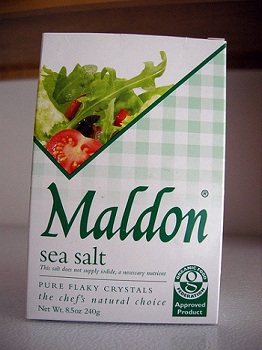
Maldon sea salt
There are lots of recipes that call for coarse salt these days. Coarse salt refers to sea salt or kosher salt, salt that has a much larger grain to it than common table salt – hence the name “coarse” salt. The reason that coarse salt is so popular is not that it is saltier or more flavorful than regular salt, but because it has a more dramatic impact when it comes to flavoring. Each of those little bits of salt is fairly large, so you notice it immediately on your tongue when you taste something. This can give the impression that something is saltier or better seasoned than something lacking coarse salt, simply because that salt is more upfront (not because the salt is any saltier) on your palate.

Coarse salt is great for finishing off a wide variety of dishes, from salted caramels and other sweet desserts that you want to lend a bit of contrast to, to good pieces of bread and steak. A small sprinkle goes a long way for most people, and coarse salt is becoming more and more popular with people who want to slightly reduce their salt intake simply because they feel they can use less.

Coarse salt is not usually good for baking. Recipes for baked goods – unless they specifically call for coarse salt – are written with the expectation that you will use standard table salt. In baked goods, you want the salt to disperse evenly into a recipe to even out the flavor of a dish, not show up in big salty chunks. Really dramatic contrasts like that work well in caramels, but you don’t want it in a white cake. You can use finer coarse salts (like some kosher salts) in baking without any problems, but it’s a good general rule to save coarse salt for a garnish, or use it when a recipe specifically calls for it to be on the safe side.

Visit Us On FacebookVisit Us On PinterestVisit Us On TwitterVisit Us On YoutubeCheck Our Feed