Archive for: jelly roll

Jams, jellies and preserves are three very common types of fruit spreads that can be used for everything from topping a toasted bagel to adding a sweet center to a buttery bar cookie. When you’re reaching for one to spread on a sandwich, it doesn’t matter which variety you choose as long as you like the flavor, but these three spreads are very different.
Jelly is cooked fruit juice that is sweetened with sugar and thickened with pectin (naturally occurring in many fruits, it has gelatin-like properties), or by cooking the mixture until it reduces. Jelly is clear and smooth, with a gelatin-like consistency. It has the most “gel” to it.
Jams are made by cooking crushed fruit with sugar and pectin (from the fruit in the jam or added) until the fruit is very, very soft and almost completely pureed. Jams are less “gelled” than jellies and a texture similar to that of pureed fruit. Some jams still contain the seeds of the fruit, particularly berries.
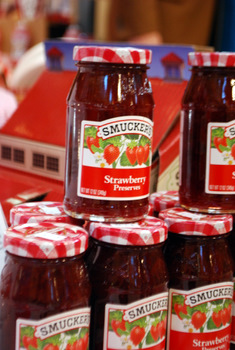
Preserves are made by cooking fruit with sugar, until fruit is very tender and the mixture has thickened. Pectin is not usually added on top of what is naturally occurring in the fruit being used. Unlike jam, the fruit in preserves is left in medium to large chunks. Preserves have the least amount of “gel” to them and are the least smooth.
When it comes to baking, fruit preserves and jams are the best choices. Not only do they typically pack the most fruit flavor, they both maintain their consistency very well even when baked. It is also nice to have pieces of the fruit in your finished products for additional color and flavor.

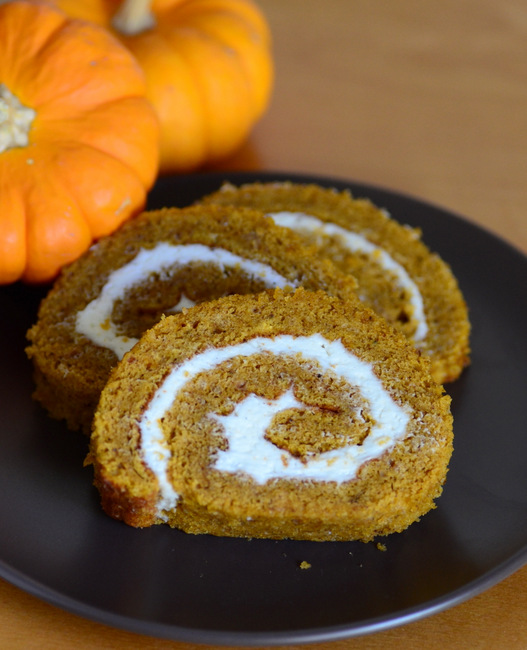
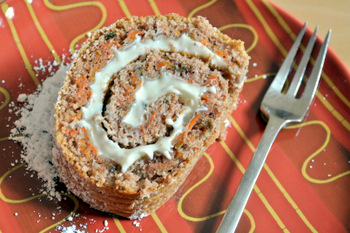
Carrot cakes have a very comforting feel to them, with their warm spices and the rich cream cheese frostings that top them off. But there is no reason that a homey carrot cake can’t be dressed up a little bit by changing the presentation around and keeping the classic flavors that make it so delicious. This is a Carrot Cake Roulade is a jelly roll style carrot cake that is stuffed with a Cinnamon Cream Cheese Filling.
The base for the roulade is a sponge cake that is spiced with cinnamon, ginger and cloves and packed with plenty of shredded carrots. More traditional carrot cakes tend to be very moist and heavy, but this one is light and fluffy. The sponge cake is made by beating whole eggs until they have tripled in volume. It’s important to use room temperature eggs to get the best results. The sponge is the perfect base for a rolled cake because it holds its shape easily, and is also durable enough to be unrolled to allow the filling to be spread inside the cake before it is rolled back up again. I’ve used orange and lemon zest to give the filling a little extra depth in the past. This time around, I played up the spicy notes of the carrot cake by adding some ground cinnamon to the cream cheese filling.
In this dessert, the sponge cake is soft and the filling is rich and creamy. To add a little bit of texture to it, I sometimes add in a generous handful of finely chopped walnuts or pecans to the cake batter before it bakes. Large nuts can make the cake difficult to roll and to slice. Finely chopped nuts are much easier to work with and still add a little bit of crunch to the finished cake. I usually just dust my roulade with confectioners’ sugar before serving, but a few whole nuts make for a nice garnish, as well.
+Continue Reading

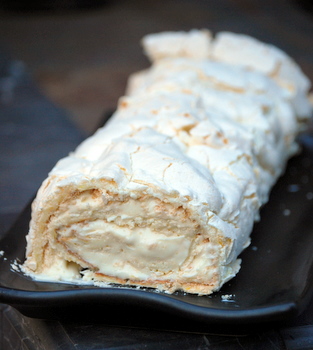
Meringues are usually a light, crunchy and fairly delicate. It’s hard to believe that they can be rolled up into a roulade shape, just like a sponge cake can. Meringue roulades work because the meringue is not overbaked, so that when it comes out of the oven, the meringue is still moist and chewy in the center – and because it stays that way. The softness of the center allows the thin meringue to be rolled up, even though the top and bottom of the sheet of meringue are crisp. It makes a very light dessert that is surprisingly easy to prepare.
The one drawback to a meringue roulade is that the meringue part is very sweet (this is a drawback to a lot of meringue cookies, actually), so you can’t just put any old filling inside. Plain whipped cream works well to balance the sweetness of the meringue if you want to be as basic as possible, but something tart works even better, something like lemon curd. This filling uses a mixture of cream cheese and lemon curd, lightened with whipped cream. I made a filling using items I had on hand, literally, so don’t feel married to the filling suggestion given below. If, for instance, you don’t like cream cheese, just fold some whipped cream into lemon curd and use that as the filling.
All that said, this dessert is fairly sweet because of the meringue (the meringue needs a fair amount of sugar to maintain its nice chewy texture) but the zestiness of the lemon still shines through and it has a great overall flavor, especially if you’re a fan of lemon meringue pie or other sweet lemon desserts. This can be made in advance and stored in the refrigerator for a day if you want to make it ahead of time before serving. It’s nice to bring it out after a cookout on a hot summer night.
+Continue Reading

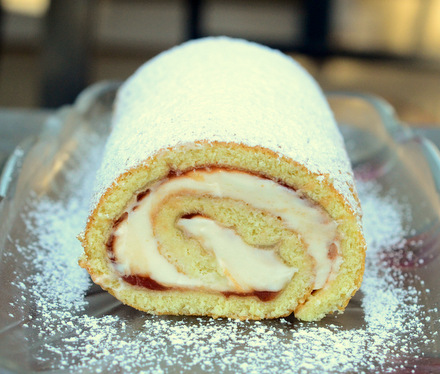
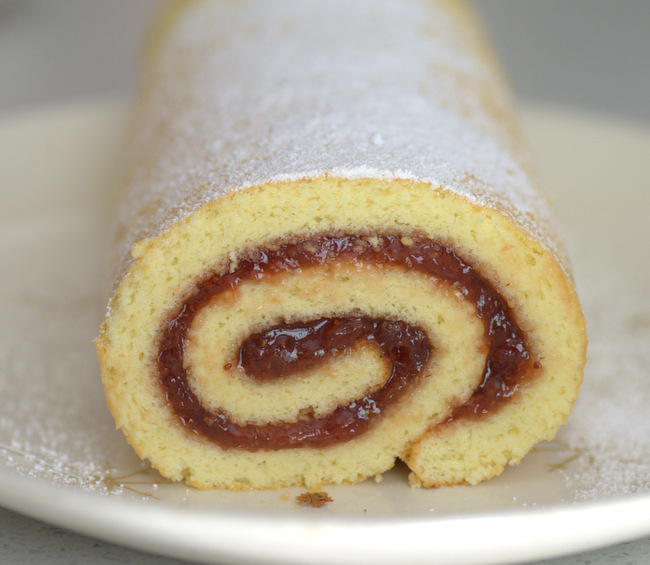
A swiss roll is the same thing as a jelly roll: a thin sponge cake that is rolled up into a spiral and filled with a sweet filling of some kind. The cake itself is simple and plain. Unlike butter cakes, which tend to crack or crumble when they are handled a lot, this type of sponge cake is very pliable. It is easy to roll and re-roll the cake, spreading fillings onto it without tearing into the body of the cake. I use pretty much the same recipe every time I make a jelly roll because it turns out cakes that are soft, easy to work with and very consistent.
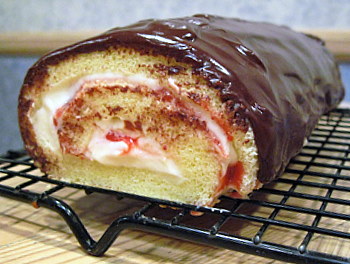
Jam is one of the most common jelly-roll fillings because it adds flavor, sweetness and some extra moisture to the cake. Whipped cream is probably the second most common filling. Anything from softened ice cream to chocolate mousse can be used, as well. For this cake, I turned it into a play on chocolate covered strawberries. I used both a cream cheese filling and a layer of strawberry jam in the center of the cake, and finished it off with a generous layer of chocolate ganache. The effect – because of the large cake component here – is somewhere between strawberry shortcake and chocolate covered strawberries, with just a hint of cheesecake.
The cake is fairly easy to assemble. The swiss roll sponge itself is very easy to handle when it is hot from the oven. Once it has cooled completely, it can be unrolled and a room temperature cream cheese filling can be spread inside. I spread my layer of strawberry jam on top of the cream cheese, although you could also mix the two or swirl them together. The chocolate ganache is simply poured over the cake.
The edges of the sponge cake might be slightly firm after baking. You can trim these before filling the cake, or, as I like to do, after the cake has been filled to give it a neat and even spiral.
I think that this cake is best served the day it was made, once the ganache has set (you can see a bit of chocolate smearing in the photo from the cake not being quite set). If you do need to make it in advance, make and fill the cake, wrap it tightly in plastic wrap and refrigerate it overnight – I wouldn’t wait longer, or the cake might dry out some – and bring it t room temperature and top it with ganache before serving.
+Continue Reading

When it comes to baking, no matter how many batches of chocolate chip cookies I make, I’m just not quite a traditionalist. If I were, I would have made a basic red velvet layer cake by now, instead of making red velvet cupcakes, red velvet sandwich cookies and, now, a red velvet roll cake. That said, I’m not exactly on the cutting edge of innovation, either. If I were, I would have forsaken cake entirely and tried for a red velvet flan.
This is a jelly roll-type cake made with a chocolate sponge cake rolled around a rich cream cheese filling. The cake, although it looks quite elegant, is fairly easy to make, thanks to the fact that the cake itself is both moist and sturdy. It is basically a sponge cake, but like all red velvet cakes it contains the requisite combination of cocoa, buttermilk and baking soda. The chocolate flavor is mild and the cake is quite tender, especially after it has been filled with cream cheese frosting and left to sit for a few hours (time that allows the flavors to blend).
Because this is a sponge-type cake that gets its structure primarily from beaten eggs, it is important to make sure your eggs are at room temperature when you start to work with them, so remember to take them out of the fridge at least 45 minutes before you’re going to start cooking. Many recipes that call for cake flour require that it be sifted before measuring and this one is no exception. Sifting helps to prevent lumps, large or small, from forming in the fine flour and creating pockets in your cake. Simply spoon a moderate amount of flour into a fine mesh sifter, sift onto a sheet of parchment paper and gently spoon back into your measuring cup when ready.
One other thing to note about this recipe is that the color is variable. I like my red velvet cakes/cupcakes to have a relatively subtle color, but if you prefer a brighter hue, simply add more red food coloring. An additional teaspoon or two will not throw off the recipe in any way. The color might darken (i.e. look less bright) after baking, so keep that in mind, too.
+Continue Reading