Archive for: irish soda bread

Neill’s Irish Soda Bread Mix, reviewed

Irish Soda Bread Mix
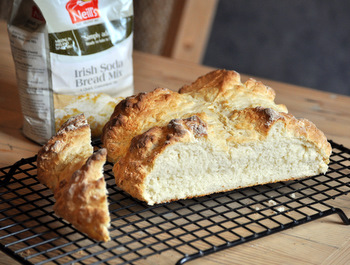
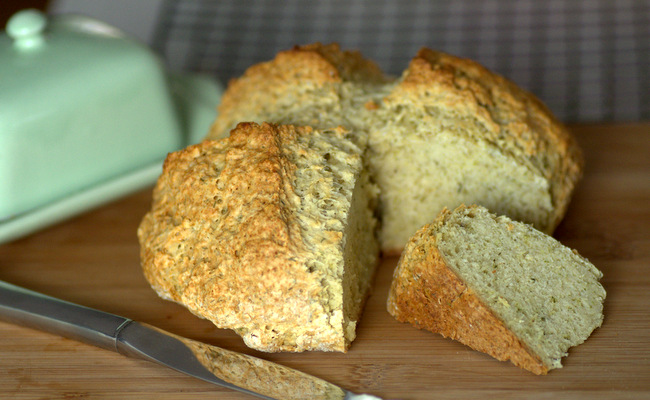
Irish soda bread is one of my favorite quick breads to make because it is so easy and so versatile. The history of the bread (not to mention the name) always emphasize how popular the bread is in Ireland, so while it is easy to make from scratch, I couldn’t resist giving Neill’s Irish Soda Bread Mix a try because it actually comes from Ireland.

The mix contains just flour, baking soda, buttermilk and salt, which are the same ingredients you’d find in a scratch recipe for soda bread. To make it, you simply add milk or buttermilk to the mix, shape it in to a loaf and bake it. The bread turned into one of the most beautiful loaves of soda bread I’ve seen, and was perfectly browned on the outside while remaining moist and tender inside. It was much lighter than some soda breads that I’ve had, which tend towards being rather dense and heavy. It stored well and still made great toast the next day.

The bread had a subtle buttermilk flavor, which you can enhance by using more buttermilk as your liquid (as opposed to plain milk). I should also note that this mix makes a great base for mix-ins, if you want to add raisins or other dried fruits for a sweet soda bread or feel like stirring in some herbs or sun dried tomatoes for a savory version. There are a few suggestions right on the packaging. The mix has just recently become available in the the US, so keep an eye out for it if you want to give it a try.

Mini Irish Soda Breads

Mini Irish Soda Breads

Irish soda bread is a type of quick bread that uses baking soda as a leavener. They’re easy loaves to make  because the basic recipe has just four ingredients: flour, baking soda, salt and buttermilk. This simple ingredient list also means that it is quite easy to put your own twist on the classic loaf. As much as I enjoy a plain soda bread when it is slathered with butter and jam (or used to sop up gravy after making a roast), I also like it with some variation. Raisins are a great way to sweeten up soda bread, and adding oatmeal or oat flour makes for a more tender, flavorful loaf. I usually make one big loaf and cut it into slices, but this time around I opted to make individually sized Mini Irish Soda Breads.

The mini soda breads follow the same recipe as full sized soda breads, but are baked off in small, biscuit-like portions. The dough is soft, so it can be dropped directly onto a parchment-lined baking sheet with a large spoon or scoop, rather than trying to form it into individual loaves. If you add extra flour to make the dough less sticky, your breads will be a little on the tough side.

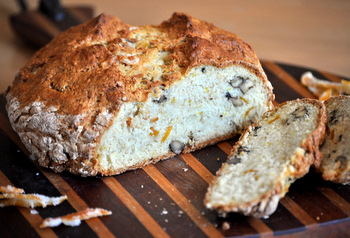
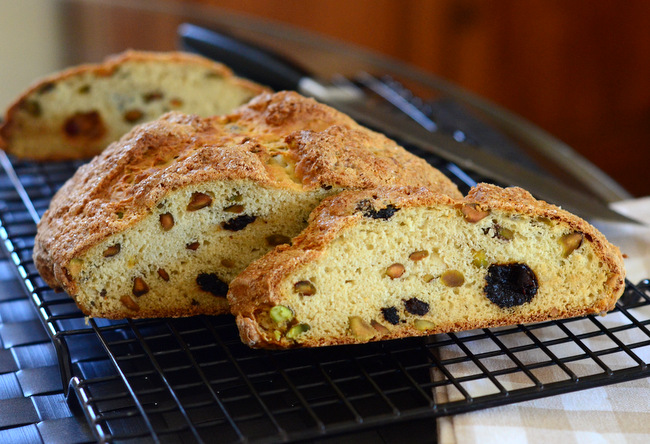
These breads can be made plain, but I added raisins, along with dried cherries and apricots to give it a little bit of sweetness. They have a nice buttermilk flavor and, like most soda breads, are plain enough to take well to a lot of butter, jam, honey or whatever else you might be inclined to pile on. These are best served when they are fresh and still warm from the oven, so try to make them shortly before serving, whether you pan to serve them at brunch or alongside dinner.

Mini Irish Soda Bread with Dried Fruit

+Continue Reading

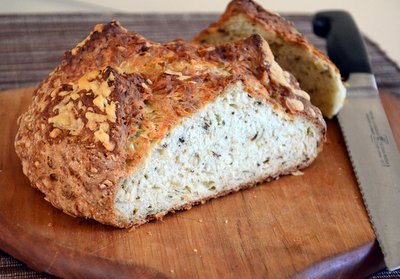
Oats and Honey Irish Soda Bread with Raisins

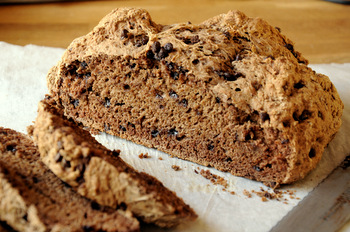
Oats and Honey Irish Soda Bread with Raisins

Irish soda bread is one of my favorite things to make when I want a quick loaf of bread fresh from the oven. Soda bread gets its name from the fact that it is leavened with baking soda, rather than with yeast. This means that very little time passes between starting to mix up bread dough and eating the finished loaf. Irish soda breads are moist, hearty and while there is a traditional way to make them, there is plenty of room for variation, too.

This Irish soda bread has some rolled oats in it and is sweetened with a little bit of honey. I threw in some raisins for good measure, partially because I like their moistness in soda breads in general, but primarily because their natural sweetness is brought out even more with the addition of the honey. This loaf is a little bit dense, but is tender and moist. It is great slathered with some butter while it is still warm from the oven – particularly if you are using Irish butter – and it also makes great toast. Despite the honey and raisins, it isn’t too sweet and pairs well as a side dish with chilis and soups.

Kneading soda bread gives it a better rise in the oven, so I always knead my bread for a minute or two before putting it on a baking sheet. I like to knead this type of bread right in the mixing bowl because there is no need to add additional flour that may toughen up the texture of the bread – and because there is no need to clean up the counter afterward! This recipe doesn’t make a huge loaf, but you could easily double the recipe and make two if you need to serve a crowd. I like big slices of soda bread personally, so I would say that this is a good sized loaf for up to 6 people.
+Continue Reading

Skillet Scones (Soda Bread Farls)

Skillet Scones

Soda bread farls are flat breads that are made from the same dough as Irish soda bread, but are cooked in a skillet or on a griddle. They’re triangular and made by shaping the bread dough into a disc and cutting it into quarters before cooking, then cooking each piece individually. The idea is that it is easier to whip up a bread at a moment’s notice if you don’t need to use the oven.

These breads, cooked in this style, are also known as skillet scones, since they tend to look (and taste) like scones. Like scones, they should be served with butter, jam, cream or any other topping you can think of. The name might not ring a bell to some, but it’s actually a pretty common food to encounter if you ever spend some time camping and swapping campfire recipes with other travelers. Just about all camp cooking is done in a skillet, so skillet scone recipes can be quite popular.

The dough is very easy to make, with just a few ingredients: flour, buttermilk, salt and sugar. The sugar can even be omitted if you want a very plain bread, even though there is only a small amount included. While it’s traditional to cut up the scones and the farl dough before cooking, I find that it is much easier to cook the dough whole and cut it up once it is done. This makes it much more tender and moist inside, while  the smaller pieces can sometimes dry out as they cook. It is also a little easier to tell when the big bread is done, as you can easily press the sides to see if the bread springs back into place before taking it from the heat. It takes about 8-10 minutes on a side, and the only thing you need to look out for is over-browning should your pan get too hot. Medium-high heat generally works the best.

The finished bread has a good buttermilk flavor and there is just the right amount of salt and sugar to make it interesting. It is a little on the dense side, like all soda breads, but has a nice tight crumb and a relatively tender crumb. The top and bottom crusts turn out to be crisp when the bread is fresh and make a nice contrast to the moister, softer interior. I think the bread is best on the first day, but if you store it in an airtight container, it’s still good the second. Usually if I have leftovers, I end up slicing the bread in half crosswise and toasting it before eating.

+Continue Reading

What is Irish soda bread?

Irish soda bread

Irish soda bread – or just soda bread, if you prefer – is a type of quick bread that uses baking soda as a leavener. While this may not seem like much of a revelation these days due to the prevalence of baking soda in all kinds of recipes, it was a boon to bakers in Ireland in the mid 1800s. At that time, Ireland did not have a strong tradition of yeast breadmaking because, unlike many other European countries, the country did not produce much of the high-protein (hard wheat) flour necessary for making good yeast breads. When baking soda was introduced to the country, it pretty much replaced yeast. It produced a reliable rise in the oven, made tasty loaves of bread and would work perfectly with the softer Irish flour.

Soda bread has four basic ingredients: flour, buttermilk, baking soda and salt.  The reaction between the buttermilk and baking soda produces bubbles of carbon dioxide, causing the dough to rise. The breads are fairly dense, moist and hearty (and satisfying for a cold and damp climate!). Moving beyond the basic elements, they can be flavored in any number of ways. Today, the breads often contain additional ingredients, like sugar, butter, currants or caraway seeds to enhance the flavor and texture of the bread. It is best served the day that it is made, when the crust is crisp from the oven, with plenty of salted Irish butter.