Archive for: double boiler

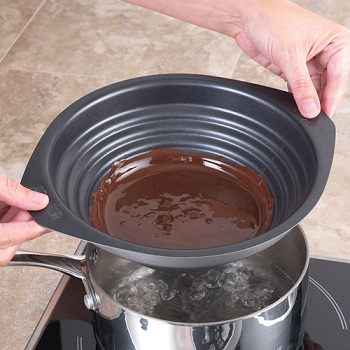
Nordic Ware Universal Double Boiler

Nordic Ware Universal Double Boiler

A double boiler is a tool that can really come in handy in the kitchen. It allows you to cook sauces or melt things at a very gentle heat, so that even the most delicate custard can be cooked without scorching or curdling. You can make a double boiler yourself out of existing pots and bowls that you already have, and this method works very well when you only need a double boiler every once in a while. If you find that you use one a lot to make sauces, clarify butter, melt chocolate, etc. you may find that you need something a little better.

The Nordic Ware Universal Double Boiler is an insert that does the job of a double boiler very well without requiring you to get a whole new piece of equipment for your kitchen. The insert is made of heavy duty aluminum and it has a nonstick finish inside. The base of the double boiler is rounded, making for easy stirring and quick mixing, while the sides are graduated with “steps” that allow it to fit over pots of various sizes. The insert is designed to work with pots that range in size from 2 to 4 quarts. The “steps” also prevent the bowl from tipping, turning or sliding around while you mix – a common problem with home-made double boilers – so you have a more stable setup to work with.

How to make a double boiler

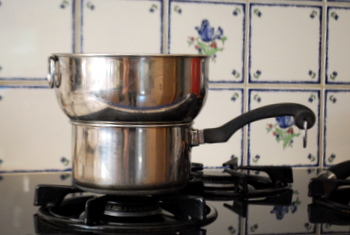
Homemade double boiler

When you put a pot on the stovetop, it gets hot – especially the parts of the pot that make physical contact with the heating element, be it flame or electric coil, of the stove. I’m not going to speculate about how hot your stove gets, since it depends on how your stove is powered, but that flame or coil is very hot. When heating something in a pot, the portion that comes in contact with the very hot bottom of the pan will heat up more quickly than the rest of the food. This isn’t a problem for most foods, but it is a big problem for some things, such as chocolate and delicate sauces, that burn very easily. The solution is to use a double boiler.

A double boiler consists of a bowl placed on top of a pan of simmering water. The bowl does not touch the water, but creates a seal with the bottom pan to trap the steam produced by the simmering water. The trapped steam keeps the top bowl going at just about 212F (100C), the temperature at which water turns to steam and a far lower temperature than could be achieved by putting the bowl directly on that burner. Inside the top bowl, you can melt chocolate without worrying that it will stick and burn.

You can buy a double boiler, but it’s easy to make one at home. All you need to make a double boiler is a mixing bowl (preferably glass/pyrex or metal) and a saucepan that the bowl will fit on top of. The two should fit tightly together; you don’t want a gap between the bowl and the saucepan, nor do you want a bowl that sits precariously on a tiny saucepan. To use the double boiler, add water to the pan and bring it to a simmer, then place the bowl on top and fill it with whatever you intend to cook or melt.

Silicone double boiler?

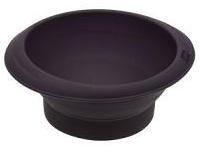
Silicone double boilerA double boiler can be a great tool in the kitchen, whether you buy a “real” one or use a stainless steel or glass mixing bowl set on top of a simmering pot of water. I do not recommend using a silicone double boiler, like the one pictured here.

Silicone is a great material for cooking utensils because it is heat resistant and flexible, so a spatula, for example, will work equally well for folding egg whites in a mixing bowl and for stirring a stir-fry. It also makes it a fantastic option for potholders and other heat-handing tools. This heat resistance, however, does not make it a good choice for actual cookware – including double boilers – because cookware counts on heat transfer from the stove-top to your food (this is also true of silicone bakeware). Silicone will transfer the heat, but it will do so much more slowly than other materials. This could be a benefit if you don’t want to stand over your double boiler and stir your tempered chocolate (or other mixture) while it cooks, but the whole process is going to take much longer than it otherwise would.

If you’re going to get a product like this, I would recommend keeping it as a mold for other foods (jello, dome-shaped cakes or summer puddings) and not for use as part of a double boiler. Stick with a traditional material to ensure that you get the best and most efficient results possible.

Visit Us On FacebookVisit Us On PinterestVisit Us On TwitterVisit Us On YoutubeCheck Our Feed