Archive for: blood orange

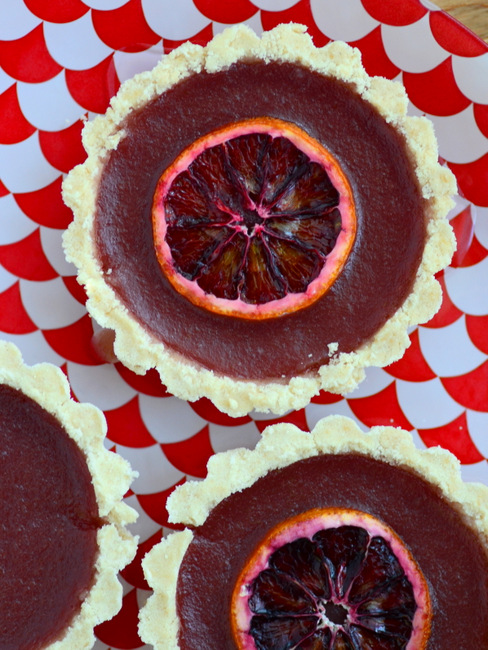
Blood Orange Tart

Blood Orange Tart
Blood oranges are definitely the jewels of the citrus world. Their red vibrant red color makes them a standout, and they’re known for being very sweet, with floral and berry notes that you don’t find in other citrus varieties. I often eat them plain, as their color gets lost in most recipes that call for oranges, but their flavor can be a great addition to many desserts.

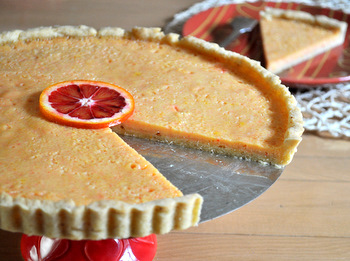
This Blood Orange Tart has a curd-like filling made with fresh blood orange juice and orange zest. The filling takes on a slightly pinkish orange hue from the blood oranges. It is creamy, with a bright orange flavor, and is a nice match for the shortbread-like tart dough. The filling is not very thick, which makes this tart seem quite light. Using a 9-inch tart pan will get you a slightly thicker layer of filling, which might take an extra minute or two in the oven to bake all the way through.

I made an Orange Almond Tart Dough for this recipe, adding some fresh orange zest to an almond-enriched tart dough. The dough is fairly sticky and it is very tender, so use flour generously when you roll this out on your work surface and have a bench scraper handy to make it easy to transfer to the tart pan. Fortunately, this dough also patches very, very easily so if it tears as you put it into the pan or isn’t quite even, you can simply break off another small portion of dough and press it into place. The baked crust is slightly crisp, buttery and very tender – so it is worth a little extra effort getting it into the pan.

Blood oranges can vary quite a bit in their color, from light orange with a few red streaks to a dark purple. No matter the color inside, any blood orange is going to give you good results in this recipe. The only difference will be some slight variation in the color of the curd. This tart can be made with other oranges (cara cara and naval oranges are good choices), too, if you can’t find blood oranges to work with. Regardless of the type of orange, be sure to use freshly squeezed juice for the best results.

Blood Orange Tart Slice

+Continue Reading

How to supreme an orange

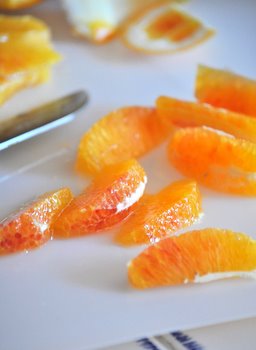
Orange segments
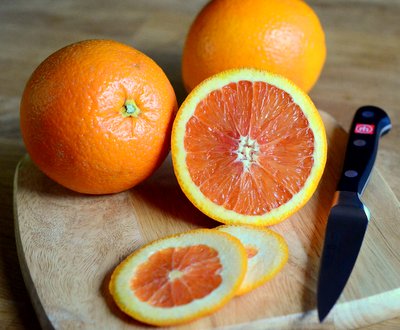
Orange slices make a delicious addition to salads, fruit compotes and even to baked goods, but the membrane that makes oranges easy to peel and section by hand can make a tough addition to any of these sweet dishes. Generally, the best way to prepare an orange to go into a dish is to supreme it. Supreming an orange, sometimes described as sectioning an orange, is when you cut an orange (or other citrus fruit) down to its most tender and jewel-like segments. It is easy to do and all you need to get started is a very sharp paring knife.

Start by removing about 1/2 inch from the top and bottom of your orange. You want to reveal the fruit beneath the peel and you don’t want to cut away too much of the fruit, so the exact size of your rounds will vary based on the size of your fruit.

Orange and knife
+Continue Reading

Blueberry and Blood Orange Crisps

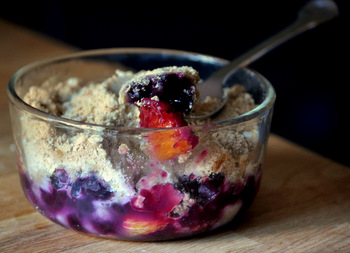
Blueberry Orange Crisp

Citrus is often used as a flavoring for desserts from scones to cakes, but pieces of orange and lemon don’t always make it into the finished product. Frankly, you wouldn’t want to have big pieces of orange or lemon floating around in all of your recipes, but they do deserve the chance to take more of a starring role once in a while. With ripe blood oranges on hand, I used them as one of the main ingredients in these Blueberry and Blood Orange Crisps.

The crisps are easy to make. They’re a mixture of blueberries and fresh blood orange segments – lightly sweetened – that is topped with a buttery oat crisp. I supremed the oranges, meaning that I sliced out each of the orange pieces and left the “skin” that holds them together behind (this is also frequently called segmenting). To do this, just cut the peel off of the orange and cut along the side of the membranes between orange segments with a sharp knife, removing the “meat” of the fuit. While you could simply chop the oranges, this leaves more tender pieces of fruit in the dessert. The finished crisps are have a wonderful bright berry flavor to them, and the blueberries and oranges are a good match. Blood oranges have a mellow orange flavor, so orange zest helps to bring it out. There is a great ratio of topping to filling (especially if you’re a fan of the topping!), too, and it is just crispy enough to add a good textural contrast to the sticky filling.

You could bake this in one big casserole dish, but I like the fact that you get a much better ratio of fruit to topping by putting these in individual ramekins. Don’t try to cram the crisps into too-small ramekins, as you won’t have as much room to pile on the topping if you do. You can use fresh or frozen berries for this recipe. If you opt for frozen, do not defrost them before adding them to the oranges. You can also use different kinds of berries, adding raspberries for a springtime dish and strawberries for a more summery variation. Similarly, if you don’t have blood oranges you can use small mandarins (even canned, drained)  or any other orange. Choose a sweet one, or consider adding an extra tablespoon or two of sugar to the filling to make up for any tartness.
+Continue Reading

Blood Orange Banana Cake

Most of the time, when I have overripe bananas, I make banana bread. Simple, tasty and versatile, it is one of my favorite baked goods. Somehow, this week, I decided to turn my overripe bananas into a cake. I know that it was the overabundance of oranges on the trees outside and my desire to use at least a few of them before the squirrels had the chance that made me add oranges to the cake.

Blood oranges are slightly less acidic than other oranges, much in the same way that a meyer lemon is less acidic than a regular lemon. They usually have a bright red interior – hence the name – though the amound of “blood” can vary significantly between varities. If you notice the pinkness of the glaze topping the cake, it is because instead of mixing milk with confectioners sugar to a pourable consistency, I substituted a few tablespoons of blood orange juice.

This cake mixes up quickly and bakes quickly. The flavor is very balanced between the sweet, zesty taste of the blood oranges – though any oranges will work – and the bananas. The cake is very moist and very soft. The crumb is not as tight or light as a non-banana cake, however it is not nearly as dense as a banana bread. It is really excellent for breakfast or a snack, but if you topped it with a citrus-spiked mascarpone frosting, this would make a really standout dessert.
I can only imagine the cupcakes!

+Continue Reading

Visit Us On FacebookVisit Us On PinterestVisit Us On TwitterVisit Us On YoutubeCheck Our Feed