Filed under Recipes, Breads - Yeast Breads, Holidays, Cakes by Nicole | 3 comments

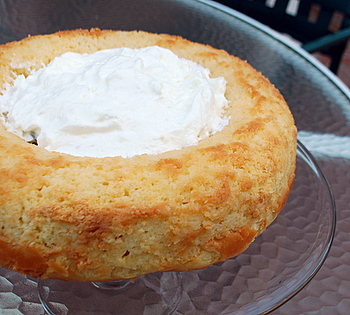
Savarin is a French cake named after Brillat-Savarin, the famous 18th century gastronome and writer. The cake is almost a bread and is leavened with yeast. In fact, it does have some similarities to brioche, though it is a bit less rich and much less time consuming to make. The yeast caked is not very sweet and primarily has a buttery flavor to it. After it has been baked, while it is still hot from the oven, a sugar syrup is poured over the cake to sweeten it and make it incredibly moist.
The sugar syrup usually includes some type of alcohol, often rum. Today, to celebrate the fact that it is New Year’s Eve, I opted to add some champagne to my sugar syrup. It doesn’t contribute any bubbles (now that would be in interesting cake!), but it adds a great flavor and makes the cake seem very festive and great for any special occasion.
I bookmarked a recipe for savarin a long time ago, and discovered that The Well-Seasoned Chef had had good results from the same one, so I started with that as my base. The finished cake is very unique and very unlike a butter cake. It has a light and tender crumb to it, but in the same way that that a bread would be light and airy, not in the same way that a yellow cake would be. Thanks to the syrup, the cake is very moist - almost juicy. The effect with each bite is almost the same thing that you get with really good french toast: it just melts in your mouth without the need for much chewing.
The cake’s flavor is buttery, not very sweet, and has a nice finish from the champagne. It is complemented well with whipped cream and fresh berries - and perhaps another glass of champagne!
(more…)
Filed under Foodies and Chefs, Baking by Nicole | 0 comments
- Although panettone is a traditional Christmas dessert and we’re a bit past it at the moment, that doesn’t mean that you have to wait until next Christmas to enjoy one. Andrea’s Recipes has a recipe for Slow Rise Panettone that can be enjoyed all year long. The bread is time consuming and takes about 24 hours to make. Fortunately, most of the time is inactive. The finished bread is cake-like and tender, high-rising and loaded with plump, juicy raisins that have been soaked in just a bit of rum.
- Coffee and Vanilla’s Chocolate Peanut Butter Triple Layer Cake with Pistachios and Hint of Orange. The cake is a tall, impressive looking layer cake that starts with chocolate cake rounds that have just a hint of orange to them. The cake is layered with peanut butter and cream cheese frosting, then covered with chopped pistachios. The green pistachios really make this cake look unusual and unique, but they serve to add some contrast to the very creamy and sweet frosting. This looks like a good candidate for a plain cream cheese frosting, too.
- Gingerbread should be dark and spicy, with lots of flavor. It should not just be a bread or cake that has a bit of ground ginger added to it. In fact, it should really be something like the Gramercy Tavern Gingerbread that Smitten Kitchen made recently. The bundt cake is “dark and sticky and chewy and heavy and spicy,” packed with molasses, dark beer, spices and brown sugar. It also tastes better the longer you keep it around and allow the flavors to develop.
- Galettes Bretonnes are simple, but distinctive, French cookies (from Brittany, actually) that are somewhere between a butter cookie and shortbread in flavor and texture. As Just Hungry points out, their defining characteristic is that they feature the salted butter that the area is famous for. The butter is flecked with fairly large pieces of sea salt, which contribute to this little cookie’s salty-sweet finish.
- A cute hand-sized meat pie - pastry filled with an almost stew-like meat mixture - makes a great snack or lunch any time (especially with ketchup or chili sauce as far as I’m concerned). The grown-up version of a meat pie is a Tourtièrre. Seriously Good’s version of this dish was baked for Christmas dinner - and was like an entire holiday meal baked into one pastry. The filling used beef, pork, potatoes, onions and lots of seasoning, as well as some beef broth and an egg to hold everything together inside the rich, tender pastry. Puff pasty or pie pastry can both work, but the texture of this crust will fall somewhere between the two.
- When I was a kid, I always went for either the old-fashioned cake donuts or the raised donuts that had been rolled in sugar. Raised donuts, when they’re at their best, have a very slightly crisp outside and an impossibly light, tender inside. Erin Cooks (along with her mom) made some Raised Doughnuts that look like they could complete head on with any donut shop’s recipe. They are light and fluffy, and the dough can be made either by hand or in a bread machine. A donut cutter will give you the best finished shape, but all you really need are two round cookie cutters to get the job done.
Filed under Food News, Sweet Stuff by Nicole | 1 comment

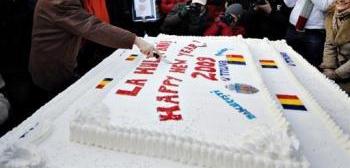
In Romania this week, a Guinness-approved record was set for the world’s heaviest cake. Normally, being “heavy” is not a real selling point for a cake. Cakes are expected to be light and tender. Even pound cakes, which are known for their tight, dense crumb, are still expected to on the light side. The one exception to this general rule is the fruit cake. These cakes are loaded with dried fruits, nuts and soaked in booze - usually rum or brandy - until they are moist, tender and very heavy. When they’re good, they’re good. When they’re bad… well, let’s just say that there is a reason fruitcakes are often depicted as brick-like objects.
The cake involved in the record was, of course, a fruit cake. It weighed in a 619-lbs and was generously decorated with whipped cream and more fruit. A huge crowd gathered to watch the ceremony and everyone was treated to a slice of the cake afterward. From the sound of it, despite the great weight of the huge cake, it was one of the good ones: sweet, boozy and rich-tasting.
In a fruitcake related side note, the competitive eating record for fruitcake is 4-lbs 14-oz eaten in 10 minutes. The record is held by Sonja Thomas, the most successful female competitive eater, and was set back in 2001.
Filed under Gear and Gadgets by Nicole | 14 comments
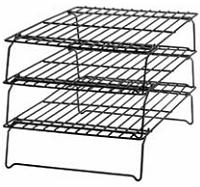
While it’s great to be able to spread out all over the kitchen when you’re cooking or baking, not all of us are lucky enough to have huge kitchens with enough counter space for every piece of equipment we have to use. Cooling racks, for instance, are usually flat and take up quite a bit of counter space that could be used for more bowls of cookie dough.
The best space saving solution (well, cheaper than moving or doing an extensive remodel) is a Three Tier Cooling Rack from Wilton. This multi-level cooling rack is actually made up of three stackable individual racks that can hold dozens of cooling cookies while taking up only a small piece of countertop real estate. The rack is made of metal with a nonstick coating and is very sturdy - in fact, if you have more than one set, you can make your cooling stack at least three levels higher without any problems. This last feature makes the rack especially handy if you do a lot of baking, or have a multi-tiered oven rack that allows you to have multiple courses cooking at a time. Each piece measures about 16×10-inches and leaves a 3-inch gap between each level. As an additional space saving bonus, it also folds up flat for storage.
The best thing about this cooling rack is that, while it can support an entire cookie sheet or cake pan on each level, you can also take your cookies from the baking sheet and let them cool directly on the rack. Some other tiered cooling racks only provide support for the baking sheets and do not have flat wire-covered surfaces to rest the cookies themselves on. This is handy because some cookie recipes call for cookies to be cooled on a wire rack themselves and not on the pans. Ultra delicate cookies and chewy cookies usually fall into this category, as they need to be away from heat.
Filed under Recipes, Cookies, Chocolate by Nicole | 20 comments

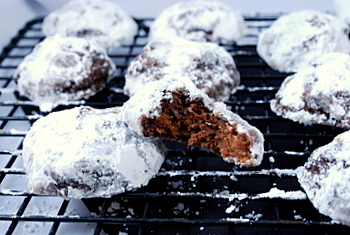
A few weeks ago, a friend shared a batch of Mrs Beasley’s Chocolate Truffle Cookies with me, saying that they were some of the best chocolate cookies she’d tasted in a long time. The cookies were excellent, although a bit messy to eat because of their heavy powdered sugar coating. They were very moist and almost melted in your mouth, and hand an intensely chocolate - but still sweet - taste. It was like eating a cross between fudge and cookie dough: rich, chocolaty and delicious. Of course, I had to try to make homemade version of these cookies.
I knew that I was looking for a rich cookie that was made with cocoa powder, because of the intense flavor and the lightness of the truffles. Melted chocolate can often make cookies a bit heavier and doesn’t necessarily give the intense flavor of cocoa powder. I started out with a recipe that sounded similar, but after making a test batch and discovering that they spread out more than the Mrs Beasleys cookies I was trying to replicate, I made a couple of changes to the way they were baked until I came pretty close.
My cookies still weren’t as huge as the Mrs Beasley’s cookies (although they were certainly a lot less expensive!), but they had a melt-in-your-mouth moistness and a very rich chocolate flavor to them. And, they were a little messy to make and eat thanks to the powdered sugar coating. They have a surprising amount of flour in the recipe for a cookie that tastes very similar to an actual chocolate truffle, but the flour is what helps the cookies keep their shape, along with the coating of cocoa powder that is added just before the cookies go into the oven.
I’m biased, of course, but I think that these were better and fresher than Mrs Beasley’s. And, unlike the purchased cookies, you can eat these while they’re warm and melty from the oven (pre powdered sugar) and that amazing experience is well worth the effort of baking them yourself. (more…)
Filed under Magazines & Cookbooks, Baking by Nicole | 0 comments
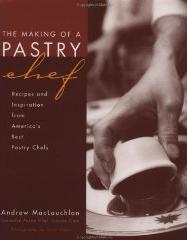
To be a pastry chef, you have to know how to bake - and it helps if you know how to cook, as well. But having the ability to turn out an excellent batch of cookies after following a recipe is not all that goes into being a pastry chef, just a good home cook can’t go from their own kitchen to a busy, 5-star restaurant kitchen without some prep. The Making of a Pastry Chef is a book that doesn’t detail every skill that you need to cut it in a pastry chef’s kitchen. Instead, this book covers everything else you could possibly want - and need - to know about being a pastry chef
The book starts off with a History of Sweets, starting with what desserts were eaten in ancient times and moving up, relatively quickly, to sweets in the present day to set the stage for the pastry business. From there, it really starts to talk about pastry chefs and what inspired them to get into the field, as well as what their training and other early career experiences consisted of. The rest of the book is dedicated to food - the traditions that still are strong in the field, the trends that are followed on a year-to-year basis, and guesses at what the future of the industry might involve. Throughout the text there are tips about skills pastry chefs need and use on a regular basis, such as how to design a menu or how to put together successful flavor combinations. Many famous pastry chefs were interviewed, so there are a lot of snippets of personal stories, as well as personal tips, throughout the book.
Now, although this book could certainly provide guidelines for someone wanting to enter the pastry field, it is also an excellent read for those who are interested in sweets and baking. It might even prove to be pretty insightful to those who prefer savory cooking. The recipes in the book - all from top pastry chefs - are all do-able for the home cook and range from simple to elegant enough for fine dining, and you’ll definitely get a sweet finish with any of them if you decide to give them a try after you finish the book.