

There are so many varieties of apples available in stores and at farmers markets these days, that it can be challenging to choose apples for baking. In the past, a baker might have reached for sweet-tart Granny Smith apples without a second thought, but there are many different kinds of apples that will work just as well, if not better, in baking pies, crisp and other apple desserts.
Texture and taste are the two most important qualities to consider in a baking apple, and the apple that you like best for everyday snacking might not hold up when put into a pie. Apples need to retain their shape and not turn into applesauce during baking. The best apples will be able to offer a little bit of resistance (keep a little hint of crunch) even after a long time in the oven. Baking apples should also not be too sweet, since most pie recipes call for a fair amount of sugar. The sugar serves as flavoring and helps thicken the juices of the apples as they cook, and cutting it down to compensate for super-sweet apples can sometimes change the outcome of the final pie.
Granny Smiths are always a decent choice for pie, as they are easy to find, will hold up during baking and can take a lot of extra flavor from sugar and spices. Jonathan, Jonagold and Pippin apples are other excellent sweet-tart choices. Gravenstein, Braeburn, Fuji and Pink Lady Apples are all crisp and sturdy, as well. Red Delicious and Golden Delicious, despite their promising names, are not good choices for baking, and neither are Gala and Cortland, since they tend to become mealy in pie fillings.
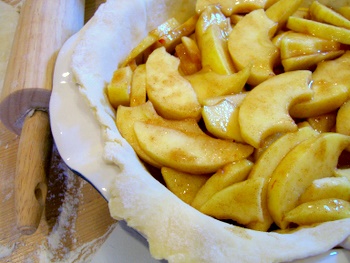
If the recommend apples aren’t available in your area, or if others not mentioned here are (this is the case in many apple-growing areas), try experimenting a little with different types of apples. One way to do this is to blend together several different kinds for a pie filling, giving your pie a mixture of textures and flavors – and covering up any apples that bake up less-than-perfectly.
I personally like to use a mix most of the time no matter what and, at the moment, my favorite is a blend of Granny Smith, Braeburn and/or Pink Lady. If you have a favorite blend, or if I missed your favorite type of baking apple (because there are so many to choose from), leave a note in the comments below!


Greg
October 19, 2013I think it is hard to decipher what kind of apples are best for apple pies since everyone has individual tastes. Apples that my family has been using for 40 + years are our favorites, even though articles say these choices are not good. They are: Cortland, Rome, and Granny Smith. This combination along with the cooking time creates an apple pie that is tasty, not crunchy, and not too soft. We also make the crust from scratch
Jayne M
October 23, 2013My dad always raved about Winesap Apples making the best pies and cakes, what’s your thought?
Meda B.
October 24, 2013I live in Windsor Ontario and I find the best apples a royal gala for baking everyone says no but they are the best for me and my family everyone raves about my apple pie!
Judy H.
November 18, 2013Northern Spy is the best, but having moved to an area of the country where these are not available, I was forced to find an alternative. On the advice of a kindly produce manager I tried Pacific Rose apples and fell in love. I find the texture and sweetness almost identical to the Spy. They still are of limited availability but I can generally request them when needed.
Elaine G
January 5, 2014I follow my mothers recipe. I use 7 MacIntosh and 8 Northern Spy. The mixture of sweet and tart apples are great and makes a well balanced pie. You can find the recipe at tastebook. Deep dish apple pie. Actually as weet apple and a tart apple balance each other out.
Susan
January 7, 2014I like the combination of Fuji’s, Granny’s and Empires, usually 2 of each!
Cecil Sayre
January 25, 2014In my book, the 20 ounce apple makes the best pie, and I’ve eaten a lot of Apple Pies.😃
Lorraine Bomphray
March 17, 2014how about using spartan apples, but I can’t find them in the store, perhaps certain stores will sell them
Amy
July 2, 2014Honeycrisps are my favorite! But they are really only available in the fall. 🙁
Luli
August 29, 2014I tend to go for either granny smith, pink lady or rome apples! I casually tried rome apples because someone made a crumble with them and they are SO sweet and tasty and don’t lose their shape. It’s a nice option if you don’t like tart or acid apples.
Vicki
September 9, 2014I know that a lot of people prefer to use a firm apple for baking pies, but I do not. My favorite apple for pies if I’m choosing just one apple, is the Macintosh. I do not care if you see the slices when you serve the pie. I have never had a Macintosh turn to applesauce but it is soft & that is the way we & many others like their pies. I have won several apple pie contests & had people ask which apple I used and they were shocked because they had always used Granny Smith’s. Just sayin’ different tastes for different people.
Martin Keeley
October 7, 2014Rome apples have always been my favorite baking apple, they have an excellent flavor and stands up well to baking.
noe goldhaber
October 14, 2014We are reading Joy of Cooking doesn’t want us to use Granny Smiths but wants us to use Golden Delicious. We went picking this weekend and got a assortment. I guess we will try whatevers in the bag. This website is very helpful and gave us plenty of great ideas. I am sure we will enjoy are pie.
christine
October 15, 2014The best apples to make a pie are absolutely, positively, most definitely Gravensteins… they are only available in Northern California.. if that fails, you can always listen to grandma when she says, Spy’s for Pies.. but mix with a honey crisp and Jonathan.
Carol Threatt
October 26, 2014The best apples for baking anything and everything under the sun are “Gravensteinsâ€. They are ready usually around mid-August in the Northeast and are difficult to find. Grocery stores rarely have any but check with your local orchids. They are a tart,tasty apple, worth hunting for. They have been around for decades and my Grandmother won many pie contests long ago. She always used Gravenstein apples.
Linda
March 1, 2015HANDS DOWN BEST~Granny Smith! Making pies for 53 years now! 😜you can usually find them if you’re willing to pay the price! Tart + sweetened with sugar for balance!! Ummm ummm good!
marge moore
September 23, 2015I read all of these comments, trying to get a handle on the Fuji,, I bought a bag, for apple pie, but thought there was no name on them? They looked so good! THEY ARE FUJI!!
But, I feel they will not do for a good apple pie?? Too sweet?? Help?
Nicole
September 23, 2015Marge – I like fujis for baking because they have a great texture. If you are worried that they will be too sweet, toss the apples in lemon juice before baking to add a little extra acidity. That said, I have baked with them many times and you shouldn’t have any problems using them exactly as-is.
Eileen
October 22, 2015I have always used Cortland Apples for Apple pie and I always received compliments and “what kind of apples did you use?” Also made them at the request of family and friends. Using only Cortland apples.
Katie
October 23, 2015I like to use a mix of haralson and regent apples!
Penny
October 28, 2015Have always used MacIntosh apples. For 50+ years. Everyone says they have never tasted a better pie! But then I also use a fabulous crust recipe that I have never seen on the Internet!
Lois
March 9, 2016Penny, thank you for your 50 years of wisdom. Can you share your fantastic pie crust recipe?
Angela
October 13, 2016I came here because I have a choice between Regent and Macintosh…. Anyone willing to share there pie recipe that uses these apples??
Oh and anyone have a good pie crust… I bought one and I know it’s not going to be the best…I can’t seem to make them very well.
Marjie
November 22, 2016Angela, for a perfect and easy pie crust try the following:
3 cups flour
1 1/2 cups Crisco shortening
3/4 cup ice water OR substitute any part of the water with vodka (I use 1/2 cup vodka and 1/4 cup ice water, but any proportion works well). The alcohol burns off but it makes the crust light and flakey.
Mix with a pastry blender (or two knives, if you don’t have one) flour and shortening until mixture resembles peas. Do not over mix! Add the water/alcohol slowly, continuing to mix. You may not need all the water, or the dough may become too sticky. Divide the dough into two parts. Flatten into a large patty and wrap it in Saran Wrap. Refrigerate for 1/2 hour or up to two days. Yields two crusts. Easy! Enjoy!
Dave
November 1, 2017Braeburn, Jonagold, Fuji, Pink Lady, Jonathan. All good!