
Archive for: whole wheat

Whole wheat flours can not only add fiber to baked goods, they can add a lot of flavor to them, too. But as is the case with so many ingredients, not all whole wheat flours are created equal. Flours range in flavor and in texture, and using different brands can even impact the results you get when you bake with them. Cook’s Illustrated recently did a taste test of whole wheat flours to see which brands were standouts in their test kitchens.
The five brands that Cook’s Illustrated tested in a recent issue were King Arthur Premium Whole Wheat Flour, Bob’s Red Mill Organic Whole Wheat Flour, Hodgson Mill Old Fashioned Whole Wheat Flour, Gold Medal Whole Wheat Flour and Pillsbury Best Whole Wheat Flour. All were tested in whole wheat sandwich bread and in pancakes. King Arthur and Bob’s Red Mill came out on top, both praised for their great whole wheat flavors. Hodgson Mill’s flour had a strong flavor, but a very coarse grind that led to some overly crumbly sandwich bread. Gold Medal and Pillsbury had the finest textures and the most subtle flavors to their whole wheat flours. These last three flour brands all received the “Recommended with Reservations” rating from CI.
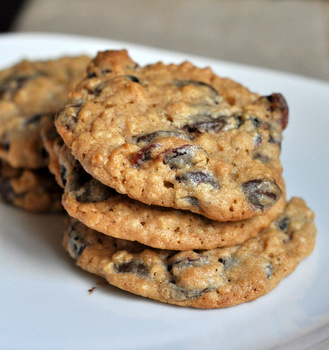
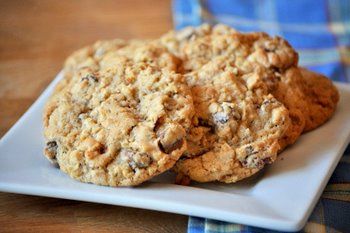
When you choose a whole wheat flour, take into account the flavor and the performance of the product. Tthis might mean that you try a couple of brands on your own at home. Personally, sometimes like a rustic feel for whole wheat baked goods and sometimes I prefer a finer, more subtle presence. I would opt for Pillsbury or Gold Medal for baking bread if I wanted to have a texture that is similar to non-whole wheat bread (finer grinds of the whole wheat generally mean that there will be a bit more gluten in these flours) and a coarse flour for some hearty whole wheat chocolate chip cookies (a coarse Hodgson Mill would be my pick there).

You don’t need a popover pan to make popovers. A muffin tin will work perfectly well, even though you will only need to use 6 of the muffin. The only real reason to have a popover pan is that it gives you a good incentive to make popovers more often. I know this to be true because I got one not too long ago and have been making popovers far more often than I normally do. The light, crispy-on-the-outside-soft-on-the-inside puffs are easy to make and are a great accompaniment at just about any meal, whether it’s soaking up gravy at dinner or being slathered with jam at breakfast.
My basic popover recipe is reliable and produces a light, tender puff. I recently set to work on creating a whole wheat popover for some variety. Whole wheat flour doesn’t take to popovers as well as all purpose flour does. It has less gluten in it and is heavier, so the popovers tend to not rise as high and be far more bread-like than regular popovers. The best way I’ve found to incorporate whole wheat flour is actually to use white whole wheat (it’s lighter than regular whole wheat) and mix in some all purpose flour to restore a little bit of the lacking lightness.
The remade popovers are more substantial than their entirely all purpose counterparts, but still have a crispy outer edge and a soft, moist interior. In every batch, I had one stubborn popover that would not develop the big hole in the center that is a popover signature even though the others always turned out just fine. If this happens to you, don’t worry about it. The popover will still be tasty, just a little more filling than the others in the batch.
+Continue Reading

Generally speaking, you get the best breads when you work with bread flour, especially if you want to create “rustic” type breads that have an open crumb with lots of large air pockets. The challenge comes when you want to use other types of flour to make a loaf of bread. We may want to live off white bread alone, but whole grain breads can be a nice change from time to time, too!
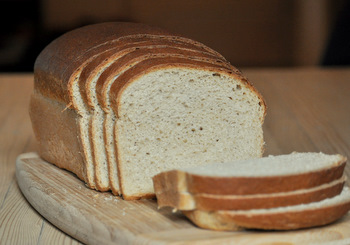
For this loaf, I used some whole wheat flour and some barley flour, but still made up most of the dough with bread flour to give the loaf the consistency and texture that I wanted. Even though the whole wheat and the barley flour make up less than half of the total flour in the dough, the loaf has an attractive “whole grain” look and feel to it. Because whole wheat flour is lower in protein than bread flour, my dough would have lost some elasticity if I used it for the bulk of the bread. The same goes for barley flour. Worst case scenario, the bread would have ended up being crumbly (it didn’t, fortunately!). The crumb is not tight, but isn’t wide open, either, and the bread is both moist and chewy inside.
I should also mention that this loaf has an excellent flavor, a little bit nutty and very slightly sweet. The whole wheat and barley flours are big contributors to this, as is the long, overnight rise for the sponge. If you don’t have barley flour, you can use other non-wheat flours as a substitute. Rye flour would work well, and so would oat flour. You could even simply use more whole wheat flour in the recipe.
+Continue Reading

It’s hard to resist a hot soft pretzel, fresh from the oven and smelling of yeast, salt and – depending on how indulgent you’re feeling – butter. Soft pretzels are a staple of mall food courts, sports stadiums and theme parks, but are far less commonly seen at home. Fortunately, they’re quite easy to make and definitely worth the effort.
My plain soft pretzels are a favorite snack of mine, but today I decided to mix things up by making a whole wheat variation. They use 100% whole wheat flour, which would normally give bread a a slightly coarser, slightly breadier texture than something made with refined wheat flour, but I added vital wheat gluten (available at most natural/specialty food stores) to the dough to increase its elasticity and help the finished pretzels to retain the chewiness that makes them so tasty. It’s worth tracking it down to make these pretzels because it helps define them as a pretzel, rather than as pretzel-shaped bread. It’s also a great ingredient to have on hand if you do a lot of whole grain baking.
The photo above is of the unbaked pretzels, while the one below, accompanying the recipe, is of the finished product. You can see how much the dough rises in the oven during the final baking. The thinner you roll out the dough for the pretzels, the skinnier and chewier the finished pretzels will be. If you do decide to aim for thin pretzels, keep an eye on the baking time, just to be on the safe side.
+Continue Reading

It has been a while since I have posted a yeast bread recipe. This isn’t because I haven’t been baking them, however. I have simply been sticking to old favorites for a while, like Sourdough and Country White Bread, and have been working on a new baguette recipe that I really like (not ready for prime time yet, sorry!). What this all boils down to is that I have been in a bit of a rut and was finally kicked out of it by a box of cinnamon raisin granola. The granola was so good that after running through a box of it for breakfast (and snacks), I decided that I needed to make some cinnamon raising bread for toasting in the morning as a replacement.
Cinnamon and raisins obviously played a role in the bread, and I went for a fairly plain loaf, rather than doing the slightly more traditional cinnamon spiral. Since granola is a whole-grain product, I also decided to go with whole wheat in my bread. I used both whole wheat flour and white whole wheat flour, as I wanted to maximize the amount of whole grain in the bread but didn’t want the texture to be too coarse, which can be a fault of whole wheat-only breads. I used honey, instead of regular sugar, to add some sweetness to the bread, and I used both buttermilk and butter to ensure that the finished loaf had a hint of a buttery taste to it. The buttery taste is a good feature in bread meant for toasting.
All in all, the bread turned out to be very satisfying. It wasn’t too heavy or dense because I gave the bread a long time to rise a develop small air pockets as the yeast did its thing. The final loaf also had the tenderness that the relatively low gluten (lower than regular flour, anyway) whole wheat flour provides. The cinnamon was mild in the untoasted bread, but came out beautifully in the finished product. I wish now that I would have tried a few slices of french toast with the loaf, but the call of the toaster was just too tempting and just about every single slice ended up there.
Butter, jam and peanut butter (not necessarily together) are my top three toppers for toast made with this bread, but use whatever strikes your fancy. But be sure to toast it. It’s well worth it!
+Continue Reading