Breads can be baked in rectangular pans, shaped into round boules, divided into dinner rolls or braided into long, elegant loaves. Often, shaping the bread is one thing that intimidates people and keeps them from baking bread in their own kitchens. Working bread dough with your hands is one of the most fun parts of breadmaking, even if it can get a little bit messy from time to time, but it’s not difficult to see that tools to help streamline the breadmaking process are just going to make baking bread at home more accessible to more people.
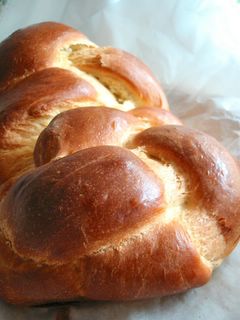
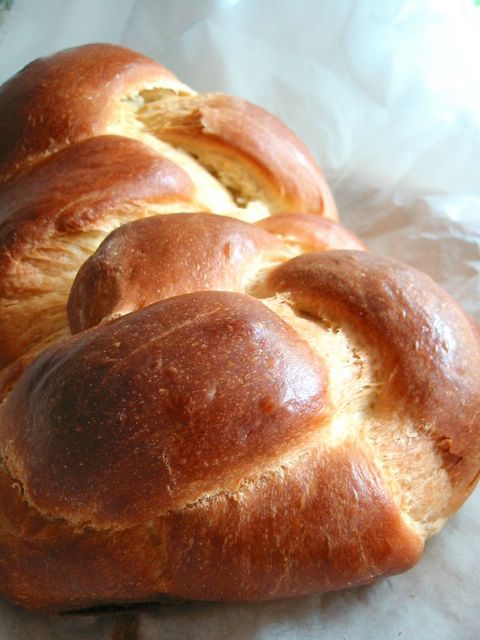
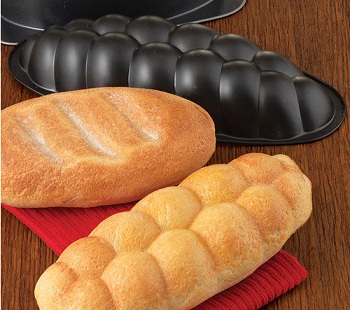
One of the more interesting breadmaking tools I’ve seen lately is this Kaiser Bakeware Braided Bread Mold. The commercial-quality nonstick pan bakes a 1 1/2 pound loaf of bread that looks like it has been braided, so all you have to do after proofing your bread is to let it rise in the pan and you get a lovely looking finished loaf. Just about any type of bread can be baked in this form, from soft challah breads to crustier loaves. The pan browns evenly and takes all the worry over getting that braid “just right” out of your bread baking – a relief to more than a few home bakers who I know worry about the look and shape of their loaves – though you won’t quite get the same handmade look from this perfectly shaped pan.
If you do want to braid your own down, here is a handy tutorial that will walk you through making 3, 4 and 5-strand braids for challah or other bread doughs.

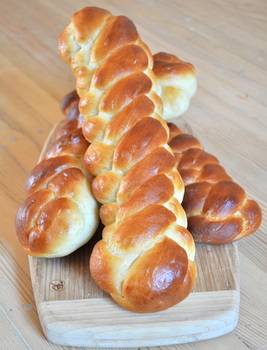
Challah bread is typically braided, whether you are making one that is plain or one that is packed full of raisins. You can treat the dough like any other bread and put it in a loaf and or simply shape it into a round, but the dough is very easy to handle and the finished braids are so beautiful that it is worth putting in the time to do it right.
The first step is to prepare your dough and let it rise until it has doubled in size. Use a recipe for plain challah or raisin challah. Turn out your dough onto a lightly floured surface and gently deflate it, flattening it into a square or rectangle. Divide the dough – using a bench scraper, a knife or a pizza cutter – into evenly sized pieces, one for each strand you’d like your braid to have.

+Continue Reading

I used to go to a bakery that, amongst other things, specialized in baking challah. Challah is a rich egg bread that is made with oil and without butter or milk. It has a similar texture to brioche, very soft verging on flakey, and a very rich texture. Traditionally, the bread is eaten by Jewish people around the sabbath and on holidays and loaves are shaped in braids. Tradition aside, this is a fantastic bread all year round. It is moist, soft and fantastic for making sandwiches, french toast, bread pudding and all kinds of good things. It is also outstanding on its own.
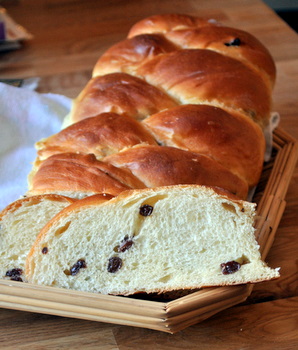
Most challah loaves are plain, but sometimes they will have raisins or chocolate chips added in to make them a little bit sweeter and give them a dessert feel. After frequenting a bakery that made a great raisin challah as a kid, I am a big fan of challah with raisins and decided to make a few loaves this year for friends celebrating the Jewish high holidays. And, of course, I made a loaf for me to keep and eat.
The bread comes together easily and can be mixed by hand or with a dough hook in a stand mixer. The dough should be slightly sticky, so I’d recommend working with a mixer if you have one. Once your dough i made and has risen well, you can divide it down into three sections and braid them together. The braided dough will proof again before being baked, and the loaf will look fantastic when it is finished. This recipe makes a fairly large loaf, but it keeps very well for snacking, sandwiches and other uses when stored at room temperature for a couple of days.

+Continue Reading

Ah, bread! The class I’ve been looking forward to all session! True – I have been looking forward to all the classes, but I am always looking to improve my bread baking skills.
We started off by talking about yeast. Freeze dried yeast and cake yeast are the two types of yeast most commonly available to home bakers. Cake yeast is preferred by bakers because it is much easier to weigh it out when they’re scaling recipes. If you work at a specialty bakery, or bake a lot of bread, you are probably familiar with the third yeast type: wild/organic yeast. Wild yeast is a rather stupid beast and, though it’s sort of a pain to feed it all the time, you will only need water, sugar and flour to catch some. You also need a relatively warm – above 50F – climate, or all the wild yeast will be hibernating. You cannot catch yeast outside in winter in New York. If you’re interested in natural starters, Adam has an extensive set of posts about it, so I won’t go into that right now. Let’s just say that your best bet, in terms of freshness and shelflife (since it’ll last almost forever) is freeze dried yeast. To discern a flavor difference between two otherwise perfectly made loves of bread, one with cake yeast and one with dried, you would have to be a real expert.
Since we had to make three loaves of bread during class, we used active dry yeast for all our recipes. For once, we appreciated how hot is gets in the kitchen because our bread proofed quickly! We made a rustic country loaf, that required a sponge, an olive-rosemary loaf, which I froze to bake at a later date, and challah.
This challah recipe is our instructor’s favorite. It has oil, eggs and sugar without going over the top into brioche-level richness. I had never made challah before and found it to be a very easy dough to work with. A woman who was auditing our class for the day told me that she is currently working as a private chef for a Jewish family and that her challah secret is to sprinkle the baking sheet with cinnamon before you place the braided loaf on it. This gives the challah a particularly wonderful aroma without making it taste like cinnamon. Be sure to grease the baking sheet well if you’re using the cinnamon trick, as it will cause the loaf to stick slightly.
+Continue Reading