Filed under Recipes, Breads - Yeast Breads by Nicole | 7 comments

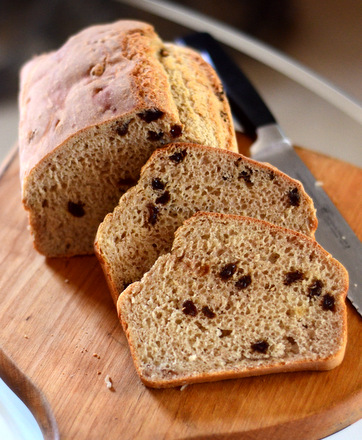
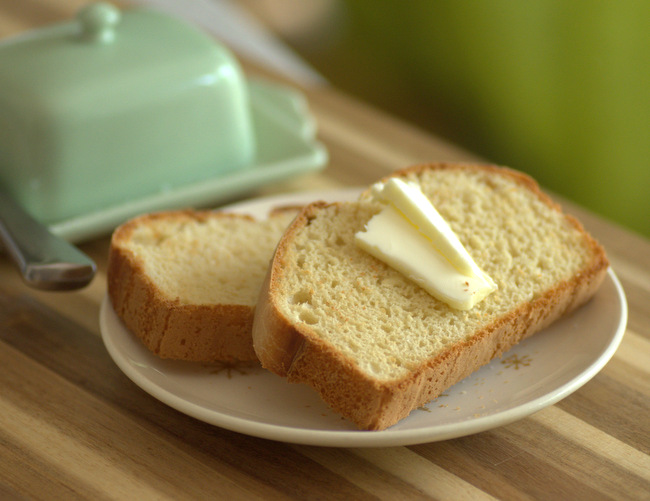
A slice of toast is always a great complement to breakfast foods, especially egg dishes, whether I’m eating at home or out at a diner. Whole wheat and sourdough make great toast, but I would have to say that cinnamon raisin bread makes better toast still. Most cinnamon raisin bread - including this homemade cinnamon raisin bread - has a buttery, sweet flavor to it to begin with and is just dense enough to soak up a lot of butter when you slather it onto a freshly toasted slice. It’s a small indulgence, but a good one.
Homemade cinnamon raisin bread is a great thing to make because you not only get to enjoy the taste of a freshly toasted slice, but you get to smell the bread while it bakes. The bread is easy to make and bakes in a loaf pan. You can do the initial kneading in a stand mixer with a dough hook attached if you don’t want to do it by hand, but you will need to clear some counter space to form the loaf by hand before its final rise. The dough is rolled out and spread with a brown sugar and butter mixture before being rolled back up into that final loaf. It’s a thin layer that only makes a small swirl in the finished loaf (it’s easy to see in person, however), but it does add a lot of flavor. I like to incorporate the cinnamon and the raisins into the bread dough, rather than trying to stick them only into the brown sugar swirl in the loaf so that they are well-distributed.
This loaf will keep well for a couple of days if you store it in an airtight container, or well-wrapped with plastic wrap on the kitchen counter. It is best to wait until it has cooled completely before slicing, but is easy to slice and makes a delicious piece of toast.
(more…)
Filed under Recipes, Breads - Yeast Breads by Nicole | 13 comments

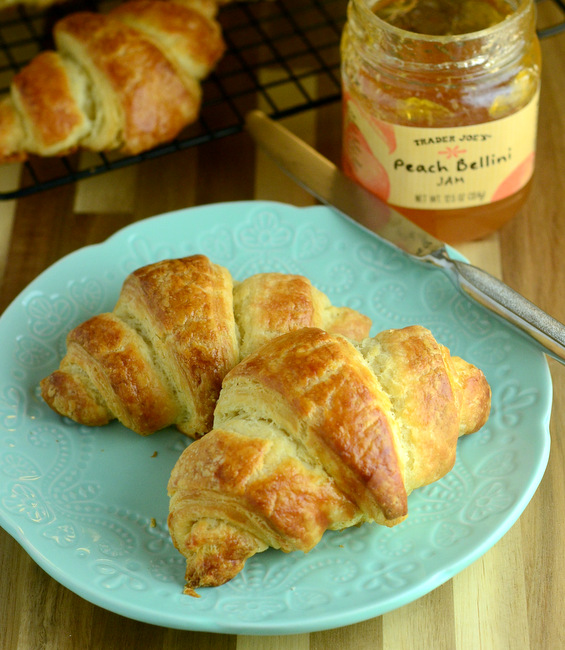
There is no doubt that the cans of refrigerated crescent roll dough that you can buy in the market are tasty, but it’s always nice to be able to take the option of a homemade version. Happily, I can say that it is not difficult to bake up a batch of homemade crescent rolls from scratch, even on a busy weeknight. They’re not quite as quick as the premade biscuits, but they are certainly very quick for a yeast bread dinner roll recipe.
The packaged crescent rolls are quite like little croissants, light in texture and buttery. This version, a variation of a Red Star Yeast recipe, has the same look, but has a slightly different feel to the dough. They’re soft and buttery, but have a texture that is more like a fluffy dinner roll than a flaky croissant. They’re easy to split and spread with butter or jam, and are great for soaking up things like cranberry sauce and turkey gravy during Thanksgiving dinner. They will also keep well for a day or two, so you can make them a day in advance and store them in an airtight container, reheating them before serving, the next day.
Shaping the rolls is much easier than you might think. All you need to do is roll out the dough into a big circle so that it resembles an untopped pizza. Then, using a pizza cutter, divide up the dough into 12 pizza slices. Starting with the “crust” edge, roll each slice of pizza towards the center to form the rolls, then curve them slightly when you lay them on the baking sheet. I brush the rolls with melted butter for a little extra buttery flavor, but you could also brush them with a lightly beaten egg for a little shine.
(more…)
Filed under Recipes, Breads - Yeast Breads by Nicole | 45 comments

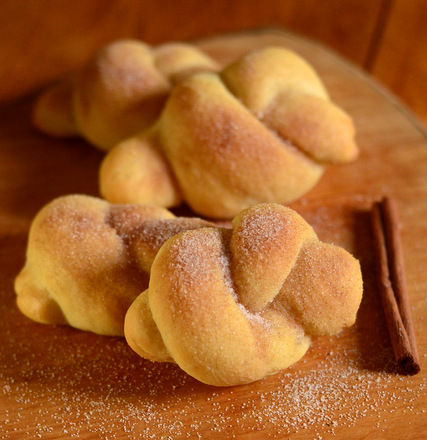
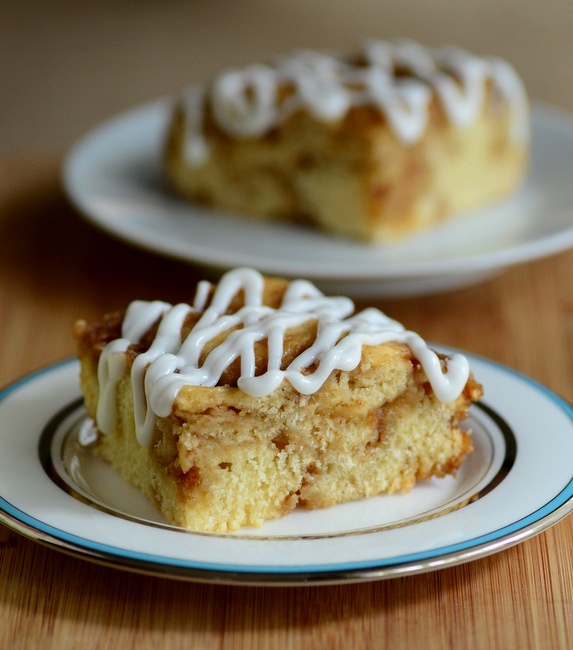
Cinnamon rolls aren’t the healthiest breakfast treat - but that’s probably why they’re considered to be a breakfast treat in the first place and not a breakfast staple. But homemade cinnamon rolls give you a little more control over what goes into your treats and you can do things like make them with a little bit less butter or, like these rolls, with some whole grain flour instead of all white flour. It’s not a huge change, but it can help cinnamon rolls work their way into the breakfast rotation a little more often.
A great substitution for all purpose flour in yeast breads is white whole wheat flour, as it has lots of whole grains but is close to the look and feel of all purpose flour. Regular whole wheat flour can make breads a little bit dense and, since it has less gluten in it than all purpose, breads can be a little bit crumbly. This isn’t really the case with the white whole wheat, which falls somewhere between the two extremes. The rolls aren’t too heavy, but are tender and soft, with a subtle nutty, whole grain flavor to them.
The dough was great, very easy to work with. It requires a slightly long first rise, then is rolled out and filled with butter, cinnamon and sugar. The dough is rolled up into a log, sliced into individual rolls and place in a baking dish. Once you reach this point, the dough can either be refrigerated overnight (my preference, so I can have the rolls in the morning) or let them rise and bake right away. I top mine with a simple glaze made with confectioners’ sugar, milk and vanilla extract. It adds just the right amount of sweetness without making the rolls too gooey or hard to handle. (more…)
Filed under Recipes, Breads - Yeast Breads by Nicole | 6 comments

It’s been pretty hot lately, so I haven’t been in much of a bread baking mood. But I recently made up a huge batch of gazpacho and it’s just not the same if you don’t have some good bread to go alongside a good soup - whether it is a hot soup or a cold one. So, I looked into my pantry and started to put together a couple of nice, hearty loaves of Honey and Flaxseed Bread.
This bread is a little bit sweet and a little bit nutty, with a nice whole grain flavor to it. I attribute its whole grain heartiness to the combination of flaxseeds and whole wheat flour in the dough, although the bread is moister and less crumbly than a completely whole grain bread might be because I included some all purpose flour to try and keep prevent it from getting too heavy. Honey really speeds up browning when it comes to baked goods, so this bread will develop a fairly thick, dark crust as it bakes. If your crust starts to get too dark (i.e. if it starts to burn in spots), simply tent a piece of aluminum foil loosely over the loaf and let it continue to bake.
The recipe given below makes one medium-sized loaf. It doubles very well if you’re going to want more than one, and all the instructions are exactly the same as given, though the risen dough should be shaped into two loaves before baking. I prefer to have the option to make just one loaf at a time unless I know I’m going to be baking for a crowd, so I’m leaving the recipe as written for a single loaf of bread.
(more…)
Filed under Recipes, Breakfasts, Breads - Yeast Breads by Nicole | 19 comments

English muffins don’t come in with too many flavor options beyond plain and sourdough, although whole wheat do seem to pop up more and more often these days. The one real flavor that english muffins come in is cinnamon raisin - and it’s a good one. When the spicy muffins toast up, the cinnamon scent and flavor is released from the bread and the raisins become hot and sweet. They’re not as versatile as the go-with-anything plain variety of english muffin, but when they’re spread with butter, cinnamon raisin is a fantastic breakfast treat.
These are very easy to make at home. The english muffin dough is a no-knead batter that is mixed up and allowed to rise for just a short period of time. Once it has risen, the dough is dropped in big spoonfuls and cooked on a skillet or griddle. This allows both the top and the bottom of the muffin to take on a golden color, while the center cooks through and still remains chewy and soft, the perfect texture for toasting.
This recipe calls for nonfat milk because it tends to produce slightly holier muffins. The higher the fat content in the english muffin, the tighter the crumb. Low fat milk works pretty well, but if you compared a whole milk muffin and a nonfat muffin, you’d notice a difference. All that said, both will taste good. If you want to experiment a little, try using other dried fruits in place of the raisins, like currants, cranberries or blueberries.
(more…)
Filed under Recipes, Breads - Yeast Breads by Nicole | 8 comments

Bread baking is perceived as being a very time-consuming and tricky process, with yeast, flour, proofing and shaping to contend with. This is why the concept of low-maintenance “no-knead” bread is so appealing. I tend to think that bread making only seems time consuming because of the long rises, not the few minutes of kneading dough, but I’m always up for a recipe that is easy and produces a great-tasting result and “no-knead” bread fits that bill perfectly.
To make no-knead bread, you basically only need to mix up the dough, give it a long, slow rise, and bake it without any kneading or shaping necessary. The long slow rise allows both gluten and flavor to develop, so that you end up with a bread that tastes good and also rises up well. The dough can be wetter than a dough that needs to be handled, which means that you’re also able to get a loaf that has a thick, crunchy crust and a moist, chewy interior. No-knead breads are usually baked in some sort of lidded pot or dutch oven (and are sometimes called “Pot Bread” as a result). This enclosed space helps the crust to develop and shapes the bread so you don’t have to.
This loaf is based on a Nancy Baggett recipe and is definitely as easy as promised. It had a great flavor, with a nice butteriness and a very subtle tang from the long first rise. It also had a wonderfully chewy interior and an excellent crust. My bread rose well and had a nice, open texture. You can substitute bread flour for the all purpose in this recipe, but you will still get very good results with the all purpose (all purpose is what I buy in bulk - and what most people keep in their kitchens - so it is definitely a little more convenient).
The shape of your bread will vary slightly depending on the size pot you use to bake it in. I used my Dutch oven, but if you don’t have a suitable pot already, you might want to check out Nancy’s advice on picking a good one for bread baking.

(more…)