Archive for: vs

Meyer lemons vs regular lemons

During citrus season, you start to see all kinds of recipes that call for oranges, lemons, limes and even grapefruits. You also start to notice that recipes call for specific types of citrus, such as blood oranges, key limes and Meyer lemons. Meyer lemons, a sweet hybrid lemon, are still relatively new to the kitchen scene when compared to some of these other fruits (key limes are probably the best example). Whether you happen to have a surplus of Meyer lemons or just of Meyer lemon recipes, you’ve probably wondered whether you can substitute regular lemons for Meyer, and vice versa, when cooking.

The good news is that you can always make a 1:1 substitution of the juice and zest of various lemons, whether you’re talking about Meyer lemons or otherwise. You should keep in mind that it isn’t the consistency of the lemons that varies when changing types of lemon, but the flavor. Meyer lemons are sweeter and much less acidic tasting than regular lemons. This means that they have a good lemon flavor, but lack the “bite” of a regular lemon. Meyer lemon juice is still quite acidic, even if it doesn’t taste that way, so you can expect recipes to turn out then exact same way when it comes to how the lemon juice interacts with other ingredients, such as curdling milk into buttermilk.

In a glass of lemonade, you’ll need less sugar when you use Meyer lemons. In a cake that calls for regular lemons, you may be able to reduce the sugar slightly if you substitute with Meyer lemons, since many lemon recipes include extra sugar to account for the tartness of the lemons. That said, read the descriptions of the recipes carefully, since some highlight that same tartness by not adding extra sugar, so there may be no need to cut down the amount included.

Sweetened vs Unsweetened Coconut in baking

I am a big fan of coconut and try to use it in recipes whenever I can. Coconut milk and coconut cream are great, but really I like the taste and texture of shredded coconut and that is generally the type of coconut that I – and probably most of you bakers our there – use most. The most commonly found in grocery stores in my area and in most of the US is sweetened shredded coconut, but unsweetened shredded  coconut is also easily available and I often get asked which is better for baking for use in a certain recipe or if the two can be substituted for one another.The simple answer is that the two are pretty much identical in how they behave in recipes, mixing in easily and adding a nice, chewy texture. You can use these two types of coconut interchangeably in a recipe and get good results. That said, if a specific type is called for in a recipe, I would try to stick with it because the two coconuts taste a bit different and will give you a different result. If no specific type is called for, you can use what you have on hand or whichever type you prefer.

The sweetened coconut has sugar added to it before drying, so it tends to be a bit sweeter and more moist from the outset. The sugar actually helps to bring out the flavor of the coconut, but since most baked goods will have sugar in them anyway, this isn’t necessary to ensure a good finished result and unsweetened will still perform well. There is a small chance that sweetened might be slightly too sweet in a recipe that calls for unsweetened, but the sweetened coconut is not so sweet on its own that it should really throw off a recipe in that way.

Whole vs freshly ground nutmeg

Whole nutmeg in jarWhen I write a recipe that includes nutmeg, I try to specify that it should be freshly ground nutmeg. I notice that more and more recipes are written this way, where years ago most just said simply “nutmeg.” This is because nutmeg has a delicate, spicy flavor that starts to dissipate shortly after being ground and you really can get a lot more flavor out of a much smaller amount than you would with preground. There is no exact standard of conversion between fresh and preground, but to give you an idea, you might only need 1/4 tsp of freshly ground nutmeg where you might need a whole teaspoon of preground – and you’ll probably get more flavor from that 1/4-tsp.

Whole nutmeg seeds, which are the dried seeds of a nutmeg tree, are sold in most grocery and specialty baking stores. One jar will last you a long time, and the whole nutmegs will retain their flavor during storage. To grate or grind it yourself, you can either use a nutmeg grinder or a microplane. If only a small amount of nutmeg is called for in a recipe, a few grinds should be enough to impart some nutmeg flavor. If you must use preground nutmeg, try to replace your jar frequently so that the nutmeg has as much flavor as possible when you go to use it.

Food coloring gel vs non-gel

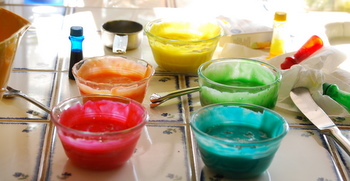
Food coloring bowls

Most supermarkets carry one basic type of food coloring, a water-based liquid that comes in red, blue, green and yellow. This type of food coloring works pretty well for most purposes. You can dye Easter eggs with it, get creative with cake batter colors and even add it to drinks to make things like plain milk a little more “interesting” (which I did as a kid). But when you are aiming for a really intense, vibrant color – such as the signature red of Red Velvet cake – food coloring can cause a lot of frustration because you need to add a lot of it to get that much color. This isn’t a problem for most recipes, as a tablespoon or so of what is basically water isn’t going to hugely impact the outcome. But for some recipes, it can negatively impact the recipe (with too much liquid/throwing off the consistency) as well as give you a headache as you try to figure out how much to add.

I like to use gel food colorings for this very reason. These food colorings, also sometimes called icing colors, usually have a corn syrup and/or glycerine base and a much, much more intense color than regular food colorings. You don’t have to use nearly as much coloring – sometimes only a few drops – to get the same color effect (or better) as you would with several times as much regular food coloring. Less liquid means that these colorings will work better in candies and frostings, where the amount of liquid in the final recipe can be quite important. Since you use less, I find that these last longer than other colorings, too. You can find them online and at craft stores (sometimes kitchen stores carry them, as well) and they often come in more colors than the plain variety from the market.

Natural peanut butter vs Regular peanut butter in baking

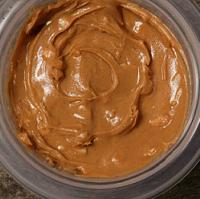
Natural peanut butterYour most basic peanut butter contains just peanuts and some oil to help the peanuts blend together into a smooth paste. There are two distinct types of peanut butter: “regular”  and “natural”. “Regular” is the term I’ll use to define your standard peanut butter and jelly sandwich peanut butter, and a category that includes most easy to find national brands. It’s creamy and thick, even at room temperature, and usually has salt and sugar in addition to peanuts in the recipe. “Natural” peanut butter is much thinner than regular peanut butter at room temperature, and tends to be extra firm when chilled. It rarely has extra ingredients added to it and it separates easily into the oil and peanuts used to make the butter.

When it comes to baking, I tend to use what is on hand, but there will often be some differences in recipes made with natural peanut butter instead of regular. Most recipes (unless otherwise specified) are written with the assumption that you’ll use regular peanut butter. The salt and sugar from that regular peanut butter can add a lot of flavor to a recipe, and the thickness of the peanut butter translates into less spread for peanut butter cookies, for instance. Natural peanut butter is often unsalted, so you may need to add additional salt to a recipe. It might also seem saltier than regular peanut butter because of the lack of sugar in the mix, so you might want to cut back on the salt in the recipe by 1/4 tsp if you are very sensitive to it. Natural peanut butter cookies tend to spread out more, and frequently have a crispier texture (this is often do to a higher proportion of oil in the mix) than cookies made with regular peanut butter. Since they spread out more, they sometimes need a slightly shorter baking time.

Most recipes will deliver a similar result no matter which type of peanut butter you use – even if you do have to make a tiny tweak or two due to a lack of salt or sugar in your product – so you can still use whatever is on hand. But watch out for a recipe that specifically calls for one or the other and be aware of the slight differences that exist between the two types.

Now, there are  a few types of low fat, low carb or reduced something-or-other peanut butters out there as well (other types of nut butter work the same way as natural peanut butters). If you’re going to use these in baking, check the ingredients list first. The more that it differs from standard peanut butter, the greater the chance that you’re going to have some differences in taste and texture in your finished recipe. That isn’t to say that whatever you’ve made won’t still be tasty. It just might not be the same as using your standard peanut butter, so keep that in mind when tasting the results.