Archive for: vs

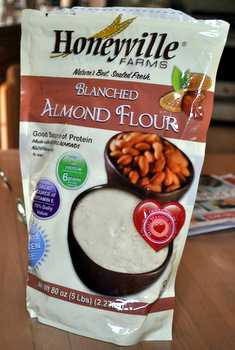
Ground almonds – also known as almond meal or almond flour – are a fairly common ingredient in many different types of recipes, from cookies, tarts and cakes to a wide variety of gluten free baked goods. It is also a popular choice for breading meats in place of, or in addition to, bread crumbs. Almond meal and almond flour both appear in ingredient lists – is there a difference between them?
Almond meal and almond flour are both finely ground almonds and there is no official difference between the two products. The terms can be used interchangeably. In practice, however, almond flour is often much more finely ground than almond meal is and has a more uniform consistency. Almond meal can be blanched (skins removed) or unblanched, while most products labeled almond flour are blanched. For most recipes, you can use almond meal or almond flour, regardless of which is specifically called for in a recipe and get good results. There are a few recipes out there, however, where you should take into account the consistency of the product you’re working with. French macarons are a good example, because most bakers will want the finest almond flour that they can find (usually blanched, as well) to get the smoothest looking finished macarons. People who use almond meal for breading often prefer a coarser consistency for a little more texture.
You can make your own almond meal by whizzing whole almonds in the food processor until finely ground. If you prefer a finer consistency to your ground almonds, you can sift your homemade almond meal a few times to remove any larger pieces of almond that you might not want in your finished product.

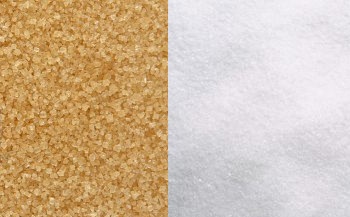
I have several different types of sugar in my kitchen, including white sugar, brown sugar and a variety of coarse sugars. By coarse sugar, I mean a “sugar in the raw” or natural type of sugar that has a much coarser texture and much larger crystals than plain white sugar has. These natural sugars have a lot of appeal when you’re in the grocery store looking for items that are less processed or have a more unique flavor, but even though they’re still sugar, that doesn’t mean that they are going to perform the same way in a recipe as regular white sugar will.
Coarser sugars are great for toppings and can be used in all kinds of baking applications, but there are some differences between it and regular sugar and that is worth keeping in mind when you reach for the sugar in your pantry. Plain sugar has a fine texture that is easy to cream into butter and beat into meringues and frostings. The small crystals dissolve quite easily in other ingredients and that fact is important to the texture of many baked goods. Coarse sugars have a large crystal that takes a lot more effort to break down and they will take more moisture to dissolve. This means that cookie doughs made with coarse sugar will be drier than those made with regular sugar and you’ll also need to work much harder to get the sugar to dissolve into a meringue or frosting. When using sugar in a recipe that doesn’t require creaming, such as sweetening a pie filling, white sugar and raw sugar can be interchanged without any impact on the finished product.
These raw/coarse sugars do have a good flavor that is not unlike a light brown sugar and they can be a nice addition to a recipe – particularly to a batch of cookies. One tweak you can make when using raw sugar is to add a couple of teaspoons of water to a recipe to get back a little of that lost moisture. Another is to process the sugar in the food processor until the crystals break down and it has a finer consistency. Doing this will allow you to use it just like regular white sugar and get the same results in terms of how your recipes come together.

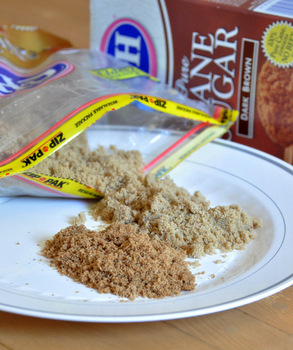
Brown sugar is white sugar that has had a small amount of molasses added to it. The molasses gives it a richer, deeper flavor than white sugar and also makes the sugar very moist. Dark brown sugar has a very strong molasses flavor, while light brown sugar is a little drier and has a much milder flavor. The two most common brown sugars are light brown and dark brown. Many grocery stores also stock golden brown sugar, which falls somewhere in between light and dark. Muscovado, which is a very dark and strongly flavored brown sugar, is also available in many grocery stores.
Although there are quite a few types of brown sugar out there, not many recipes specify what type of brown sugar they call for. Recipes don’t usually specify because the different types of brown sugars are interchangeable and will perform the same way in just about every cookie, cake, bread or other recipe that they’re included in. When recipes do make a recommendation for dark brown over light brown sugar, it’s not because of the way that the sugars function, but because of the flavors that they impart in a recipe. A darker brown sugar brings that slightly bitter molasses note to gingerbread and can add depth of flavor to chocolate cake. A lighter brown sugar is a better choice for butterscotch pudding or caramel corn, where you might want a subtler flavor in the finished product.
Since light brown and dark brown sugar are generally interchangeable, it is worth taking a chance and playing around with their flavors, seeing what they add to different recipes (such as chocolate chip cookie) and what type of sugar produces your favorite result.

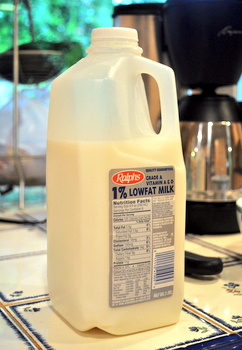
Many baking recipes call for milk as one of the main ingredients. Many recipes will call for a specific type of milk – whole milk, low fat, skim – and others will simply call for it without specifying the fat content. This brings a couple of questions to the surface: what is the difference between whole milk and skim milk, and does it matter what you use when it comes to baking?
The difference between whole and skim milk is the fat content. Whole milk generally contains about 3.5% fat, while skim contains none. All liquids in baked goods help to bind things together – even if you add water to a recipe – but fat plays an even more important roll and acts as a tenderizer and moisturizer. This means that cakes and muffins with slightly more fat in them tend to have a finer crumb and not be quite as dry when they have a little more fat in them. In professional bakeries, whole milk is the standard for baked goods and most recipes for home bakers – unless otherwise specified – tend to assume that you will be using whole milk. You can substitute low fat or skim milk in just about any recipe that calls for milk, but because the recipe was probably designed to work with a little more fat in it, you should mix carefully so that your product doesn’t become tough from overmixing.
I typically use low fat milk when I bake because that is what I keep in my kitchen on a regular basis. I tend to note in recipes when I think using a different type of milk will be beneficial. I prefer to use whole milk in ice creams and custards when possible because that small amount of extra fat in the milk contributes to a much richer mouthfeel in the end. In cakes, muffins and other baked goods, you should have results that are very, very similar regardless of what type of milk you use.

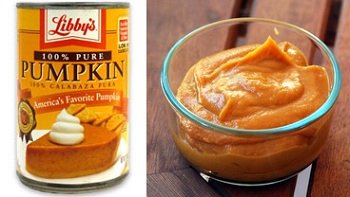
Canned pumpkin is a fall baking staple, used for everything from pumpkin pancakes for breakfast and pumpkin pies for dessert. But is fresh, homemade pumpkin puree any better to bake with than canned pumpkin? There are a couple of reasons that canned pumpkin puree is so popular. First, it is very convenient and readily available to anyone with a well-stocked grocery store. There are both regular and organic versions available and it is relatively inexpensive. The second reason is that it is consistent. Canned pumpkin puree – although there might be slight differences from brand to brand – does not vary much in its thickness, texture or flavor. Recipes usually call for pumpkin puree with the expectation that you will use canned pumpkin, and you can expect consistently good results when using it.
Homemade pumpkin puree can be as good as canned, but it takes quite a bit of prep work to cook the pumpkin and puree it. Since recipes are written for canned, if you have a pumpkin that yields a puree that is too thick or too thin, you may have to adjust it (by straining or by adding in a tablespoon or two of water) to get the right consistency. Pumpkins vary widely in flavor, and homemade puree doesn’t always turn out to be as flavorful as canned (believe it or not, but I have had many bland pumpkins – even pie pumpkins!). Now that I’ve scared you off, fresh pumpkin puree can very flavorful and, if you get good quality sugar or pie pumpkins you can get a really great result that was well worth the extra effort. You just don’t get the guarantees of canned when working with fresh pumpkin and there is a risk that your pumpkin might not be up to snuff in the flavor-department.
I have used both in the past and will use both in the future, but in the end, canned pumpkin is definitely easier and can be tastier than fresh pumpkin puree. I make fresh if I have a great pumpkin to start with and when I have some spare time. As long as you don’t mind all the extra prep work involved in making your own puree, it’s worth a shot, but it’s a good idea to have a can (organic, regular – any kind you like) on hand in the back of the pantry just in case.