Archive for: vanilla

Vanilla beans are a pricey ingredient prized by bakers and cooks because nothing imparts vanilla flavor like seeds scraped straight from a fresh vanilla pod. I usually have a few vanilla beans on hand and, like so many other deal-hunting bakers, I try to replenish my supply when I find a good deal on bulk vanilla beans (the holidays are a great time to stock up). Having a large supply of vanilla beans on hand begs a question: how long do vanilla beans last?
Vanilla beans will keep for at least a year when properly stored, and can last more than two years in ideal conditions. They should be stored in a closed container in a cool, dry place. An airtight container will help to keep the beans moist, but it is not necessary for storage. Most purveyors recommend letting your beans breathe by exposing them to air every few weeks for a few minutes – particularly when the beans are stored in an airtight container. Vanilla beans should never be stored in the refrigerator, as the moist environment in the fridge can actually encourage mold to grow on the beans. If you live in a very humid place, it is best to buy vanilla beans in smaller quantities and use them when they are fresher to ensure that you get the best results.
The beans may dry out over time, but that doesn’t mean that you can’t use them. To refresh a dried vanilla bean, submerge it in hot water for a few minutes before using to plump it up, or simply wrap it in a moist paper towel and microwave it for a few seconds. Once the bean has been softened again, it is easy to split it and scrape out the seeds. Vanilla beans that have already been used to infuse a custard or other dish can be dried out again and saved almost indefinitely, adding their remaining flavor and aroma to things like vanilla sugar.

I keep a container full of vanilla sugar in the back of my pantry that I refresh every time I have an extra vanilla bean around. Making your own vanilla sugar is a great way to repurpose vanilla beans that you have already use to infuse a custard or other sauce with vanilla, giving them a second life (and getting your money’s worth!) in the kitchen. Vanilla sugar isn’t something that I often see in stores, but there are a few companies that make it available for purchse. One of these is Rodelle, a company that specializes in vanilla and vanilla extracts. Their vanilla extracts are excellent, but if you are going to branch out from the standard baking vanillas, their Vanilla Sugar is also a must-try.
I make my vanilla sugar with regular white sugar, the kind that I use in most of my cookies and cakes. Their all-natural vanilla sugar is made with coarse, crunchy sugar crystals and is completely infused with vanilla extractives – meaning that it has the same intense smell as vanilla extract and the same dark color, but it is sweet and flavorful at the same time. I have to admit that their vanilla sugar has more vanilla flavor than any other vanilla sugar I’ve tried, whether homemade or at a high end restaurant. I still use my homemade vanilla sugar for baking because I find that the finer sugar is a little more versatile in recipes, but this sugar gets sprinkled on buttery cinnamon toast, added to coffee drinks and used to finish off muffins and scones with both vanilla flavor and a crunchy texture from large sugar crystals. The vanilla sugar is a little bit more difficult to find in retailers than their vanilla extracts, but it is worth keeping an eye out for if you, like me, are a vanilla fan.

Creme anglaise is a classic French custard sauce made with egg yolks, sugar and milk or cream (as well as vanilla for flavoring) that is cooked until just thickened. This sauce can be served on its own as a dessert accompaniment, alongside fruit or cake, but it can also be put to other uses and one of the very best is when you put it into an ice cream maker and turn it into ice cream. This type of ice cream is often termed “French vanilla” and stands apart from other vanilla ice creams because of its rich custard flavor and high egg yolk content. Homemade ice cream starting with a true creme anglaise base is one of the best ice creams you can eat.
Creme anglaise itself is not difficult to make. A combination of egg yolks and sugar is tempered with hot milk, and the mixture is cooked in a double boiler until thickened enough to coat the back of a spoon. You can make your own double boiler easily with a bowl and a small saucepan, and using one will prevent your custard from overcooking while you thicken it. I typically infuse the milk with a vanilla bean and scape the seeds into it before adding it to the rest of the ingredients for a strong vanilla flavor, but you can substitute vanilla extract by simply whisking it into the finished creme anglaise just before cooling.
You really do need an ice cream maker for the best results with this recipe (although you can certainly make the creme anglaise, chill it and enjoy it on its own!) because an ice cream maker will allow you to achieve a very smooth ice cream. This ice cream has a delicious, rich vanilla flavor and a fantastic texture. Unlike ice creams that are made with less fat (using fewer/no egg yolks), this ice cream is always scoopable and creamy – even straight out of the freezer. It is best served in small portions, but that just makes the enjoyment last longer.
+Continue Reading

You’re probably used to seeing banana bread that is dark and dense looking, and often full of brown sugar and spices. Banana bread made like this is delicious, but as with all things, it never hurts to have a little variety in your recipe book. The last time I had a bunch of ripe bananas in the kitchen, I decided to give banana bread a lighter color and flavor by turning it into Vanilla Bean Banana Bread.
This banana bread recipe is not that different from other banana bread recipes, but it has vanilla incorporated into it in two ways. It includes a generous amount of vanilla extract and is made with vanilla sugar. Vanilla sugar is simply sugar that has been infused with vanilla bean. Vanilla sugar can be mixed up just before using, but the flavor becomes more potent after it has been sitting around, so make a big batch (you can always replenish simply by adding more sugar, or a fresh vanilla bean from time to time) and keep it in the pantry. I keep this on hand all the time, as it goes very well in coffee and other baked goods, and it is a great way to use up leftover vanilla beans after you’ve made a custard or pudding.
The banana bread bakes up to be very moist and tasty, with great flavors of both banana and vanilla. In fact, since there are few spices to mask the flavor of the banana, I think that this bread actually has a better banana flavor than many similar loaves! The bread rises high and smells wonderfully of vanilla. It is good plain, but it is even better when sliced, toasted and spread with a little bit of butter.
+Continue Reading

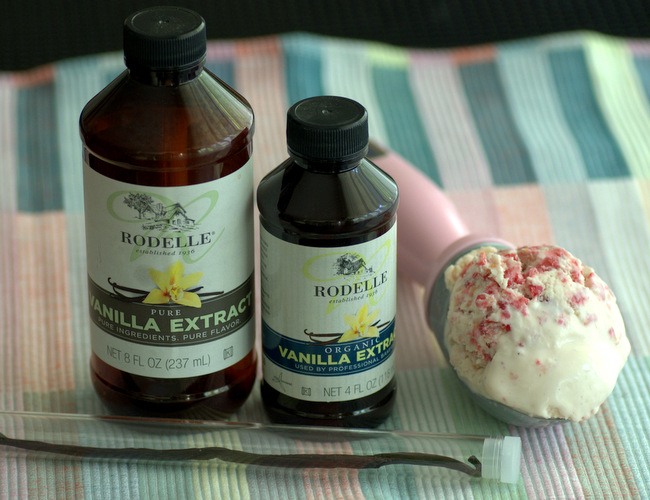
Any baker will tell you that vanilla is one of the most essential ingredients that you can have in your pantry. Although only a small amount goes into most recipes, vanilla can improve the flavor of just about everything it touches. I try to keep a good supply of vanilla on hand, both extracts and vanilla beans, and even make vanilla sugar with previously used vanilla beans so I have yet another source. I recently tried Rodelle’s Vanilla Extract and Organic Vanilla Extracts. Rodelle is a company that specializes in vanilla and vanilla extract, and though you may not have heard of them (perhaps they’re not carried in your local market) they have been around since 1936, brewing vanilla beans in search of the best flavor for bakers to use.
The reason that Rodelle’s Vanillas are interesting is that the company says they have one of the highest vanillin levels on the market in their products. More vanillin translates to a better, stronger vanilla flavor. I tried both the Pure Vanilla and the Organic Vanillas in batches of simple vanilla pudding (as well as in a few cake recipes) to compare the flavor and was very happy with the results. The vanillas are both made with bourbon vanilla beans and have a wonderfully sweet, floral flavor to them, which came through nicely in my test recipes. Even if you smell them straight out of the bottle, you will definitely have a stronger vanilla overtone than you might with some other vanilla extracts, where the alcohol smell/flavor can be more upfront.
I will say that both had very similar overall flavor profiles, so if you’re trying to decide which to try, it’s up to you whether you prefer organic products or not. You’ll get great results either way, especially in a recipe that is vanilla-heavy – such as vanilla pudding or vanilla cupcakes with vanilla frosting – where you can really taste the difference between a high quality vanilla and a lower quality one.