Archive for: tart dough

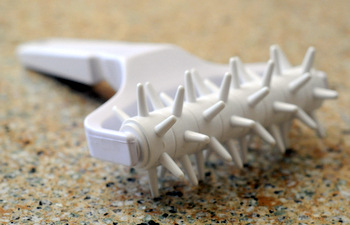
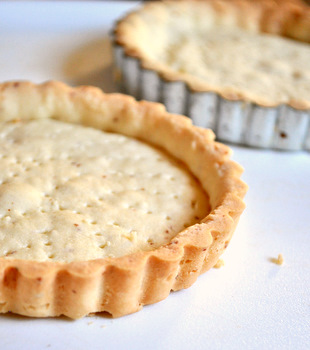
A dough docker is one of the stranger looking tools that you might find in your kitchen. The docker, which is also known as a rolling docker, is a small, spiky rolling pin that is attached to a small handle that makes it easy to roll. Docking is the process of creating small vents in dough to prevent it from blistering and rising in large, uneven pockets during baking. This docker is used to easily and quickly allow bakers to dock doughs just by rolling the spiked portion with firm pressure over dough. Pastry dough, tart dough, pie crusts, flatbreads and pizza dough are some of the most commonly docked doughs because bakers typically want them to bake as evenly as possible (particularly if there are toppings or fillings involved) in the oven. The rollers come in various lengths, and while 4-6-inches is common, you can find some that are only an inch or two wide and professional models that are a foot long.
Not everyone needs a rolling docker in their kitchen, although they do make very quick work of docking. If you don’t have one, you can also dock your dough by pricking the dough all over with the prongs of a large fork. The docker does take the guess work out of docking, however, since you don’t need to wonder whether you’ve added enough holes to your dough or whether it is evenly marked.

Pie and tart crusts tend to be on the plain side. Of course, they will taste buttery and have a nice crisp texture, but the flavor in a tart typically comes from the filling. To let the character analogy go a little further, a supporting character can make or break a show. This is true of a tart crust, as well, where a bad crust can ruin a tart and a good one can make it memorable. One way to make a tart crust more memorable is to give it a little extra flavor of its own. A touch of lemon zest or a touch of spice in the crust can go a long way in boosting the flavor in a tart.
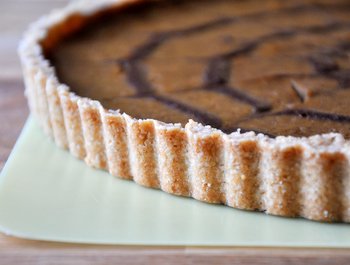
This Maple Sugar Shortbread Tart Crust is a new fall favorite of mine. It uses maple sugar, which infuses a subtle maple flavor into the crust and gives it a lot more dimension than a plain shortbread crust typically has. Maple sugar is a sugar that is made from maple sap that has been boiled and crystallized. It is slightly sweet, but not so sweet that it takes anything away from a good tart filling. It is buttery and tender, and bakes up to have a nice crispness that holds up to most tart fillings.
This type of crust doesn’t need to be rolled out like a pie crust. The dough is crumbly, more like a regular shortbread cookie dough might be, and it can be dumped into your tart pan and pressed firmly into an even crust. This makes it very quick to make and quick to set up in the pan, since you don’t have to wait for the dough to chill or rest. The recipe will produce enough crust for a tart pan up to 11-inches in size, so if you are using a 9 or 10-inch pan, you may have a little bit leftover (roughly 1/3 cup or so, unless you want a very thick crust). I don’t mind having a little leftover when it comes to this dough, however, because extra tart dough can always be used to make a mini tart shell or two for other desserts.
This crust goes especially well with fall fillings, like sweet potato and pumpkin. It also goes well with vanilla-filled tarts, as the maple will stand out against the vanilla. The maple will be more subtle against a chocolate filling. And, of course, it works well with any tart filling that has a touch of maple already in it!
+Continue Reading

Blood oranges are definitely the jewels of the citrus world. Their red vibrant red color makes them a standout, and they’re known for being very sweet, with floral and berry notes that you don’t find in other citrus varieties. I often eat them plain, as their color gets lost in most recipes that call for oranges, but their flavor can be a great addition to many desserts.
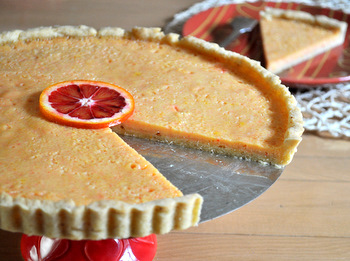
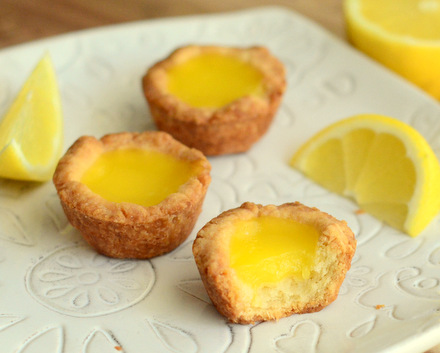
This Blood Orange Tart has a curd-like filling made with fresh blood orange juice and orange zest. The filling takes on a slightly pinkish orange hue from the blood oranges. It is creamy, with a bright orange flavor, and is a nice match for the shortbread-like tart dough. The filling is not very thick, which makes this tart seem quite light. Using a 9-inch tart pan will get you a slightly thicker layer of filling, which might take an extra minute or two in the oven to bake all the way through.
I made an Orange Almond Tart Dough for this recipe, adding some fresh orange zest to an almond-enriched tart dough. The dough is fairly sticky and it is very tender, so use flour generously when you roll this out on your work surface and have a bench scraper handy to make it easy to transfer to the tart pan. Fortunately, this dough also patches very, very easily so if it tears as you put it into the pan or isn’t quite even, you can simply break off another small portion of dough and press it into place. The baked crust is slightly crisp, buttery and very tender – so it is worth a little extra effort getting it into the pan.
Blood oranges can vary quite a bit in their color, from light orange with a few red streaks to a dark purple. No matter the color inside, any blood orange is going to give you good results in this recipe. The only difference will be some slight variation in the color of the curd. This tart can be made with other oranges (cara cara and naval oranges are good choices), too, if you can’t find blood oranges to work with. Regardless of the type of orange, be sure to use freshly squeezed juice for the best results.

+Continue Reading

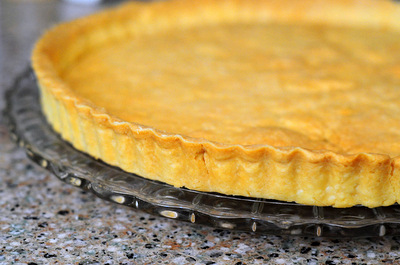
Vanilla and almond is a good combination in just about any dessert, so it should come as no surprise that a tart crust that combines those two flavors is a terrific basic tart crust recipe. This buttery Vanilla Almond Tart Crust has ground almonds and vanilla extract in it, and bakes up into a crisp and tender crust that can be used for all kinds of desserts. The recipe makes plenty of dough for a 9 or 10 inch tart pan, and can also be used for a number of smaller tarts, and it works well with both baked and unbaked tart fillings. It goes particularly well with chocolate fillings and fruit fillings, and I often use it as a base for my Strawberries and Cream Cheese Tart.
This tart dough comes together easily and is much less fussy than a pie crust can be. The dough has ground almonds in it and uses cake flour, which has less gluten in it than all purpose flour, to help produce a more tender crust. The cake flour should be measured by spooning it into your measuring cup, then sifting it into the rest of the tart ingredients. Cake flour can be clumpy if it is not sifted, but for this recipe it is not necessary to sift it before measuring it out.
This tart dough is very sticky, so it is important that you chill it well before using it. That stickiness also means that the dough will be crisp and tender after baking, not tough. I usually stick the dough into a gallon-sized plastic bag, press it into a flat layer and chill it thoroughly in the refrigerator or freezer (freezer is best if you need to chill your dough quickly). I then roll it out on a lightly floured surface and am ready to line my tart pans!
+Continue Reading

Guava, in the form of sweet guava paste, is a popular filling for all kinds of pastries in Cuban cuisine. There is a local Cuban bakery in my area – Porto’s, for anyone in the LA area – that makes all kinds of pastries with guava. It only takes one or two bites to realize that the sweet guava fillings not only a good match for buttery pastry, but are quite addictive! This guava tart isn’t inspired by a dish from that bakery, but it is a Cuban recipe from Eating Cuban, a cookbook that I really enjoy.
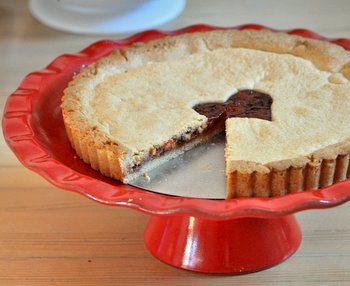
This tart is very simple. It has a filling made with guava paste sandwiched between two layers of tender and buttery crust. The filling itself – since it is only made with guava paste – is very sweet, but it is toned down very well by the lightly sweet pastry that makes up the rest of the tart. Having a filling with only one ingredient also means that this tart is easy to throw together without much prep work once you have a block of guava paste on hand to start with. The pastry dough is much like the dough for a butter cookie, and while it is lightly sweetened, the dominant flavor is butter once it has baked. It is tender and has a fantastic texture once it has baked, neither too soft nor too firm. The dough can be a bit crumbly if you’re not careful (and a bit sticky if you don’t chill it!), but it can easily be patched with small scraps of dough if you accidentally tear it while rolling.
Guava paste is typically available at Mexican and Latin American markets, although it can sometimes be found at regular grocery stores (depending in the area) and specialty markets. The amount of guava paste given in the recipe is my suggestion for how much you should use in your tart. Since the paste is sliced, it is easy to make the filling into a thinner layer if you are worried about the tart being overly sweet for your tastes. Another way to temper the guava filling is by serving this tart with a few slices of good, dry cheese. A sharp Cheddar is a good choice (just as it is a good choice with apple pie), but I like Spanish Manchego as a side to this tart. That said, I also like a generous layer of guava filling and a big scoop of ice cream on the side, but I’m not above just grabbing a slice and eating it for breakfast with a cup of coffee, either!
+Continue Reading