Archive for: sweet potato

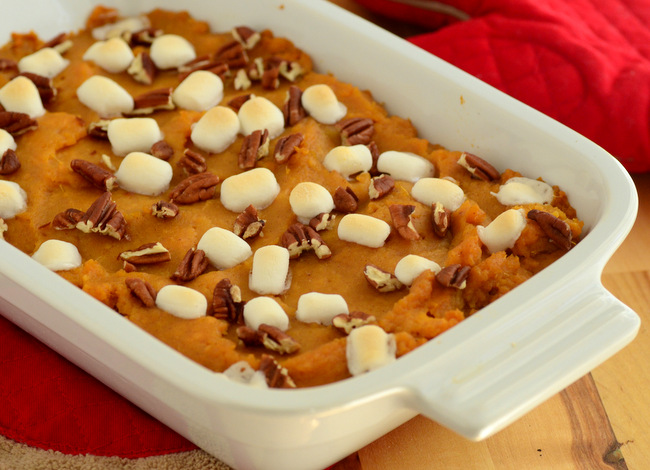
Sweet potato casserole is a must-have Thanksgiving side dish for many. It isn’t one that my family ever served when I was growing up, but after you’ve had a taste of one it is easy to see why the sweet side dish is such a favorite. I used it as inspiration for this Sweet Potato Bread Pudding with Marshmallow Topping. It’s a tribute to that side dish – complete with a layer of toasted marshmallows on top – that is meant to be served as dessert.
This bread pudding is made with sweet potato puree, brown sugar and a warm blend of cinnamon, cardamom and nutmeg. The custard mixture looks and smells a lot like a very liquidy version of sweet potato pie filling. It is poured over cubed bread and left to soak for a bit before being poured into a baking dish and baked in the oven. I bake the bread pudding until it is set, then sprinkle the marshmallows over the top and slide the dish back under the broiler for a minute to toast them. I like the look of mini marshmallows, but full sized marshmallows make a fine topping, as well.
The bread pudding is rich, but not too heavy, and you can really taste the sweet potato. The spices – especially the hint of cardamom, which I love with sweet potato – give it a really nice depth of flavor, too. The bread pudding isn’t too sweet on its own (unlike some sweet potato casseroles!), so the sweetness from the marshmallow is a nice finish for this dessert, and also means that you don’t need to make a separate sauce for serving.
I typically use challah when I make bread pudding, as the tender and eggy loaves make a great base for a sweet dessert. If you don’t have challah, you can use something like brioche or even plain white bread. While you can pretty much use any kind of bread to make a bread pudding, I prefer not to use whole grain breads because some of them have a strong flavor and take away from the dessertiness of a sweet pudding. And since you’re topping this particular bread pudding off with a layer of toasted marshmallows anyway, you might as well not worry about whether you’re getting whole grains in it when you’re indulging in a slice.
+Continue Reading

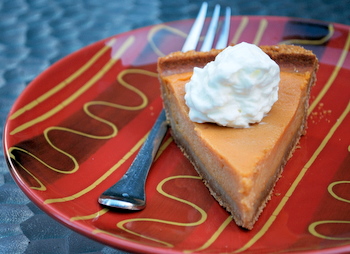
Sweet potato pie makes a nice change from pumpkin pie when you’re looking for a fall dessert to serve at a family dinner or to bring to Thanksgiving. Similar to pumpkin pie, sweet potato pies are made with pureed sweet potatoes and spices that are mixed into a custard with eggs, milk and sugar before baking. Also like pumpkin pie, many sweet potato pies tend to be a little on the bland side. To remedy this in pumpkin pie, I’ll add more spice to boost the flavor, and I do the same thing when making my sweet potato pies.
This Brown Sugar Cardamom Sweet Potato Pie has a lot of flavor and it mostly comes from a relatively small amount of cardamom. Cardamom is a spice with a very strong and slightly citrusy flavor. It pairs very well with earthy sweet potatoes and really brightens up the overall flavor of the pie, not to mention that it is a slightly unusual spice for this type of pie and will set yours apart from a typical pie. The other flavor element here is the brown sugar, which adds a rich sweetness to the pie. Canned sweet potato puree is a very reliable base for this type of pie. If you are using homemade sweet potato puree, you might consider pressing it through a strainer before using to keep the pie as smooth as possible. When baked, the pie should have a creamy texture that is a bit lighter than your usual pumpkin pie and that makes a lovely contrast to the graham cracker crust.
In addition to the brown sugar in the sweet potato pie mixture, there is also a layer of brown sugar added to the bottom of the pie plate before baking. I actually got the idea to add this layer to the bottom of the pie from Cook’s Illustrated. Their recipe ends up giving you a layer of melted syrup on a pastry crust, but since I like to do my sweet potato pies with a graham cracker crust, I ended up using a slightly different technique. I add a thin layer of brown sugar to a cooled graham cracker crust, the pop the crust in the oven before I add the filling to warm up the sugar layer. This keeps the sugar sticking to the bottom of the crust, rather than mixing in with the filling when the sweet potato mixture is poured in. The sugar doesn’t form a truly distinct layer in the pie, though it does add some additional sweetness. What it does do is help keep the graham cracker crust crisp and helps prevent the filling from soaking in and making it soggy before the pie is even served.
Pie pans will vary in depth. Try to resist overfilling your pie crust for best results, even if that means you need to discard a few tablespoons of sweet potato pie filling.
+Continue Reading

A very simple custard of eggs, milk, sugar and vanilla (or some other flavoring) that is cooked on the stovetop or baked in small ramekins in the oven is the first thing that most of us think of when we think of a custard. A custard is a cooked mixture that is thickened with eggs, and while that simple custard may be the first thing that comes to mind, all kinds of other mixtures are custards as well. Custard pies are pies that are filled with a custard base – eggs, some type of liquid and sweeteners – and baked until the mixture is set. While that basic custard mixture can make a nice pie filling itself, pumpkin pies, sweet potato pies, buttermilk pies, chess pies and even pecan pies are all custard-based pies.
All custard pies need to be handled with care to get the best results. Here are a few tips that might come in handy when baking them, whether you’re doing a pumpkin pie for the holidays or a classic custard pie for another occasion:
- Place your pie on a baking sheet and put it on the rack in the oven, then pour the filling from a large mixing cup to prevent spillage.
- Custard pies should be baked until they jiggle slightly. Residual heat will help them firm up even more once they come out of the oven, but overbaking can cause cracking.
- The easiest way to test for doneness is to insert a sharp knife into the center; the knife should come out clean, even though the pie still jiggles slightly.
- Custard pies cut more easily with a smooth, hot knife. Run your knife under hot water and dry it off before cutting your pie.
- Pies are at their best within a couple of days of baking, when the filling is at its most tender.

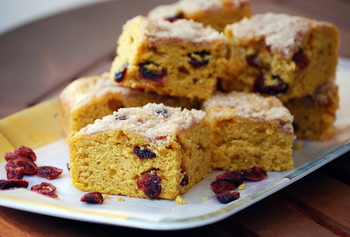
Sweet potato pie is probably the most obvious choice of baked good when it comes to sweet potatoes, but these veggies are surprisingly versatile and it’s worth branching out from the standard to try other recipes, like Sweet Potato Oatmeal Chocolate Chip Cookies or this Sweet Potato Coffee Cake with Dried Cranberries. This is one of my new fall favorites, and a great addition to a holiday brunch menu. I’d use canned sweet potato puree (plain, unsweetened) if I were going to bake a batch just before a big holiday meal and homemade cooked sweet potato puree (unseasoned) as a way to use up leftovers after the feast.
The coffee cake is easy to put together, with a moist cake base and a crisp streusel topping. The sweet potato contributes a lovely orange color and a round, naturally sweet flavor to the cake, but it’s biggest impact is on the texture. Compared to a plain coffee cake, this version is more moist and a bit denser. Much like the denseness in a pound cake, the finished cake actually tastes very rich, not heavy, because it is very tender. The dried cranberries add in some additional sweetness to the cake and add a little bit of texture, too.
Since I wanted the flavor of the sweet potato to really shine, I only added spices to the streusel topping. This adds just a hint of spice to the coffee cake and doesn’t overpower the natural taste of the sweet potato. By this, I really mean that it keeps it from tasting like just another cinnamon-spiced coffee cake! The cake will keep well for a couple of days when stored in an airtight container, so feel free to make this a day or two ahead so you have something to munch on – or serve to company – as you keep the kitchen turning out tasty treats over the holidays.
+Continue Reading

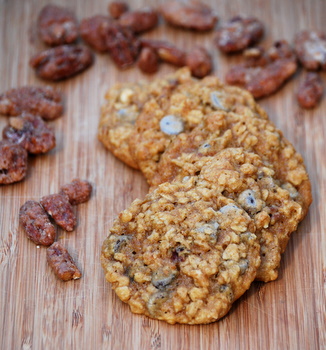
Pumpkin isn’t the only vegetable that becomes a popular inclusion in desserts and baked goods during the fall. Sweet potato is also very popular. And for good reason, since sweet potatoes have a naturally sweet flavor and a beautiful color to them. They also take to other flavors very well because the sweet potato itself is quite mild. Sweet potato pie is a classic, but sweet potato can be used in other desserts, as well. These oatmeal chocolate chip cookies have some mashed (cooked) swet potato incorporated into them, giving them a bit of extra sweetness and a hint of orangey, fall warmth.
The cookies are fairly standard, as far as oatmeal chocolate chip cookies go. Adding some sweet potato to them makes the cookies very moist and tender. They start out fairly chewy, but will become slightly more cake-like (although still moist) after a couple of days. The biggest change in these from a plainer cookie is the spicing. Some oatmeal chocolate chip cookies rely only on cinnamon, while these use cinnamon, cardamom and nutmeg. The cardamom in particularly seems to go very well with the sweet potato.
I used regular semisweet chocolate chips and toasted pecans in these. I think they’d be very good with milk chocolate and with walnuts, as well. I think that dark chocolate might take away a bit from the natural flavor of the sweet potato, but will still work if that’s what you prefer to use.
+Continue Reading