Archive for: sourdough

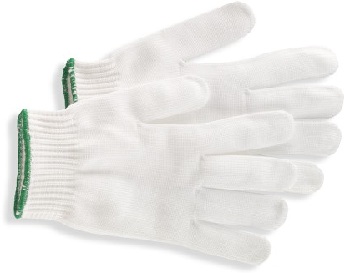
Kneading dough can be a messy business, getting flour all over your kitchen counter and bits of dough stuck all over your hands. It is very satisfying work, of course, but there are times when you just don’t want to get dough all over the place and there are some doughs that are so sticky that they make kneading by hand very difficult. These situations are when something like Dough Gloves come in handy, since they can make kneading dough a less-messy affair. The gloves are made of thick nylon and are thoroughly dusted with flour before you stick your hands into your dough. The flour sticks to the gloves (unlike flour that you rub on your fingers) and prevents the dough from sticking to the gloves – allowing you to knead a dough more easily and cleanly. The other bonus of using gloves like these is that you won’t need to add as much extra flour to your dough. Anyone who has handled sticky dough can tell you that the primary reason to add extra flour is to keep it from sticking to your hands. Less added flour, particularly for very wet/slack doughs, will result in a better textured loaf at the end of the bread-making process.
The only drawback to these is that they come in one size to fit all hands, which means that if you have very large hands or very small hands, you might have a little difficulty fitting these properly. You also lose a little of the fun of squishing dough between your fingers, but that may not be such a bad thing when you don’t have to scrap dried dough bits off your fingers later, either.

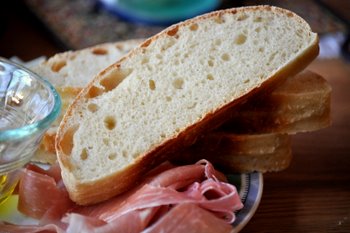
Most ciabatta recipes start with a preferment called a poolish, a mixture of flour, water and yeast that is left to sit for a period of time – usually 12 to 24 hours – before the rest of the dough is put together. Starting a ciabatta this way will add a lot of flavor to the dough and it will also add a certain degree of suppleness to a dough, which you need to produce a holey-ciabatta bread. Another type of preferment is a sourdough starter and I have found that it also works very well as a starter for ciabatta – and as someone who has been keeping a sourdough starter alive in my kitchen for a long time, I always appreciate a new way to put it to use. And since I always have my sourdough starter on hand, I don’t need to wait the 12 to 24 hours that a poolish takes to develop before baking my bread.
I first found a recipe for sourdough ciabatta on the King Arthur Flour site (they also have a recipe for ciabatta without sourdough), but it took a few tweaks to get it to the consistency that I liked. My dough uses just water, bread flour, olive oil and salt, along with some active dry yeast to give it extra lift. Make sure that your sourdough starter has been fed and is active before you mix it into the dough. My sourdough starter is quite thick, but they vary in consistency, so you will need to gradually add in the last cup of flour to the bread dough before letting it rise, as some doughs will need more additional flour than others.
The original recipe suggests that the dough should have the consistency of drop-cookie batter, thick and slightly sticky but not dry or firm. If you add too much flour, your bread will be a bit denser. If you don’t add enough, the dough will be too slack and will be very difficult to handle. The trick is not to add too much flour to the dough and use a lot when you are handling it (as well as having a big bench scraper on hand) to ensure it doesn’t stick. To test my dough, I press it with my fingertip: it should feel sticky but should hold together, not stick to my finger. After my dough rises, I quickly deflate it and very gently shape it. I let it proof right on the baking sheet I am going to use so it is ready to go into the oven without needing to be moved again.
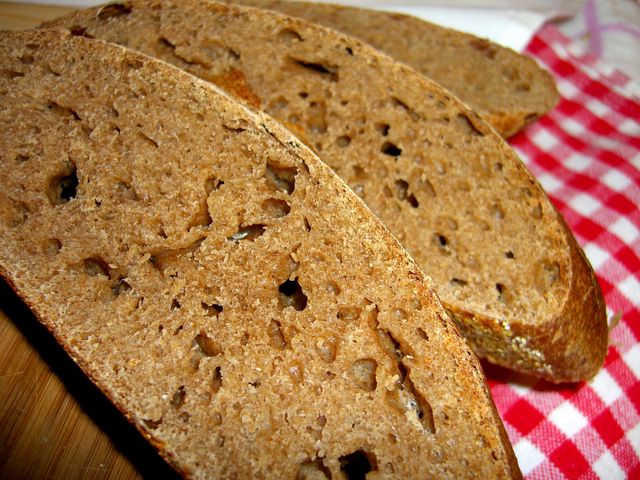
This ciabatta is not quite as holey as some ciabattas that I’ve had, but it has a chewy crumb and a nice crispy crust to it. It has a hint of sourdough flavor to it, and since it has a little more body than some more open-textured ciabattas, it slices and toasts very well. You can also put this bread to use as you would other ciabatta breads, making sandwiches and paninis or dipping in olive oil and serving alongside good cheese and prosciutto.
+Continue Reading

Bette’s Oceanview Diner is one of my favorite places in Berkeley, California. They have a cute, bustling diner feel – rare to find on this coast – and fantastic food. Their basic pancakes and scones are really excellent and their specials are equally delicious. It’s hard to pick a favorite, but the enormous Dutch Bunny - a 12 inch puffed apple pancake – is definitely a consistent favorite. Even if you need 4 people to eat one. It also opens quite early, which would have swayed my opinion of it even it I didn’t love the food because I’m a morning person and it sometimes seemed like things in Berkeley didn’t open for breakfast until after 10am. Getting up early also prevented me from having to wait in a long line just to get in the door.
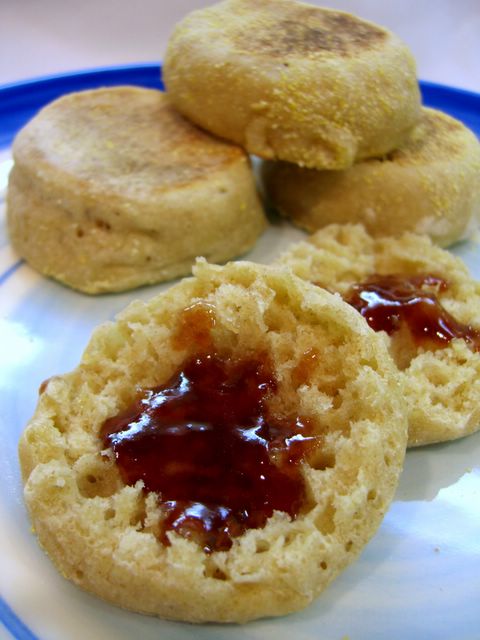
When I was flipping through the Bette’s Diner Pancake Handbook , I decided that based on their excellent recipe track record, their recipe for sourdough english muffins would be a good place to start to make an attempt at a non-pancake breakfast favorite I’ve wanted to try for some time.I was surprised at how easy these were. Once my starter was fed, I mixed up the dough and let it sit, covered, overnight. You don’t have to worry about overdeveloping the sourdough flavor because the baking soda will neutralize some of it, leaving just the right amount of sourness in your muffins.
The major change that I made in this recipe, aside from using some whole wheat flour, was to replace the milk the original called for with water. I wanted to ensure that I got the rather coarse, open texture I like in english muffins. I could only find a small biscuit cutter, so I had to use 2-inch rather than a 3-inch round. If you use a larger one, you may need to cook yours for an extra minute or two per side and you will probably get fewer than the 20 or so that I got.
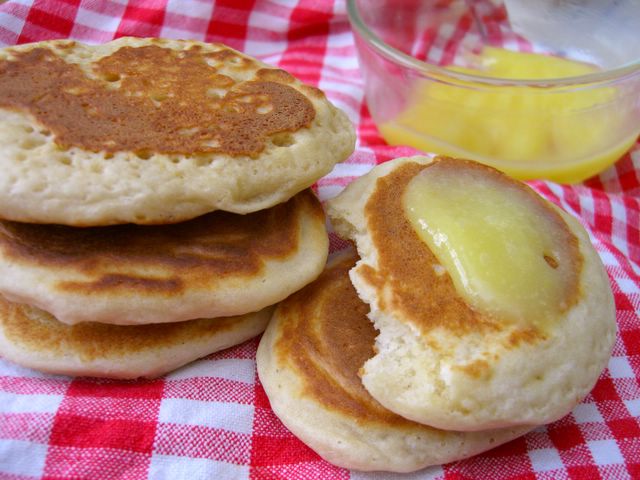
They tasted fantastic. They were a bit doughy when hot off the grill, but like most yeast breads, their texture stabilized once they were allowed to cool for a few minutes (they cooled quickly). Honestly, they were some of the most flavorful english muffins I’ve ever had – chewy, slightly sour and full of holes to catch jam and butter.
+Continue Reading

There are three ways to come by a starter:
Catch wild yeast
Use packaged yeast
Buy/Borrow/Steal
I would say that the best way to start a starter is to get some from a friend. Sourdoughs – and their starters – get their flavor from long and slow development, so the older your starter is, the more character it is likely to have. Of course, a fresh starter will still produce excellent results and it is the way to go if you don’t have any friends who keep starters in their fridge.
Yeast is easy to catch and not too hard to maintain. The flavor of your particular starter will depend on the yeast that live in your enviornment. San Francisco sourdoughs have a strong, unique flavor due to their sea side location. The flavor can also be influenced by any additions you make to your starter. You can enhance the yeast-catching ability of your starter by adding things to increase fermentation – like grapes, peaches, potatoes or simple sugars.
Excessive heat is pretty much the only thing that will kill yeast, which is why water temperatures are called to be below 120F. Moderate heat encourages the growth of yeast, which produces carbon dioxide and causes your bread (or starter) to bubble and rise – hence the reason for allowing your dough to rise in a warm place. The cold does not kill yeast, it merely causes it to slow down or, in extreme cases, hibernate completely. Active dry yeast has been freeze dried, but it reactivates when exposed to water. Slow rises are done in a refrigerated enviroment where it can take ten times the length of a normal rise for your dough. Slow rises, like slow cooking, allow the flavors of the dough to meld and increase in strength. Slow rises also allow some breads which might have difficulty rising quickly, due to low gluten content or high fat content (like rye breads or brioche), to achieve a better rise.
+Continue Reading

If you end up making more oatmeal than you can eat, a great thing to do is add it to bread dough. It adds moisture, heartiness and great taste and texture. Because I often add a bit of vanilla and molasses to my oatmeal, I find that it lends a bit of extra sweetness to the final bread. Sometimes I boost this with a bit extra molasses or honey in the dough.
Sourdough has a long first rise to let the sour flavor develop. I wouldn’t recommend using olive oil in this bread, as a milder vegetable oil will let the flavor of the bread come through. This makes a great sandwich bread.
+Continue Reading