
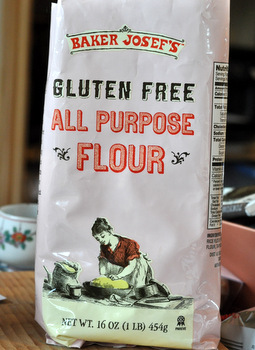
Regular Trader Joe’s shoppers will have noticed that TJ’s has added a new item to their baking section in the past few weeks: Baker Josef’s Gluten Free All Purpose Flour. They’ve had a good Gluten Free Brownie Mix that has been around for quite a while now, and this all purpose blend should give gluten free bakers a few more options for gluten free baking at home. The popular brownie mix uses rice flour as its primary grain, and so does this flour mixture, which is made with whole grain brown rice flour, potato starch, rice flour and tapioca flour. It’s a small bag – only 16 ounces – so you only get about three cups of flour (give or take) to play with at a time. The bag states that it can be “substituted cup for cup with all purpose wheat flour in most recipes.”
I find that rice flour is often the base for many gluten free flour blends when they’re intended use is dessert baking, as opposed to heartier bread recipes. I tried the flour in several recipes, including a cake and the cookie recipe that comes on the back of the bag. The cake had an extremely tender, soft crumb and a good flavor – but it also had a slightly sandy texture from the rice flour (common, with rice flour) that kept you from forgetting that you were eating a gluten free cake and not a regular one. The blueberries in blueberry muffins tended to sink down a bit, since they didn’t get as much structural support from the batter as they do in regular muffins, but they looked beautiful and were still tasty. The cookies worked out very well, and were just a touch more crumbly than you might expect regular chocolate chip cookies to be. The sandiness that comes from the rice flour was much less noticeable in cookie form.
+Continue Reading

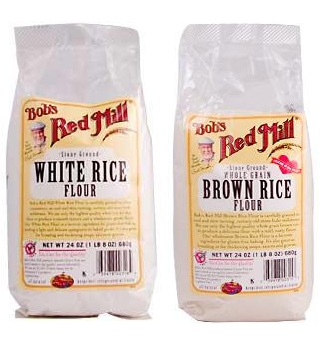
Rice flour is a fine flour made from ground rice. It is completely gluten free, including even “glutinous rice flour,” which is made from sweet rice and is a staple for making Japanese treats like mochi. Rice flour can be used in a wide variety of culinary uses and is a very popular base for noodles in many Asian cuisines. It can also be used as a thickener in sauces, as a breading for fried dishes and as the base for various baked goods. It is available in white, which is made from polished white rice, and in brown, which is made from whole grain brown rice. Both types of flour work just about the same way in a recipe, but have slightly different flavors and colorings. Brown rice flour can take longer to cook when it is in noodle form, for instance, as brown rice takes longer to cook than white rice.
Rice flour is very commonly used in gluten free baked goods to give them structure and substance, but it is also a popular addition for non gluten free baked goods because of its unique and slightly sandy texture. For instance, a small amount of white rice flour in a buttery shortbread recipe can make that shortbread extra tender and crumbly, with a melt-in-your-mouth feeling. It can also add a heartiness to a yeast bread recipe when a small amount is added, since it contains no gluten and will compact a bread dough somewhat, so it can be found in some dense, whole grain breads.

I have been meaning to experiment with alternative flours for some time. Anything from rye to buckwheat to rice to mesquite. Did you know that your can actually make some rather strange types of “flour”? To make pumpkin flour, for example, all you have to do is dry/dehydrate pumpkin and then puree it into dust. Now, I couldn’t find a single recipe that told me exactly how to dry out my pumpkin, so I supposed I’ll have to hold off on that. Using flours other than wheat can dramatically change the taste and texture of your baked goods. For example, adding a tablespoon of instant mashed potato – aka potato flour – to your bread will make it a bit moister than usual.
Never one to go only halfway (well, maybe sometimes), I went out and purchased a bag of white rice flour and plunged headlong into an attempt at gluten-free baking. Not because Shauna guilted me into it. No sir.
Did you know that 1 in 133 Americans are gluten intolerant? I tried some of the recipes on the back of the bag of flour, too, and discovered that a major concern of the manufacturer is sugar content. Let me tell you that a nearly unsweetened muffin, no matter what kind of flour is used to make it, is not a muffin that I want to eat. Fortunately, I didn’t have to, since I filled up on crepes before I started baking.
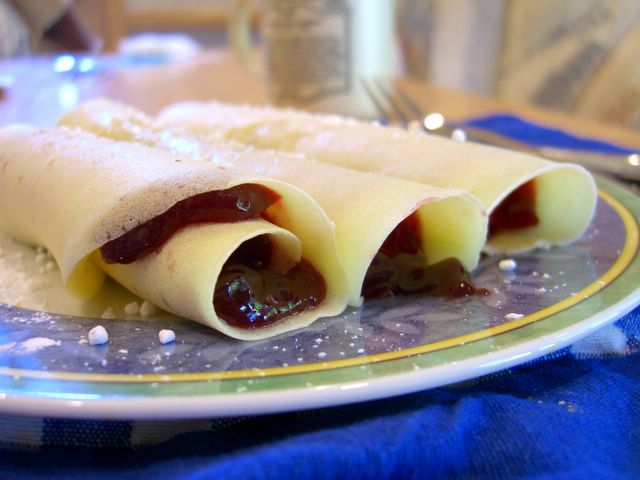
Tender, tasty and a bit thicker than your typical crepe, I liked these a lot. You can see from the photo that I made them in a nonstick pan; if I had greased the pan with butter, they would have browned a bit more. They held up well to jam (my favorite on crepes), but you could easily smear them with nutella or wrap them around sausages and dip in maple syrup. And they’re gluten free, so you can share the recipe with your Celiac friends.
+Continue Reading