Archive for: pear

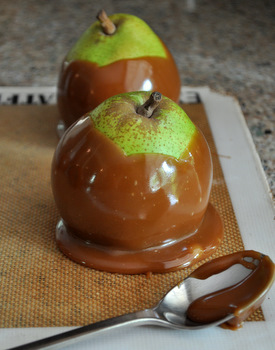
You will see all kinds of fruit dipped in chocolate, from delicate berries to large stone fruit. When it comes to caramel dipped fruits, however, apples are just about the only ones that you see. Sweet-tart apples are a great match for caramel and the fruit is sturdy enough to hold up to being dipped into relatively hot caramel (chocolate melts at body temperature, so is much cooler when things are dipped into it compared to caramel), but apples aren’t the only fruit that can be dipped in caramel and I have recently discovered that Caramel-Dipped Pears can be a wonderful treat, too.
To make these, I first prepared a batch of the same salted caramel that I used when making my Classic Caramel Apples and then dipped not-quite-ripe pears into it, holding the pears by their stems. Pears don’t take as well to having chopsticks inserted into them as apples do. Fortunately, when the pears are not yet at their peak of ripeness, it is easy to handle them simply by holding on to the stems. Ideally, the pears that you use for dipping should only have a very slight give to them if you give them a gentle squeeze with your fingertips.
It is important to use a pear that isn’t quite ripe yet for several reasons. First, the pears are sturdier and will hold up to both the dipping process and the warmth of the caramel. A pear that is already extremely ripe and soft may break apart when dipped into the caramel, or the skin might tear. Second, using slightly unripe pears allows you to dip your pears well ahead of time. The pears will continue to ripen after being dipped (since pears generally ripen off their trees), so you can dip them one day and have a perfectly tender, ripe pear that is enrobed in caramel and ready to eat a couple of days later. If you really want your pears to last, you can store them in the fridge, where they will ripen even more slowly than pears at room temperature.
I used Comice pears – Royal Riviera Pears from Harry & David, to be specific – because they are my favorite type of pear. Sweet and juicy, they have a sturdy flesh and are large enough that you get a great ratio of caramel to pear. These pears also become extremely tender when they are ripe, providing a great contrast to the chewy caramel. You can use other types of pears, too. Bosc pears are a great choice and have a nice firm flesh that makes them a popular choice for poaching and baking. Anjou and Bartlett pears, providing they have stems long enough to grasp when dipping them, can be good choices, too.
+Continue Reading

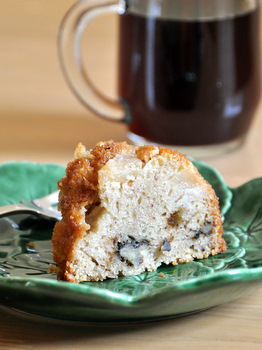
Pears are a great to bake with when they come into season because they have a wonderful flavor, work well with all kinds of fall spices and add a ton of moisture to baked goods. In this Nutmeg-Spiced Pear and Walnut Cake, I added a lot of fresh pear into a nutmeg-laced buttermilk cake, along with some walnuts for texture. The cake is sweetened with sugar and a hint of maple syrup, and the combination of the pears, the nutmeg and the maple makes this a delicious and memorable fall treat that can be served for brunch or paired with ice cream for a dessert.
The cake is easy to make and comes together very quickly. Diced pears and walnuts are folded in just before the batter is poured into the pan to bake. I will use fresh pears that have been peeled when I have them available, but canned or jarred pears (packed in juice or water, but not syrup) will work just as well if you drain them well before using them. Canned pears will be a little more tender than fresh pears and you will have to fold them into the cake batter carefully to avoid smushing any small pieces. The cake is not too sweet, so the delicate pear flavor comes through beautifully in every bite. I think that buttery walnuts work well here, though pecans make a great addition, too.
Because this cake is very moist, I think it comes out best when baked in a tube pan with a removable bottom, although I have it pictured here in a bundt pan. With the tube pan, you don’t need to worry about the tender cake or fruit sticking to the sides of the pan. If you’re using a bundt pan, be sure to grease and flour it even if you are using a nonstick pan to ensure that you get a clean release. If some of the pieces of pear still stick to the pan, simply pop them back into place on the unmolded cake and dust with confectioners sugar and no one will know the difference.
+Continue Reading

Pears don’t always get the appreciation they deserve when it comes to baking. A ripe pear is juicy and tender, and no matter how tasty, it can be difficult to imagine a ripe pear holding up as well as an apple in a pie or cobbler or other fruit-heavy dish. But pears can really shine in baked goods, with their sweet and delicate flavor. The trick is usually just to save the very ripest pears for eating and take those that are still a little bit firm (i.e. will not squish under light pressure) and bake with those.
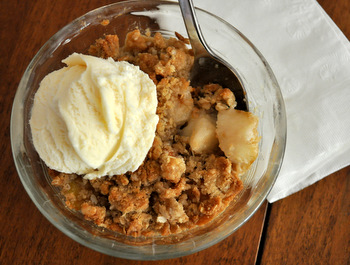
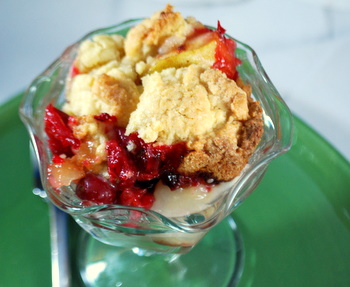
I used a mixture of fresh pears and whole cranberries in this cobbler. Both fresh and frozen cranberries can be used. The combination of winter fruits in a dessert that is served hot is the perfect dish for a cold evening by the fire. The fruit mixture is lightly sweetened with brown sugar and even more lightly spiced with ground cinnamon. I didn’t want to overdo the spices to allow the great flavors of the sweet pear and tart cranberries to come through clearly. A little cornstarch helps ensure that the juices from the pears thicken up just a little during baking.
The topping for this cobbler is similar in consistency to a cookie dough. This means that it is difficult to spread onto the fruit, unlike more cake-like batters. Instead, break the dough up into chunks with your fingers and distribute them evenly over the fruit. You should have enough to just about cover the entire cobbler and the topping will spread as it bakes, giving the dessert a “cobbled-together” appearance.
+Continue Reading

The only real problem I have with pears is that they bruise easily. They are juicy, have great flavor and go well with a huge variety of sweet and savory dishes. The bruising is a problem, though, because it really has an impact on the appearance of sliced pears and – at the risk of sounding a bit silly – a cheese plate just doesn’t look the same with a bunch of bruised pears on it. Fortunately, there is at least one great use for slightly bruised, but still ripe, pears: pear butter.
Pear butter is basically a very thick, smooth applesauce-type dish that is made with pears. It gets the name “butter” from how silky smooth the finished puree is. I was inspired to make a batch after smelling the wonderful scents of Apple Cider Butter being cooked at the Smuckers factory last week, as well as by the fact that I had a bunch of bruised Bosc pears sitting on my kitchen counter when I returned from the trip. You can use any variety of pears for this.
The butter is easy to make: just cook the pears down with a little spiced cider and puree it. I always put pear butter through a strainer at least once to make sure it is as smooth as possible. I don’t add any extra sugar, but if you prefer yours a little sweeter, feel free to add in 1/4 cup or so of brown sugar. You can taste the spices from the cider – cinnamon, cloves, etc. – in the finished butter, but I add in a little bit extra to keep the flavors strong. This will keep well in the fridge for about a week (maybe two, if stored in an airtight container) and can be used as a spread for English muffins, biscuits, toast, pancakes and even savory things like pork chops (very tasty!).
+Continue Reading

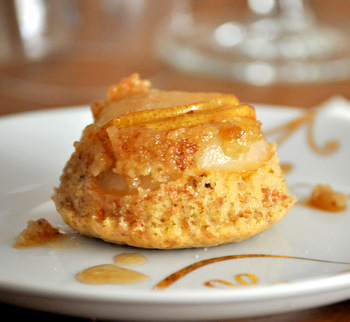
Since I’m one of the featured bloggers for the 1,2,3 Puff Pastry contest this month, I’ve been doing quite a bit of thinking about puff pastry and its applications. Fortunately, it’s pretty versatile. Vol-au-vents are cases made of puff pastry. They look like cylinders of pastry, with high, crisp sides and a light, buttery base. The top of the vol-au-vent remains open and can be filled with just about anything, although they’re primarily used for savory appetizers and main dishes. When they’re used for desserts, these same pastries are more likely to be called tarts or simply shells. I’ve stuck with that theme here and opted to call these caramel and pear filled vol-au-vents Caramel Pear Puff Pastry Tarts, instead.
These treats have a great combination of textures and flavors. A crispy, buttery shell is made very easily with puff pastry and the sweet, fruity filling is rich and satisfying. Eating one is a lot like having your own personal pie – only without the fuss of making a regular pie crust and waiting for the filling to bake. The filling is made on the stovetop, just a quick caramel sauce with lots of pears in it. I thickened the sauce with a little bit of cornstarch, since pears will release a lot of juice as they cook and you get a nice, thick consistency by helping it to thicken just a little bit. I used brown sugar and a hint of vanilla to accent the pears.
The cases are also easy to make. Start with a sheet of puff pastry on a lightly floured surface. Cut out about a dozen 2 or 2 1/2 inch rounds with a circular cookie cutter. Cut a smaller circle out of the centers of half of those pieces. Stack the donut-shaped round on top of a solid piece, using a bit of water or lightly beaten egg to hold them together, and bake until golden. If you don’t want to make them yourself, it is possible to find this type of pastry shell ready-made in grocery stores, too. Both options are pretty quick to work with.
If all else fails, or if you simply have leftover filling, the pear-caramel mixture is great on top of vanilla ice cream, too.
+Continue Reading