Archive for: parchment paper

Reynolds Wrap Nonstick Pan Lining Paper, reviewed

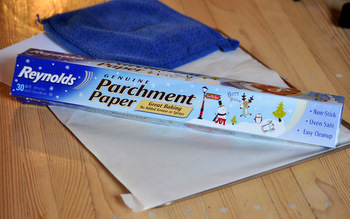
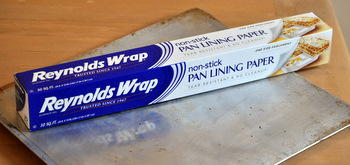
Reynolds Wrap Nonstick Pan Lining Paper
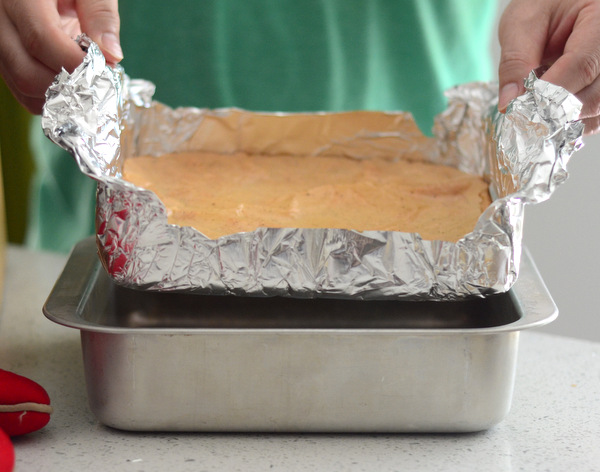
Nonstick parchment paper is a great tool to have in the kitchen. Perfect for lining cookie sheets and cake pans, parchment paper makes cleanup easy and prevents your baked goods from sticking to your pans. Parchment paper is best used on flat surfaces (such as the bottom of pans), but there are things that I bake that I like to be able to lift out of the pan for cooling, slicing and serving. These include coffee cakes, brownies and bar cookies, and when making these types of baked goods, I typically line my pans with aluminum foil and lightly grease it. I can lift the foil right out of the pan (I wrap it up, over the sides) and my baked goods don’t stick.

Reynolds Wrap has managed to combine aluminum foil and parchment paper into one product, their new Nonstick Pan Lining Paper. This paper has foil on one side and parchment on the other. The idea is that the foil allows the paper to conform to the shape of the pan – sides and all – but the parchment paper gives it a nonstick finish with no extra greasing required. This product is a little more expensive than both foil and parchment are, but I picked up a roll recently to see how it performed.

The paper feels heavy, much thicker than either plain aluminum foil or parchment paper. It pressed easily into my pans (sheet pans with shallow sides and deeper, rectangular baking dishes), wrapping into the corners and up the sides easily and staying exactly where I contoured it to my pan, although I noticed that it didn’t have quite as much flexibility as plain aluminum foil. The parchment side of the paper worked just like regular parchment, so it definitely didn’t need to be greased. Overall, I was happy with the performance, but lightly greased aluminum foil works just as well for most baking applications. I would choose this for more heavy duty baking (like lasagna, which Reynolds Wrap actually recommends) where I would think that foil alone might not hold up to the job.

Update: My paper did curl around the edges when I used it on baking sheets without “wrapping” the edges around the sides of the pan, however this didn’t seem to impact what I was baking in any way, as the thick paper stayed flat under my baked goods.

What is a silpat?

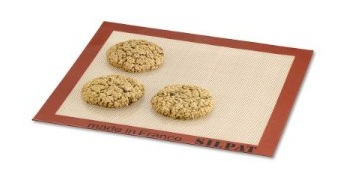
Silpat

Many baking recipes call for lining a pan with parchment paper, but parchment paper isn’t the only thing that you can use to line a pan. Silpats are non-stick baking sheets made of a blend of food-safe silicone and a fiberglass mesh. They’re incredible versatile because nothing sticks to them, they can be used thousands of times and they work at a very wide temperature range. Parchment paper, by contrast, can only be used a limited number of times and may start to smoulder at very high temperatures. To use a Silpat, simply place it on your baking sheet without greasing and place your cookie dough directly on top of the mat, then bake. Because they add a degree of insulation to a pan, using one of these silicone mats often results in more evenly baked cookies and cakes, especially if your oven (or pan) tends to have hot spots in it. Silpats have many fans, but the insulation they add can mean that a familiar recipe may take an extra minute or two bake fully compared to the same recipe made on a parchment-lined sheet pan.

Silpats, and other silicone pan liners, aren’t just for baking cookies. These non-stick sheets have many other kitchen uses. They’re wonderful for rolling out pastry dough, kneading bread dough and working with especially sticky foods, such as hot sugar or candies. The mats clean with water (or a mild soap), so they’re as easy to care for as they are to use, and you’ll definitely find quite a few uses for one if you have one in your kitchen.

What is parchment paper?

Parchment Paper
One thing that comes up in baking recipes almost as often as butter, flour, sugar and eggs is parchment paper. It is recommended for lining baking sheets, lining cake pans and being used to roll out pie crusts and cookie dough. But what is parchment paper?

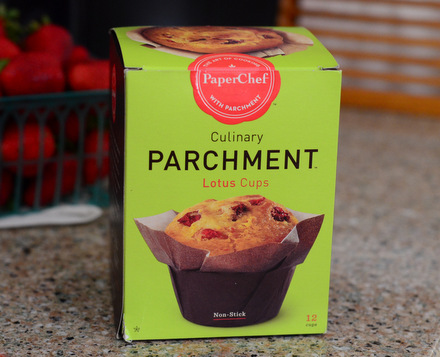
Parchment paper is a heavy duty grease and moisture resistant paper that is used in baking and cooking because it provides a heat-resistant, nonstick surface to bake on. Parchment paper is made from paper that is treated with an acid during production to give it a high stability and high heat resistance. The paper is then coated with a nonstick material, typically silicone, to give it its nonstick properties. Parchment paper is safe to use to temperatures up to 420-450 degrees Fahrenheit (exact temperature depends on the brand) and is best used in a regular or convection oven, not under a broiler. At higher temperatures, the paper will become brittle and will start to turn dark brown. Both sides of parchment paper are identical, so both sides can be placed “up” when using it.

The best thing about parchment paper is that it is nonstick, so it eliminates the need for greasing cookie sheets when you put a piece of parchment down before you portion out your cookie dough. The cookies will come off very easy, with no sticking and absolutely no mess. In fact, you probably won’t even need to was the baking sheets afterward! Parchment paper can be reused several times, especially when using it to bake cookies, but will become brittle after several uses of a single sheet and should be replaced at that point.

When using parchment to line pans, greasing the pan is also usually recommended. This is because a little bit of vegetable oil in the pan will help the parchment to stick to the pan, meaning that no batter will creep under the parchment when you fill your pan up.

Can I bake with wax paper?

Wax paper roll

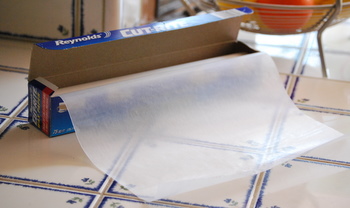
You’ll notice that most baking recipes these days call for lining a pan with parchment paper. It is widely available, but can you substitute it with similar looking wax paper if you don’t already keep it in your kitchen? The short answer here is that wax paper may look similar to parchment paper, but it is quite different, and it is not ideal for baking.

Wax paper is coated with a thin layer of wax to make it water resistant. It is often used in the kitchen for food storage purposes, since something wrapped in wax paper will stay much fresher than something wrapped in a non-waterproof material. While it is not nonstick in the same way that silicone-treated parchment paper is nonstick, the wax makes it nonstick, so it is a good choice for rolling out pie or cookie dough.

But as useful as it is, it is not a good choice for baking. At high temperatures, the wax on the paper can melt and will transfer to whatever you are baking. The food grade wax is not toxic, but it’s a good idea to keep it out of your baked goods. The wax will transfer to your baking sheet and may require additional cleaning. The wax also has a fairly low smoke point, which means that any exposed wax paper will smoke while it is in the oven and there is a possibility that, if you are cooking something that requires a very long baking time or very high temperature, the paper could actually catch fire. If you use wax paper to line the bottom of a cake pan, it will not smoke but you will still have wax transfer.

Stick to parchment paper – which is reusable, completely nonstick and is generally heat resistant to around 450F – for your baking needs, or simply fall back onto an even older technique to prevent sticking: lightly greasing a pan with oil. I also like to line the pan with aluminum foil and lightly grease that to minimize the amount of cleanup you need to do after baking.

Pre-Cut Parchment Paper

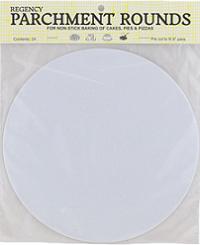
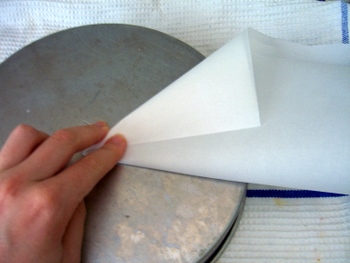
Pre-Cut Parchment PaperIf you’re baking a cake or bread, and you know that you’re going to need to remove it from the pan after baking, it’s a good idea to try and make the task as easy as possible. You can grease the pan well, which is effective, but it is best to line the pan with parchment paper that won’t stick to either the pan or the cake. To line a pan with parchment paper, you need to tear a sheet off of your roll that is larger than the base of your pan, then cut it down to fit. There is a technique to doing this that is not difficult, but it does result in a lot of wasted parchment paper and adds a few minutes of prep work. I don’t mind doing it, especially when I only have one or two cakes to do. But if you’re baking a lot of cakes or are otherwise short on time, you can buy Pre-Cut Parchment Paper Rounds in a variety of different sizes. They come out of the bag and ready to fit 8-in, 9-in and other size pans.

They’re inexpensive and cut down on wasted parchment. The only downside is that you can’t easily cut these into different pan sizes, so you’ll either have to have some parchment sheets on hand or a roll of parchment tucked away somewhere if you think that you’ll need to line any square or rectangular pans in the near future.

Visit Us On FacebookVisit Us On PinterestVisit Us On TwitterVisit Us On YoutubeCheck Our Feed