Archive for: milk

What is half and half?

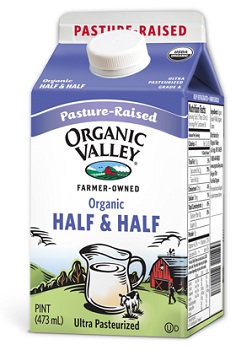
Half and Half carton
The term “half and half” shows up very frequently in cooking and baking recipes in the US, but it is not particularly well known outside of the US (or the term refers to something completely different). When it appears in a recipe, it sometimes generates a little confusion as to what it is. “Half and half” is a mixture of half heavy cream and half whole milk that is commonly found in the US. Heavy cream has a fat percentage of about 35% and that concentration of fat is what helps stabilize it when you whip it into whipped cream. Half and half has a fat percentage around 12% and, although much thicker and creamier than milk, it will not whip up into fluffy whipped cream like heavy cream will.

The rich, creamy consistency of half and half is ideal for adding to black coffee to lighten it up without watering it down and for adding to soups to enrich them. It can be used in place of milk in many recipes, such as cakes and quickbreads, and will give baked goods an even finer, more tender crumb than they would typically have (although it is worth noting that the extra fat can create a product that is too rich and even slightly greasy occasionally). My favorite application for half and half is in ice cream, where may recipes will call for both heavy cream and milk. Using half and half saves me a step when mixing up my ice cream base, it also saves me a step when writing the recipe because I can call for one convenient ingredient rather than two separate ones.

You can substitute for half and half by mixing half whole milk and half heavy cream. IF you live in a county where “light cream” is widely available, know that it has a slightly higher fat content than half and half and should be mixed with approximately one third whole milk to make a substitute for half and half.

Whole milk vs low fat or skim milk in baking

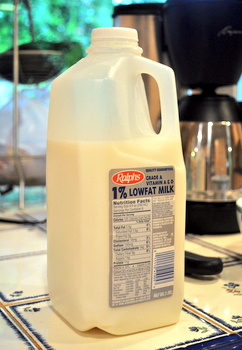
Low fat milk

Many baking recipes call for milk as one of the main ingredients. Many recipes will call for a specific type of milk – whole milk, low fat, skim – and others will simply call for it without specifying the fat content. This brings a couple of questions to the surface: what is the difference between whole milk and skim milk, and does it matter what you use when it comes to baking?

The difference between whole and skim milk is the fat content. Whole milk generally contains about 3.5% fat, while skim contains none. All liquids in baked goods help to bind things together – even if you add water to a recipe – but fat plays an even more important roll and acts as a tenderizer and moisturizer. This means that cakes and muffins with slightly more fat in them tend to have a finer crumb and not be quite as dry when they have a little more fat in them. In professional bakeries, whole milk is the standard for baked goods and most recipes for home bakers – unless otherwise specified – tend to assume that you will be using whole milk. You can substitute low fat or skim milk in just about any recipe that calls for milk, but because the recipe was probably designed to work with a little more fat in it, you should mix carefully so that your product doesn’t become tough from overmixing.

I typically use low fat milk when I bake because that is what I keep in my kitchen on a regular basis. I tend to note in recipes when I think using a different type of milk will be beneficial. I prefer to use whole milk in ice creams and custards when possible because that small amount of extra fat in the milk contributes to a much richer mouthfeel in the end. In cakes, muffins and other baked goods, you should have results that are very, very similar regardless of what type of milk you use.

What does ultra pastruized mean?

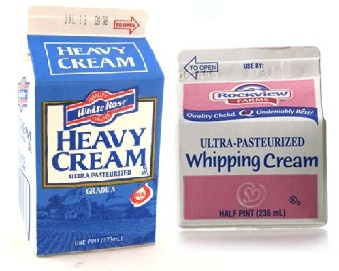
Ultra pasteurized heavy cream
Pasteurization is the process of heating a food – usually a liquid – to a specific temperature for the purpose of slowing microbial growth, extending the shelf life of a product by slowing the spoilage process. The technique was first developed to prevent wine and beer from souring quickly, but it is very widely used today with dairy products because pasteurization actually halts the growth of potentially harmful bacteria in milk. In pasteurization, milk is heated to a temperature of 161°F for 15–20 seconds, then quickly chilled to 40°F or lower. The target temperature for pasteurization is below the boiling point of milk because milk will curdle if it boils.

The label “ultra pasteurized” also appears frequently in the dairy aisle, primarily on cartons of heavy cream and half and half. These products are subject to an ultra high temperature (UHT) pasteurization process where they are heated to at least 275°F for a very short period of time. Ultra pasteurized dairy products (the process is used for many products, including juices, etc.) have a much longer shelf life than their pasteurized counterparts because the process eliminates a much larger percentage of bacteria than regular pasteurization does.

In general it does not matter if you use pasteurized or ultra pasteurized in a recipe that calls for milk or cream and there is virtually no nutritional difference between the two. That said, since cream is the product subject to UHT more frequently than milk (in the US, this is the case, while in many other parts of the world UHT is common with milk products to make them shelf-stable without refrigeration for several months), it is worth noting that there can be some small drawbacks to it. UHT can impart a slightly cooked taste to dairy, which might not be noticeable in a baked product but can be detectable in whipped cream. The ultra pasteurized heavy and whipping creams also do not whip up quite as well – although they still will whip up to a fluffy cream – as their pasteurized counterparts and seem to take slightly longer to do so.

What is heavy cream?

 What is heavy cream?Heavy cream, also known as whipping cream, is an ingredient that is frequently called for in recipes. Cream is the thick, fat-rich part of milk, which rises to the top when milk is fresh and is skimmed off. The type of cream is determined by its fat content. Heavy cream has a fat content between 36 and 40%. A high milkfat will add tenderness and moisture to a baked good, just like adding most other types of fat. For instance, many scones are called cream scones because they are made with cream. It is certainly possible to substitute some other type of milk for the cream in these recipes and have them come out, but they won’t be nearly as tender or moist as a scone that is actually made with heavy cream. Heavy cream is also used to make whipping cream. The fat in the cream is what helps stabilize it after it is whipped, and why you can’t whip just any old dairy product into whipped cream with a whisk. The fat also prevents the cream from freezing too hard when it is used in ice cream, leading to a creamier finished product.

There is one type of heavy cream, called manufacturing cream, that is used commercially by bakers, cooks and bakeries. It has an even higher fat content of 40-50%. This can be substituted to regular heavy cream (it is often found at bulk stores, but would not be found at a grocery store with regular cream), but otherwise there are no real substitutes for heavy cream when you need it. The fact that heavy can whip and hold its structure so well makes it unique. And because its high fat content gives lightness to all kinds of dessert, from featherweight mousses to silky ice cream to tender scones, it is an ingredient that is generally worth using when called for to get the best results you can.

Visit Us On FacebookVisit Us On PinterestVisit Us On TwitterVisit Us On YoutubeCheck Our Feed