Archive for: low fat

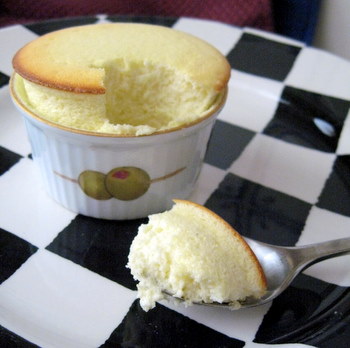
In the US, I would venture to guess that most people think about pies made with summer fruits before they start to think about puddings with them. Summer puddings are a great way to make use of fresh berries, and while I will admit that I still won’t turn down a slice of pie, a pudding is an easy dessert well worth keeping on hand.
I like to think of summer puddings as no-bake bread puddings. Summer pudding is a traditional British dessert that is made by layering slices of white bread with berries and syrup or juice. The dessert is created in a dish, pressed down tightly to help the bread absorb all that liquid, and then chilled until ready to serve. The result is a fresh-tasting and flavorful dessert that isn’t too sweet, showcases your berries and is perfect for serving with loads of whipped cream.
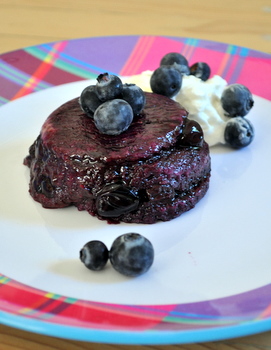
You can really use any kind of berries – including frozen – in a summer pudding, but since the whole point is to take advantage of fresh berries, I’d recommend saving this recipe for summertime. I used all blueberries to make this pudding, cooking them in a bit of sugar to ensure that they were sweet before layering them with the bread rounds. White bread tends to give the best result because it is so tender, but I’ve used brioche and challah in puddings with good results, too. Since these are individual puddings, use a cookie or biscuit cutter that is about the same size around as your ramekins/serving dishes to cut the bread into slices for layering.
The pudding is moist, tender and fruity. It is also very light – and very low in fat compared to shortcakes and pies. The puddings will keep well in your refrigerator for two or three days if you want to make these ahead of serving time, or if you simply want to make a batch to enjoy over a couple of days yourself. The recipe doubles and triples easily, and if you have any leftover berries, you can always save the syrup and pour it onto ice cream or pancakes to use it up.
+Continue Reading

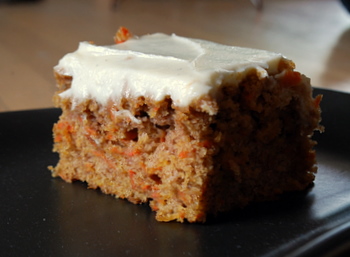
I don’t cook much from food magazines, and when I do, it’s usually from an older issue that I found behind the bookcase and flipped through, rather than one that just arrived in the mail. My thought process tends to be along the lines of “oh, that looks good. I’ll have to remember that and try it later.” For once, however, a dish I intended to make managed to align itself with a recipe from the most recent (April 09) issue of Cook’s Country: carrot cake. With a bag of fresh carrots in the refrigerator, I didn’t waste much time trying out their recipe for a lower fat carrot cake.
My usual carrot cake recipes don’t actually have much more fat than this one, as I prefer a cake-like carrot cake and not a dense/wet one, but this is “reduced” from those oil-heavy recipes, so I’ll let the lower fat label stand. The main difference between what I usually make and this recipe is that this one uses oil, not butter, as the fat. That said, I did make a few changes to the recipe as I prepared it.
Most of my changes had to do with the spicing. I decided to omit some of the more “traditional” carrot cake spices and use cinnamon and cardamom for a spicy flavor that was a little bit different. I also used applesauce where the recipe called for carrot baby food. Apparently, the testers felt that applesauce didn’t contribute enough carrot flavor to a cake, even though the cake has an entire pound of shredded carrots in it. I’ve never had a carrot cake that really tastes like a carrot (or a sweet zucchini bread that really tastes like a zucchini, either), and since unsweetened applesauce performed perfectly in the cake, I don’t really feel like I missed out.
The cake was delicious. I loved the twist that cardamom provided to the overall flavor. The sweetness of the brown sugar really came through and fit the carrot cake well. It was moist, but not wet, and had a soft, tender crumb to it. I didn’t bake this in a carrot cake pan; I used your standard 9×13-inch pan. Since it’s a sheet cake, it will serve quite a crowd. If you’re not entertaining, however, the cake will keep well for several days in in airtight container (plastic wrap over the pan is fine) as you eat your way through it.
+Continue Reading

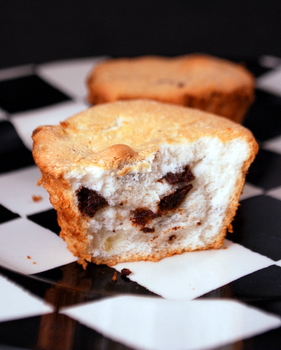
Angel food cakes are just delightful – fluffy, soft and sweet. The full size cakes are light, but sometimes you just don’t need a whole big cake. Maybe you don’t have an angel food pan, which is crucial to success in baking a full angel food cake, or maybe you don’t want to use up a dozen eggs just for the egg whites. Perhaps it’s just too much cake to have lying around the house. Whatever the reason, it’s good to know that angel food cake can be adapted into a cupcake recipe quite easily.
Angel food cupcakes are light and fluffy, just like their big brothers, but bake up in a regular muffin tin. They’re not quite as impressive to look at (small and with flat tops), but they taste great and are a yummy snack. I don’t frost angel food cupcakes because they are so soft that their taste and texture can be lost if you use too much as a topping. I opt for a simple glaze, if I’m going to top them, or leave them plain.
To dress up this batch, I mixed some chocolate to make chocolate chip angel food cupcakes. I used some bar chocolate (dark and white chocolate) and chopped it up to act as my “chips.” Chopping up the chocolate is actually one of the most important things you need to do for this recipe before mixing them into the batter. Full-size chocolate chips can be too heavy for the delicate cake and will sink down to the bottom, causing not only an uneven distribution of ingredients, but probably causing the cupcakes to stick to the pan. Chopped chocolate – and you can use any flavor you like – will remain suspended in the cake nicely.
One other thing to keep in mind is that it is better to either use a nonstick muffin tin or very lightly grease your pan. Cupcake wrappers tend to shrink around the cake when it cools, while the cake can cling to the sides of the pan as it cools to help maintain its ultra-fluffy texture.
+Continue Reading

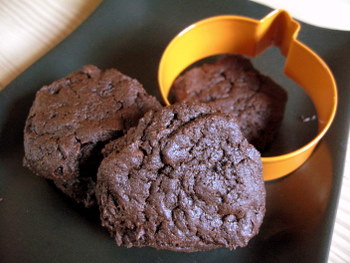
Alice Medrich’s recipe for cocoa fudge cookies is one of my favorite chocolate cookie recipes. Not only are they delicious, but the cookies are also quite low in fat. The secret ingredient in these cookies is yogurt, which adds moisture and tenderness to the cookies without adding in a lot of extra butter or oil. These pumpkin spice fudge cookies are little more than a riff off of the original recipe, only they use pumpkin puree instead of the yogurt originally called for.
The substitution is an easy one-to-one using canned pumpkin because it actually has a similar consistency to the Greek yogurt that I normally use in baking. It should be the same for most brands, although if you find that your pumpkin is unusually thick or dry (or if you’re using leftover roasted pumpkin and pureeing it yourself), you can whisk a tablespoon or so of water into the pumpkin to juice it up.
You can’t taste any of the pumpkin itself in the finished cookies because it is just too mild compared to the strong chocolate flavor of the cocoa powder. This isn’t a bad thing, but to give a little hint of the pumpkin’s presence in the dough I also decided to mix in some of my homemade pumpkin pie spice. The spiciness works very well with the chocolate and adds a little something extra to push these chewy, fudgy cookies over the top.
+Continue Reading

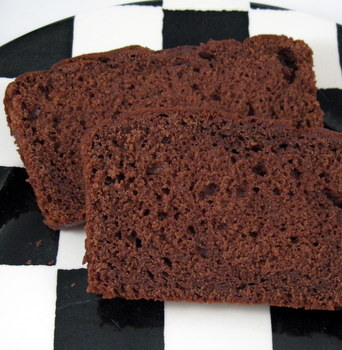
Not all chocolate cravings are created equal. Some call for a piece or two of dark chocolate, while others might need a big bite of white chocolate to be satisfied. Some aren’t satisfied by real chocolate at all and need to be treated with a slice of chocolate cake. For me, the answer to this kind of craving is an easy to make chocolate loaf cake. It takes only a couple of minutes to put together and needs no frosting, so you only have to wait for the cake to bake and cool (at least somewhat!) before indulging.
This cake was inspired by a recipe I’ve made many times before, a marbled chocolate bundt cake. That recipe is one featured in Alice Medrich’s excellent cookbook, Chocolate and the Art of Low Fat Desserts. Tasting that cake, you would never know that it is lower in fat than your average pound cake, and so I took some ideas from that recipe to come up with this one. For instance, I used yogurt to add moisture and tenderness to the cake, and opted for cocoa powder to give the cake its chocolate flavor, rather than higher fat chocolate. While my finished product isn’t too low in fat, it’s still reasonable enough that two slices can be eaten without guilt – and it tastes delicious.
It looks like a pound cake, but has a soft and fluffy texture, with a very fine and tender crumb. It is moist in the way that you expect a good sheet cake to be, but not in the same “wet” way as a carrot cake often is. I’ve had some yogurt-based cakes that do seem wet and dense, and this cake is neither. The cake has a very deep chocolate flavor, with a perfect balance between sweetness and bitterness (from the cocoa powder). Loaf-style cakes aren’t usually served with frosting, and fortunately this cake has enough presence on its own that it doesn’t need any. I like this cake plain, but if you really want even more chocolate, stir in 3/4 cup chocolate chips before baking.
As usual, I used a thick low fat Greek-style yogurt. You’ll get the best results by using a low fat or full fat yogurt, rather than nonfat, just because the extra fat will contribute to the tenderness of the cake. This isn’t to say that nonfat won’t work (it will), just that your results may be slightly different and you should take a bit more care not to overbake the cake. If you don’t have yogurt, use sour cream instead because it has a very similar flavor and consistency. Regular yogurt can be used if you don’t have Greek-style yogurt and the results should turn out just fine.
+Continue Reading