Spicy gingersnap cookies are a great alternative to graham crackers when you’re making a crust for a pie or a cheesecake. They can be ground up into crumbs just like graham crackers can be and give a warm, spicy kick to whatever they’re paired with. I like to use them a little more often in the winter, when everyone is in the mood for spices like cinnamon, ginger and cloves, but I like them in general because they’re an easy way to add a lot of flavor to a recipe.
These Mini Lemon Cheesecakes are a perfect match for a gingersnap crust. The cheesecake batter is flavored with lots of lemon zest, so it has a bright citrus flavor that is a wonderful contrast for the spicy crust. I also added a small amount of lemon zest to the crust to tie the two together. I recommend choosing a flavorful type of gingersnap (Biscoff are quite good) for the best results, but you will still get a tasty dessert if you use regular graham crackers for the crust, as well.
These are a spinoff of my Chocolate Chip Mini Cheesecakes. They’re single serving cheesecakes, baked in muffin pans. I recommend using a muffin liner when baking these because it makes it much easier to remove them from the pan and serve them. If you happen to have a mini cheesecake pan, where the bases of all the muffin cavities are removable, then you can skip the muffin liners and bake your cheesecakes directly in the pan.
These can be served at room temperature shortly after being baked, or they can be chilled for up to two or three days. Garnish with whipped cream and a sprinkle of spice and gingersnap crumbs, or a small twist of lemon zest.
+Continue Reading

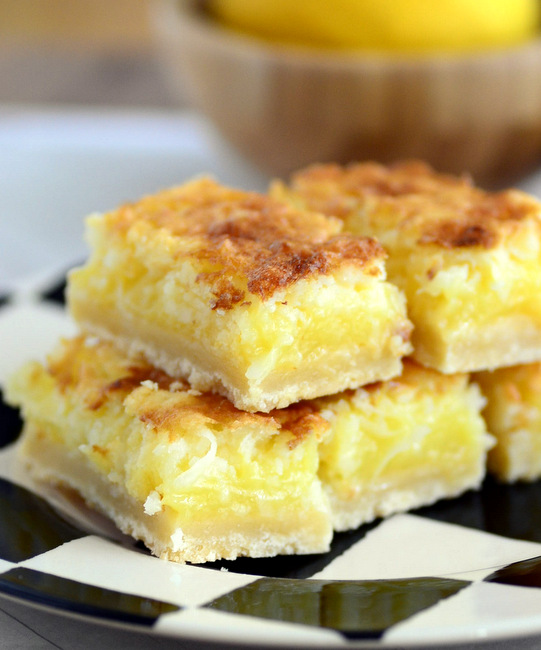
This is a lemon bar recipe for lemon lovers. It has a filling that is nice and thick, a great lemon flavor and a beautiful silky texture. The lemon custard is sitting on top of a layer of tender shortbread crust that is thick enough to hold up to it without getting soggy, even if you are planning to take the bars to a picnic the next day.
Many lemon bar recipes use sour cream or milk to round out the flavor of the filling and give it more body. This makes for a tasty lemon bar, but it also mellows the natural zestiness of the lemon a little bit. My favorite lemon curd recipe isn’t cut with butter or any other fat (besides the egg that thickens it) and it has plenty of body – and the filling for these bars works the same way. With just lemon juice, sugar and eggs you get a fantastic result.
You need to use fresh lemon juice to get the best results for this recipe, as store-bought lemon juice just doesn’t have the same brightness as a freshly juiced lemon. You’ll also want a little bit of fresh lemon zest to add to the crust, to give the bars a little extra lemon. Serve these bars chilled or at room temperature, and dust them with a little bit of confectioners’ sugar just before serving to give them a beautiful finished look.

+Continue Reading

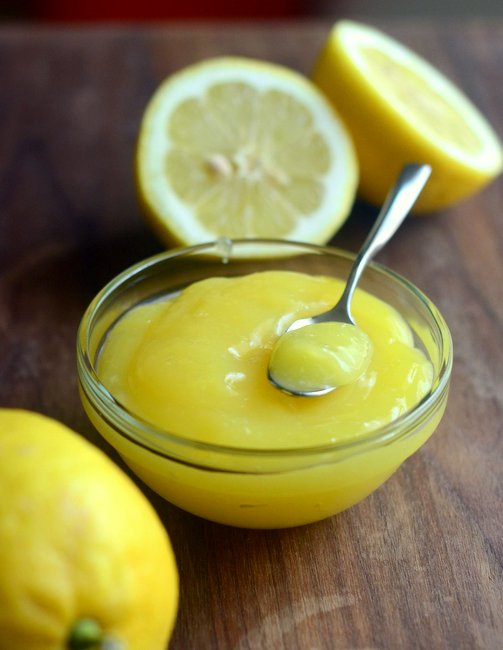
Whenever I have a lot of lemons in my kitchen, I usually make a fresh batch of lemon curd. I am a big fan of the creamy, tangy curd and will put it on fresh fruit, scones, slices of cake and just about anything else I can think of. Another great use for it is putting it into a batch of ice cream. With the zesty lemon curd as a base, you get a very bright and fresh tasting ice cream with loads of lemon flavor and very little effort.
I use my favorite Low Fat Lemon Curd as a base for this recipe. The curd is low in fat because, unlike other lemon curds, it doesn’t use any butter but still delivers a smooth and creamy finished product. I also like the fact that the curd is quite tart, which makes it work very well in this Lemon Curd Ice Cream. The basic method is to make your lemon curd and chill it, then mix it with half and half and a small amount of additional confectioners’ sugar (when served cold, ice cream will taste less sweet than the base alone, so it’s always a good idea to have a little extra sugar). Chill it in an ice cream maker and you’re ready to eat!
The finished product is very light and creamy, with a great lemon flavor and a tangy finish. It actually reminds me a lot of lemon sherbert – only better than just about every kind I can remember tasting. You do need an ice cream maker to get the best result. You can make a slightly more granita-like version by pouring your base into a shallow container and putting it in the freezer, then stirring it every 30 minutes with a mixer or a fork until well-frozen. Serve this on its own, with fresh fruit, whipped cream or put a small scoop into a flute and top with champagne for a zesty spring cocktail!
+Continue Reading

Souffles are a very versatile dessert because they are light, yet satisfying. Chocolate souffles can be fairly rich and you might not want to have one after a very meal. Lemon souffles, on the other hand, have a bright and fresh flavor that you can always make room for. These Lemon Blackberry Souffles have an easy to make lemon base that is made with fresh lemon juice and lemon zest. There is very little added fat in these – aside from the egg yolks that give the souffle their body – so they actually are just as light as they taste.
The souffles themselves are lemon. The blackberries are actually buried at the bottom of the ramekins, underneath the cloud-like lemon topping. In the oven, they become sweeter and juicier, and add some extra sweetness to the souffles when they’re served. I used fresh, whole blackberries for these souffles. You can substitute other berries, such as raspberries, blueberries or boysenberries. If you only have frozen berries, defrost and drain the berries, then spoon them into the ramekins in a single layer. You’ll have a saucier result this way, as the fresh berries hold their shape well during baking, but you’ll still get the same great flavor.
These are best served when they’re fresh from the oven, warm and rising dramatically above the rims of their ramekins. The recipe doesn’t take long from start-to-finish (and it is possible to prepare the base earlier in the day and beat in the egg whites just before baking), so it’s fairly easy to pop these into the oven at the end of a meal and be ready to eat them just as the coffee has finished brewing. If you must let them sit before serving, they’ll deflate a bit, but they’ll still have great flavor and will be enjoyable to eat.
+Continue Reading