Archive for: flour

Some recipes call for sifting your flour. Other recipes call for flour that has been sifted. Still other recipes don’t specify whether your flour needs to be sifted or not – and with all the options, this raises the question of what does sifting flour actually do?
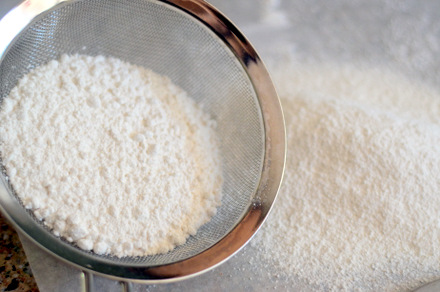
Sifting flour is a way of aerating your flour and making sure that there are no large lumps in it. Flour is very finely milled and it is typically packed in small bags, where it gets packed down easily. This is especially true of cake flour, which has an exceptionally fine texture. Depending on the climate you live in, your flour might also develop lumps due to very high humidity and it can even attract small bugs, and sifting eliminates both of these problems. When a recipe calls for sifting flour together with other ingredients – such as cocoa powder, leavening agents or salt – it is to help disperse those ingredients into one mixture before adding them to a recipe.
Aerated flour – as opposed to packed-down flour – is easier to mix in to recipes. For most recipes, giving your flour a few gentle stirs with a knife or whisk to aerate it while it is in your storage container is enough agitation to break up any big lumps that might be present and prepare the flour for use in a recipe. As long as you are gentle and don’t pack the flour very firmly into your measuring cup you shouldn’t have any problems when you use it, even if the recipe calls for sifting your flour after measuring.
When a recipe calls for flour to be sifted before measuring (i.e. “1 1/2 cups sifted cake flour”), however, you should take care to sift your flour before measuring. Sifted flour does have more air dispersed in it than unsifted flour, and there are some delicate recipes where having the flour as aerated as possible – such as angel food cakes – will produce a better, lighter finished product.

Unbleached flour is refined flour that has not had any whitening agents added to it. Bleached flour is flour that has been whitened – i.e. bleached – using chemicals. Bleaching flour does not have much of an impact on the flavor of the flour – although some people say that they can taste the difference, so if you are very sensitive you may fall into this category – but it does change the color of the flour to a bright white. Bleaching also serves to lower the protein content of the flour, softening it so that baked goods made with it will be more tender. Most cake flours, for instance, are bleached.
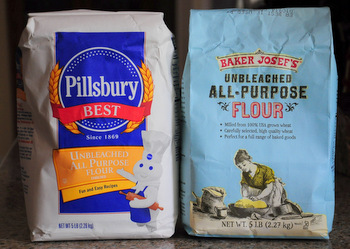
Unbleached flour has a pale off-white color and the difference between it and bleached flour is very clear when you put the two side by side. Unbleached all purpose flour is widely available and is a good choice for just about all baking projects, regardless of whether the recipe specifically calls for unbleached flour. In fact, a good number of bakers these days use unbleached all purpose flour exclusively (using only bleached cake flour in recipes that specifically call for it), so many recipes are designed with it in mind.
Baked goods made with bleached flour may have a slightly softer texture and a brighter color than those made with unbleached flour. You’re probably not going to notice a significant difference in a batch of chocolate chip cookies made with unbleached vs bleached flour, but you may notice that your angel food cake is lighter, whiter and softer when made with flour that has been bleached because the difference is much more obvious in that type of baked good.

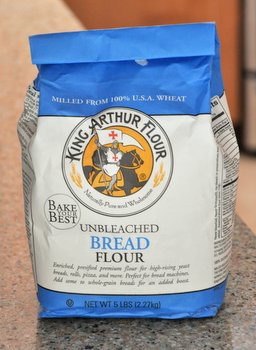
Bread flour is a high protein flour that is intended to be used in yeast breads and designed to give you a better result in those breads than you would get with another type of flour. The high protein content means that the flour has more gluten in it. The increased amount of gluten allows doughs make with bread flour to be extremely elastic, and that elasticity leads to a lighter and chewier yeast bread. It is occasionally called for in non-bread recipes when a chewier texture is desired, but this is not very common.
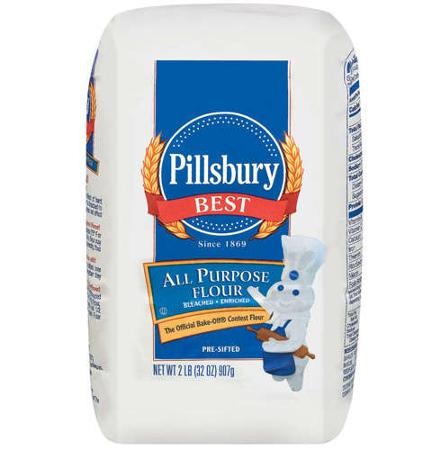
All purpose flour is the most commonly used flour (here in the US; some countries just have “plain flour” with a similar purpose). The idea behind all purpose flour is that it is good for most purposes and you can use it for baking cookies, baking cakes, making pastries and making breads. Most of the time, all purpose is a good choice, but those specialty flours – such as cake flour, pastry flour and bread flour – can definitely deliver a better result when they’re called for in a recipe.
It can be difficult to create a substitute for bread flour if you do not have bread flour but a recipe calls for it. The best way to substitute for bread flour is by adding a small amount of vital wheat gluten (which is just pure protein/gluten) to all purpose flour to increase its protein content. Remember that a higher protein content will lead to a more supple dough. If you directly substitute all purpose in a recipe that calls for bread flour, you may end up with a bread that doesn’t rise quite as well or has a slightly more crumbly texture than it would otherwise have. Fortunately, bread flour is very widely available at most supermarkets, so it is easy to have on hand if you regularly bake yeast breads at home.

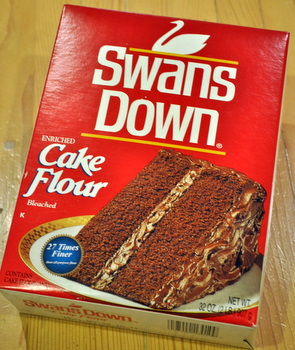
All purpose flour is the standard flour for home baking, but a glance down a well equipped grocery store baking aisle is enough to tell you that there are many other types of flour available for baking. Cake flour is one of them and, if you like to bake, it should be a staple in your kitchen. Cake flour is a low protein flour that is made from soft winter wheat. It has a protein content of about 8% and is usually bleached, which gives it a very fine texture and a very light color. Because it has such a fine texture, cake flour should be sifted before incorporating it into a recipe to prevent clumping.
As the name suggests, cake flour is great for making cakes and other baked goods because it gives you a very tender result. This is because it has such a low protein content compared to other flours (all purpose is usually around 10%) and less gluten forms when you mix it into a batter, producing a cake with a fine, soft, even crumb. Although all purpose flour can yileld a great cake, there is generally a noticeable difference in the texture between a cake made with all purpose flour and one made with cake flour. You can make any kind of cake with cake flour, but it is commonly flour in white cakes and in angel food cakes, both of which are known for having a light texture.
There are many recipes that specifically call flour cake flour, but you can substitute it into a recipe that calls for all purpose flour, too. Use 1 cup of cake flour plus 2 tablespoons for each cup of all purpose flour called for. By the same token, you can substitute all purpose flour for cake flour in a pinch by using 1 cup of all purpose flour minus 2 tablespoons for each cup of cake flour called for in a recipe. Still, it is best just to use cake flour instead of approximating it if you want to get the best results from your recipes.
The word “gluten” is probably so well know these days because we are all so much more aware of people with gluten intolerances and products that are gluten free. Of course, this doesn’t really describe what gluten is. Gluten is protein in wheat flour and some other cereal grains. Gluten is elastic, and when combined with water, the proteins first come together in long strings. These networks of gluten are what allow breads to rise and give just about all baked goods their shape and texture. In addition to providing a soft, chewy texture to fresh breads, gluten is also responsible for the brittle texture of stale breads; when moisture leaves a baked loaf of bread (over the course of a few days), the gluten becomes less elastic and finally will crumble under pressure, as seen in a crumbly and stale loaf.
When the protein is isolate from the starches of the flour, it is brownish-grey, tough and rubbery. This may not sound that appealing in text, but in this state it is known as seitan and is frequently used as a meat-substitute in vegetarian or vegan cooking, and the chewiness of seitan is what makes it a very convincing faux-meat.
Wheat flour, rye and barley are probably the three most common grains that sources of gluten. At stores like Whole Foods, as well as at specialty baking stores, you can buy “vital wheat gluten” on its own. Vital wheat gluten is flour-less gluten and it can be added to breads – especially breads made with low-protein whole grain flours – to increase elasticity, giving the finished loaves a much higher rise and softer texture.