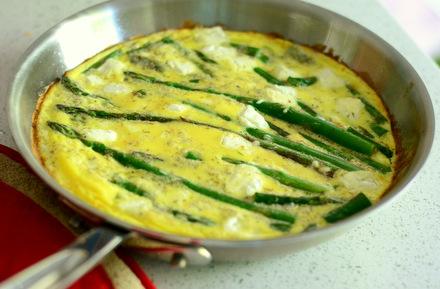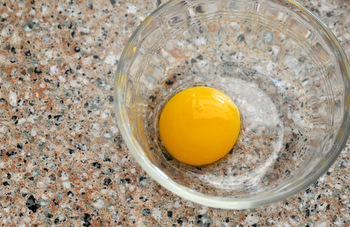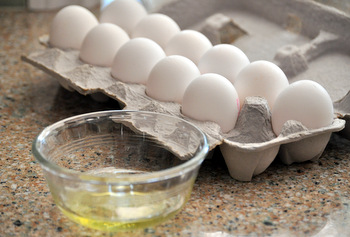
There are many recipes out there that call for separating your eggs and when they do, there is a good chance that you are going to have leftover egg yolks or leftover egg whites as a Fortunately, both leftover egg whites and leftover egg yolks can be stored untilĀ you need them. But that still leaves you with the question of how to you use up leftover yolks when you have a few of them on hand? Egg whites are easier to use up, because they can make a great addition to a scramble or an omelet, and most people don’t want to add several extra yolks to an omelet without the whites. Fortunately, here are 5 great recipes that put extra egg yolks to good use.
- One or two extra egg yolks are often included in Yellow Cake Recipes, to give the cake batter that buttery yellow tint. To make a basic yellow cake more yellow, you can even substitute one whole egg for two egg yolks to enhance the yellow color of the cake
- If you have two yolks to use up, a simple Vanilla Pudding is a nice recipe to make. Yolks add a lot of richness to the pudding, giving it a silky texture. They can make a nice addition to other puddings, including chocolate and Butterscotch Pudding, as well.
- Classic Creme Brulee is the ultimate custard dessert – and a wonderful way to use up three egg yolks (some recipes may call for more or less). As in the pudding, the yolks give the creme brulee a very delicate texture and make the custard seem to melt on your tongue. The finished dish will be rich, but will feel oh-so-light.
- If you find yourself with four egg yolks, consider picking up a few limes and a graham cracker crust at the store to make a Key Lime Pie. This zesty, creamy pie is easy to make and very refreshing on a hot day.
- When you have more than five extra egg yolks, consider making a batch of Tocino de Cielo. This delicate flan-like custard is made with lots of yolks and no dairy. The flavor and texture are incredible – and you might find yourself saving yolks just to make up a batch.

There are many recipes out there that call for separating your eggs and when they do, there is a good chance that you are going to have leftover egg yolks or leftover egg whites as a Fortunately, both leftover egg whites and leftover egg yolks can be stored untilĀ you need them. But that still leaves you with the question of how to you use up leftover egg whites once you have them on hand? The easiest thing to do with a leftover egg white or two is to mix it into some more eggs the next time you’re making a scramble or an omelette, but here are 5 great recipes that put them to an even better use.
- A batch of Coconut Macaroons is a simple way to use up one or two egg whites. These chewy cookies are easy to make and even easier to eat. The recipe can be scaled up or down easily depending on how many egg whites you have available and how much shredded coconut you have on hand.
- A Fresh Strawberry Souffle uses up four egg whites, and needs no yolks. This light and satisfying souffle can be made with a variety of fruit, but strawberries are perfect in the summertime when they’re in season. Several other souffles can be made using only egg whites, as well, including Maple Souffles and Chocolate Banana Souffles.
- Classic White Cake has a soft, white crumb because it uses only egg whites and no egg yolks in the cake batter. A full sized layer cake will take about six egg whites, but a half batch of the recipe will make a dozen delicious white cupcakes.
- Real Vanilla Bean Buttercream, made with an Italian meringue base, is a must-try for cake and cupcake lovers. This frosting uses five egg whites in an Italian meringue, which forms the base of the ultra-buttery frosting. You may never go back to American-style buttercream again.
- If you are dealing with a whole lot of leftover egg whites, use them up in a batch of angel food cake. A batch of Angel Food Cupcakes bakes a dozen delicious light cupcakes with only five egg whites. If you can make it to 10-12 egg whites, you’ll have enough for a full sized Angel Food Cake.

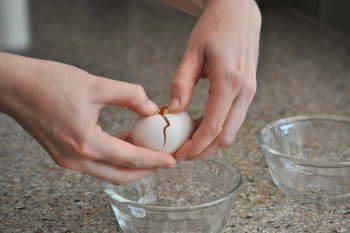
Separating eggs is one of the most basic skills that a baker should have. There are many recipes for baked goods, including cakes and souffles, that require eggs to be separated. And it’s handy to know if you just want to whip up an egg white omelette for breakfast, as well. This is also a skill that can take a little bit of practice to master if you want to get cleanly separated whites and yolks, without bits of egg shell, every time.
I put together a little photo tutorial to help provide a visual of exactly how I separate eggs.

+Continue Reading

Many types of baked goods and desserts call for separated eggs, and when eggs need to be separated, you need to ensure that the yolks and whites don’t mix. This can be a challenging task even for experienced cooks, as a few drops of egg yolk in your whites is likely to throw off a meringue recipe, so many people turn to egg separators for a little assistance. Egg separators are kitchen gadgets that help keep separate your eggs with minimal help from you and promise a foolproof way to divide those eggs. In a recent issue (April/May 2012), Cook’s Country set out to test some widely available egg separators to see how they worked.
The test kitchen discovered that most egg separators don’t work very well. Many don’t have large enough slots to allow the egg whites to fall through, away from the yolks. Others have slots that are too large, and won’t keep the yolk separate. On top of that, most didn’t make the egg-separating process go any faster. Even so, there were a couple of models that performed reasonably well and garnered “recommended with reservations” reviews.
Their top pick was the Wilton Better Baking Egg Separator. This model looks like a measuring cup without a handle and has a catch basin that holds on to the yolks while you crack eggs into it. It also holds up to 10 eggs, and the measurements on the cup allow you to easily see how much egg you’re collecting (which is great for recipes that call for a lot, like Angel Food Cake). The second top pick was the Kuhn Rikon Egg Separator (pictured), a slightly more complex system that allows you to separate, measure and store both egg whites and yolks. It holds up to 20 egg whites, which was convenient, although the separation process still was not speedy. A handheld separators, such as the Fox Run Separator, were not easy to use and very slow compared to separating egg by hand, so they garnered “not recommended” review.

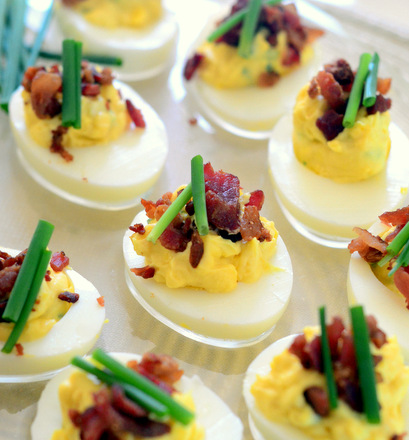
My grandmother was a huge fan of Deviled Eggs and made them for all kinds of holidays and family gatherings as I was growing up. I became a fan, too, so as soon as I was old enough to operate the stove safely I asked my grandmother to teach me how to make them myself. I made them with her whenever I visited, and these days I often just make myself them as a snack.
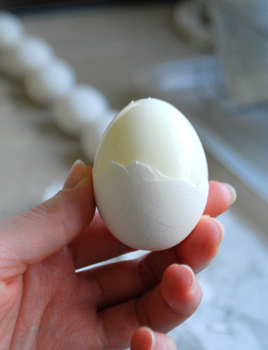
Good deviled eggs start out with good hard boiled eggs. Actually, there are lots of egg dishes (from egg salad to and brightly colored Easter eggs) that start out with hard boiled eggs. The trick to getting a perfectly cooked hard boiled egg is to cook it just long enough to cook through without making the egg tough or discolored. Nothing is less appealing than opening a hard boiled egg and seeing a gray-green cast to the once-yellow yolk. That gray-green color results from overheating eggs, which causes sulfur to be released from the egg whites and turn an discolor canary-yellow yolk.
My grandma tended to estimate the time the eggs needed to boil, but I find that an actual timer works much better. I start by placing my eggs in a pot and add just enough water (tap water) to cover them.

+Continue Reading