Archive for: dark chocolate

Chocolate is practically synonymous with indulgence, and people love it. But it is no surprise that there are many people and companies that want to take the indulgence out of it so that we can all eat it with less guilt. Smaller packaging has probably been the most successful method, since chocolate – by law – must contain nothing more than cocoa butter, cocoa solids, sugar, milk, vanilla and an emulsifier (or a combination of those ingredients) and nothing more to be called chocolate.
Some researchers at the University of Warwick in England have developed a process where up to half of the cocoa butter in chocolate is replaced with fruit juice to cut fat and calories. They say that the chocolate still retains its creamy texture, while taking on a slightly fruity flavor from the juice. The juice – which included apple, orange and cranberry – is injected in very tiny droplets to create a stable emulsion with the real chocolate, for a creamy product with the feel of chocolate. It does have a slightly fruity taste, which might be a plus for those interested in flavored chocolate products, though researchers also said that the fruit juice could be replaced by water for a flavorless version.
+Continue Reading

Trader Joe’s always has interesting items near their checkout lanes, little impulse buys that you might want to pop into your cart at the last minute. Most of these items tend to be chocolate, so I suspect that quite a few people end up picking something up on their way out. I’ve been eyeing the Trader Joe’s Organic Stone Ground Salt and Pepper Dark Chocolate, but held off on buying it for a few weeks until I came up with something to do with it.
The Salt and Pepper Dark Chocolate comes with two discs in each package. They’re Mexican-style, stone ground chocolates, which means that they have a more rustic texture to them and aren’t as smooth as other chocolates are. You can break them into chunks and eat them as-is, but Mexican style chocolates are often used for baking and for making hot chocolate. The chocolate here is rich and fruity, with a coarse and somewhat crumbly texture that melts into your mouth. You can really taste both the salt and pepper that are mixed into it, as they are generously included, though there is enough sweetness in the chocolate to still allow this to taste like a treat. Salt and pepper with chocolate may not sound like the best combination, but the pepper is more subtle than the salt flavor and just seems to make the chocolate a bit spicy and a lot more complex.
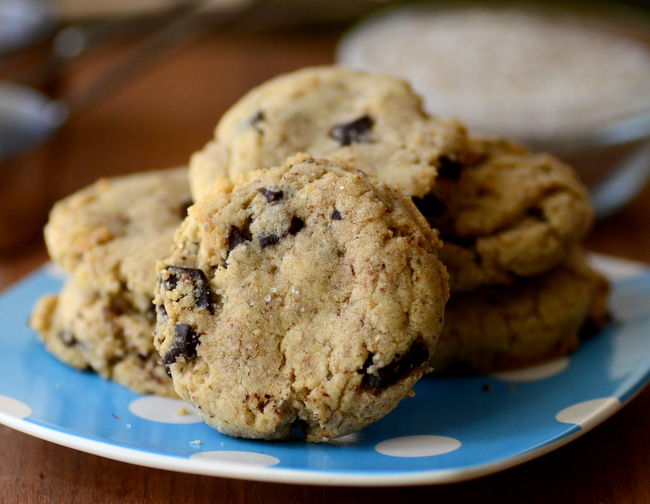
I would say that this particular chocolate is more for adults than kids, because it has a somewhat sophisticated flavor to it, but it sure is fun to experiment with. The discs make great hot chocolate, for instance. I used 1/2 of a disc to turn some coffee into a Salt and Pepper Mocha and a whole disc for a cup of indulgent hot chocolate. It also works well in brownies and could add a whole new layer of flavor to a batch of chocolate cupcakes or chocolate chip cookies.

Chocolate truffles are one of the easiest chocolate candies to make at home. They are incredibly decadent and are the perfect way to satisfy a chocolate craving – so it comes as a surprise to many truffle lovers that they only have a few ingredients. A very basic chocolate truffle recipe is made with just chocolate and cream or butter, or a combination of the two. The cream and butter contribute to the silky texture of the chocolate ganache that makes up the center of the truffle, while the chocolate gives the truffle its flavor.
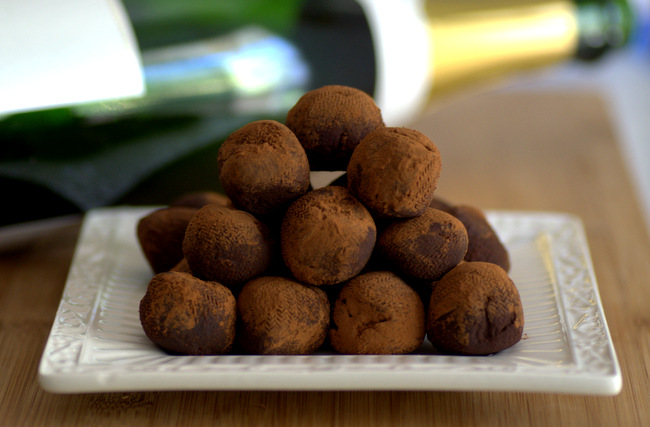
These Dark Chocolate Truffles are a must-try for a dark chocolate fan. My favorite recipe is incredibly easy, with just two ingredients. They’re rich and creamy, with a tremendous amount of dark chocolate flavor. The chocolate is the most important part of the recipe, since that is where all of the flavor comes from, so it is crucial that you use high quality chocolate. High quality dark chocolate isn’t necessarily chocolate with the highest cacao percentage that you can find, but it should be a high quality brand that has a flavor that you really like. This might mean that the chocolate you start out with is a little on the expensive side, but you will really be able to taste the results, so it is well worth it. I also recommend choosing a dark chocolate that is from 60-65% cacao. I used a single-origin chocolate from Peru (this is a great recipe to try using single origin chocolates, by the way) from Callebaut that was 65% cacao.
Once the ganache is made and set, I divide the chocolate up into even pieces and roll them between my palms to shape them. This process can be a bit messy, because the heat of your hands is what helps to melt the ganache a bit, making the truffles easier to shape. I recommend portioning the ganache first and then starting the rolling process, so you don’t make too much of a mess in the kitchen!
Traditionally, chocolate truffles are finished by rolling them in cocoa powder to give them a rustic look that is similar to that of an actual truffle (mushroom) that was freshly plucked from the earth. If you prefer, you can roll your truffles in finely chopped nuts or even confectioners’ sugar to give them a nice finish. Truffles can be stored at room temperature, but should be stored in the fridge if you live in a warm climate to keep them from melting.
+Continue Reading

Unsweetened chocolate is chocolate in one of its simplest forms, a solid chocolate made with just cocoa solids and cocoa butter. The natural fat content of a cacao bean is 52-55%, which is typically the amount of fat (cocoa butter) found in unsweetened chocolate. The exact ratio of cocoa solids to cocoa butter will vary slightly from producer to producer, with smoother unsweetened or plain chocolates having slightly more cocoa butter in them. This mixture of cocoa solids and cocoa butter, when it is still liquid during the production of chocolate, is known as chocolate liquor. To produce other chocolates, this liquor can be mixed with milk solids, sugar, vanilla and other ingredients to create a wide range of milk and dark chocolates.
Unsweetened chocolate is not a popular choice for eating, since it has a very bitter taste to it, but it is a common ingredient when it comes to baking and cooking because it makes it easy to add a strong chocolate flavor to a recipe. It is less commonly seen today, as there is a wide range of quality dark chocolates to choose from (whereas a few decades ago the choices were slim), but it is still a staple in many pantries. Recipes like chocolate cakes, brownies and cookies will be where you are most likely to see unsweetened chocolate pop up, but occasionally they will also be used in ice creams and puddings where you can easily add extra sugar to sweeten the recipe to taste.
You can substitute unsweetened chocolate into a recipe for dark chocolate by slightly increasing the sugar in your recipe, although you will probably find that this is completely unnecessary if you are only adding in a small amount of chocolate. Similarly, you can substitute dark chocolate for unsweetened chocolate by reducing the sugar very slightly. You probably don’t want to substitute unsweetened chocolate for chocolate chips in any recipes where you get big pieces of chocolate, since the bitterness of unsweetened chocolate probably won’t give you the finished flavor profile you were looking for.

Dark chocolate is chocolate that is made primarily with sugar, cocoa and cocoa butter, and does not contain milk or milk solids. The amount of sugar, cocoa and cocoa butter can vary dramatically from brand to brand, but it is the lack of milk that really distinguishes dark chocolate from milk chocolate. Dark chocolates also often include vanilla and an emulsifier, to keep the chocolate as smooth as possible. In the US, there is not specific minimum cacao percentage for dark chocolate. Cacao percentage refers to the amount of cocoa solids in a product. Cocoa solids are all of the ingredients from a cocoa bean, including cocoa powder, cocoa butter, chocolate liquor. In Europe, the definition of dark chocolate specifics 35% cocoa solids. Premium dark chocolates have a higher cacao percentage and a higher price tag than less expensive dark chocolates.
Semisweet chocolate, bittersweet chocolate and extra dark chocolate are all names that have been created to describe different types of dark chocolate, but all three are dark chocolate. There are no strict definitions that divide these sub-types of dark chocolate. They are primarily inventions of chocolate manufacturers to make it easier for consumers to differentiate between dark chocolates with more intense flavor.
When a baking recipe calls for dark chocolate, you can typically use any type of dark chocolate and get good results from the recipe. Depending on the amount of chocolate called for in a given cake, brownie or cookie recipe, you will usually get the best results if you use a chocolate that you really like the flavor of.
While most baking recipes are not very sensitive to the amount of cocoa or cocoa butter in chocolate (i.e. to the Percent Cacao noted on the packaging), there are a few recipes that are. Lighter textured recipes, such as souffles and mousses, can have a dramatic change in texture from one chocolate to another and you should try to stick to dark chocolate with the cacao percentage that the recipe recommends, if it notes a specific type of chocolate. For instance, high cacao percent chocolates can create a much firmer mousse than a low cacao percent chocolate. Chocolate candy and bon bon recipes can also be strongly impacted by the cacao percentage of a chocolate, so if you are using chocolate to make truffles, take note of the brand you use and the texture of the finished product so that you can replicate the same treat if you liked it, or opt for another brand if you want a different texture or flavor.