Archive for: cooks illustrated

Cook’s Illustrated tests Graters

Rosle Grater

Whether you’re using them for grating cheese to fill up a quesadilla or shredding carrots for a carrot cake, a grater is a tool that just about everybody has in their kitchen. The more often you use graters, the more you will notice how different they are. Some grate smoothly, some leave you with chunks of cheese or other crumbly products in your hand after grating. Some are simple, others have a half dozen different sizes and shapes of shreds to offer. In a recent issue (May/June 2012), Cook’s Illustrated decided to revisit the question of which type of grater is the best.

A few years ago, the CI test kitchen asked themselves this same question and picked out a four sided box grater with multiple functions, including a slicer and a super fine grate due to its versatility. The reason that they decided to revisit the issue is that they realized that they really only used the grater for one type of grating: producing long shreds of cheese, potatoes, carrots and other foods from large holes. For very fine grates, the test kitchen uses a microplane (which can’t be beat for very fine grating) and they never used the slicer that was included with their previous top choice.

They decided to look for a grater that could produce consistently excellent shreds, and not just do a little of everything. They rated ease of use, stability and ease of cleaning. They also took into account durability and, of course, performance. The best performing graters shredded soft and hard items easily and with minimal waste.

Their top pick was the Rosle Coarse Grater, which performed excellently  in repeated tests and fit nicely over bowls, while still offering stability for hand grating with its rubber feet. It was compact and easy to use (and easy to store), and since the vast majority of shredding  that the test kitchen needs is a coarse shred. Their two runners up were the Microplane Specialty Series 4-Sided Box Grater and the Cuisipro 4-Sided Box Grater.

Their previous top choice, the OXO Good Grips Box Grater fell to a “not recommended”  thanks to a strange redesign from OXO. The new design added grates that opened both upwards and downwards and made grating messy, and the grater difficult to clean.

Cook’s Illustrated picks The Best Butter

European-style butters
Butter is a staple in the the kitchens of every baker and is a crucial building block for all kinds of recipes, from simple chocolate chip cookies to flaky croissants. Most baking is done with plain, simple unsalted butter. This type of butter is labeled “sweet cream” butter and is available in every supermarket in the US. Over the past few years, European style cultured butters have been joining sweet cream butter on market shelves, boasting a richer texture, more flavor and double or triple the price of sweet cream. European style butters have a higher fat content than sweet cream butter (83-86% compared to 81-82%) and they are inoculated with bacterial cultures and allow to “ripen” before churning, giving them a more complex flavor.

In a recent issue (Nov/Dec 2011), Cook’s Illustrated set out to find The Best Butter in a taste test of seven cultured European-style butters and three regular sweet cream butters. They tasted the butters alone, when spread on plain crackers, and when baked into their recipe for French butter cookies to see how the butters stacked up when baking. The results were somewhat surprising, as the Cook’s Illustrated team learned that one type of butter was not better than another across the board.

+Continue Reading

Cook’s Illustrated reviews Canned Pumpkin

Canned Pumpkin
Pumpkin is a fall baking staple, and while you can certainly make your own puree at home with just a little bit of effort, it is far easier to stock up on canned pumpkin for your baking projects. Canned pumpkin is a very consistent and reliable product to work with and can give you great results in your recipes. Most recipes that call for pumpkin are formulated to use canned puree, and because homemade versions can vary somewhat in flavor and texture, they can occasionally throw a recipe off if you’re not aware of that. I do like to make homemade puree when I have an especially good pumpkin to work with, but I always have some of the canned stuff in my pantry so that I am ready to bake pumpkin pie on a moment’s notice. There are several brands of canned pumpkin out there and, like most products, there is some variation in flavor that can really impact your finished products. A few seasons ago, Cook’s Illustrated did a taste test on several brands of canned pumpkin to see which brand baked into the best pumpkin pie.

They tested Farmer’s Market Organic Canned Pumpkin, Libby’s Canned Pumpkin and One-Pie Canned Pumpkin. Libby’s Canned Pumpkin and One-Pie Canned Pumpkin were both taste-tester favorites, even though they had slightly different flavors. One Pie had a slightly “sharper” pumpkin flavor, while Libby’s was “creamy” and had more sweetness to it. The test kitchen didn’t recommend Farmer’s Market Organic Canned Pumpkin, which testers said had an unpleasant “chalky,” “vegetal” flavor to it. I bet that I’m not the only one who was surprised at the results of the test (given that I keep both brands in my pantry on a regular basis)! The full review is online (available without subscription until the end of the month), if you want to read through the test before stocking up on pumpkin the next time you’re at the store.

The CI test kitchen also mentions – and it is worth mentioning again regardless of your brand preference – that it is important to check the labels carefully when you’re buying canned pumpkin to ensure that you don’t buy pre-sweetened, pre-spiced pumpkin pie filling when you’re in the market for plain canned pumpkin for your baking.

The Cook’s Illustrated Cookbook giveaway!

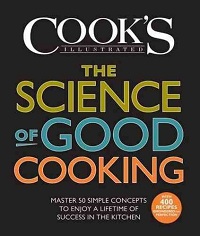
The Cook’s Illustrated Cookbook
I’ve been enjoying my copy of The Cook’s Illustrated Cookbook, the newest cookbook from Chris Kimball and the rest of the team at America’s Test Kitchen. The huge book has more than 2000 recipes and was put out to celebrate the 20th anniversary of the publication of the Cook’s Illustrated magazine. To read a full review of the book, check out this post. To do my own part in the celebration, I’m giving away a copy of the book to one lucky reader! .

To enter the contest, leave a comment below with your favorite Cook’s Illustrated recipe. Their exhaustively tested recipes always turn out a good product and almost everyone has at least one favorite that they turn to again and again. If you haven’t made any of their recipes before, just leave a comment with the recipe that you want to make most (since just about everything you could think of, with variations, is in here). The contest ends Friday, October 14th at midnight and the winner will be randomly selected from the entries. Don’t forget to fill in your e-mail on the comment form (it will not be public), as that is how I will contact the winner, and good luck!

Update: This contest is now closed. Congrats to Robert on winning the book and a huge thanks to everyone for participating and sharing your favorite recipes!
 

The Cook’s Illustrated Cookbook

The Cook's Illustrated CookbookCook’s Illustrated probably has the most devoted following of any food magazine – and for good reason. Their no-nonsense magazines each contain recipes that were exhaustively tested to ensure they represent the best result possible, as well as product and equipment reviews that you can trust. The first Cook’s Illustrated magazine hit the stands in 1992, which means that the magazine is about to celebrate it’s 20th anniversary. To celebrate this milestone, and to recognize all of the hard work that has been put unto every issue, The Cook’s Illustrated Cookbook was put together. The massive volume can replace the stack of dog-eared back issues of the magazine that is sitting in the corner of your kitchen. It contains 2,000 of the best recipes that Cook’s Illustrated has published in the past two decades.

As you flip through the book, you’ll notice that there are far more recipes in here than you could possibly have imagined. Although 2,000 recipes does sound like a lot, avid readers of the magazine will probably feel that they have a good handle on the types of recipes that they’ll find in here. This is true, to an extent, but everyone who picks it up with discover (or rediscover) favorites. The recipes are divided into categories and further divided into smaller sections – the Pasta chapter, for instance, is divided into 9 sections based on the types of sauce and pasta used – so it is easy to find recipes on any particular subject. They are all written in the same, familiar style as the recipes from the magazine and other Cook’s Illustrated cookbooks: there is a discussion of how they put together this version of the recipe and why it works before the instructions.

Alongside the recipes are many tips (with hand drawn illustrations, of course) on completing various kitchen tasks, from stuffing won tons to slicing fennel to assembling double crust pies. Every tip and every recipe is clear and helpful. If I were to fault the book on anything, it is on the total lack of color illustrations or photos. That said, I definitely have a strong connection to Cook’s Illustrated, just as many other long time readers do, and the lack of a few pictures isn’t going to lower my confidence in my ability to make any of these recipes or in my confidence that they will all come out very well when I do make them.

Visit Us On FacebookVisit Us On PinterestVisit Us On TwitterVisit Us On YoutubeCheck Our Feed