Archive for: clafoutis

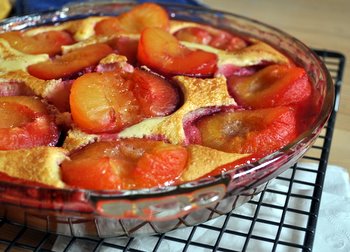
Baking with plums is wonderful, not just because plums are so tasty, but because plums are a beautiful color and make for some of the most incredible looking desserts you’ll come across. The flesh of most plums is a reddish yellow color. Most of the coloring of the fruit comes from the skin, so I tend to leave it on when I bake with them. Leaving the skin on saves a lot of prep time, and the skin is tender and easy to both eat and slice through, so it isn’t unpleasant (as some other peels are) in a finished product – and it sure is lovely to see.
This time around, I used plums in a Plum Clafoutis. A clafoutis is a french dessert that is somewhere between a custard and a cake in consistency, easy to slice through but with an eggy flavor. It is a great backdrop for all kinds of fruit, from strawberries to pears. The batter comes together very quickly and is poured over fresh fruit, then baked. My plums were relatively small, so I halved them and arranged them cut-side-up in my baking dish, resulting in a colorful and dramatic look for the finished dish.
In the oven, the plums become meltingly tender and sweet. They really stand out against the lightly sweet, eggy backdrop of the clafoutis. I added a bit of almond extract to the batter, which complimented the plums very nicely. The color pops even more than the flavor, as the plums manage to replicate the colors of the most amazing sunset you’ll ever see. I like this when it is served at room temperature, but it is also good after being chilled in the refrigerator before serving.
+Continue Reading

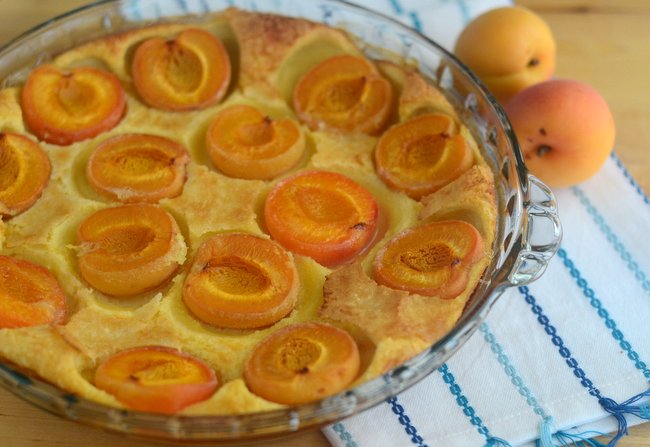
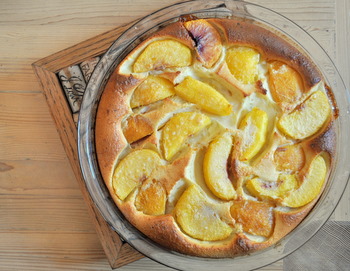
I bought a few peaches this week and they hit their peak today, filling the kitchen that sweet, floral aroma of ripe peaches. I ate one, then wanted to use the rest in a dessert where they would shine. Peaches go well in many dishes, but I decided on a Peach Clafoutis. It’s hard to beat a clafoutis for a one-dish fruit dessert because they are easy to make and really showcase the fruit they use, letting the fruit stand out in flavor and in appearance.
I have lots of Meyer lemons around my kitchen and decided to give this clafoutis a little more dimension by including some of the zest. Meyer lemons are not as acidic as regular lemons, and their zest lends a lemon flavor that is mellow and sweet. Meyer lemons are at the peak of their season during the late winter, but many trees – including mine – produce fruit all year round. You can substitute regular lemon zest for Meyer lemon zest, or use a mix of orange and lemon, if you don’t have any Meyer lemons on hand.
The clafoutis batter is somewhere between a pancake and a custard. It has lots of egg and milk in it, and it has just enough flour to hold everything together and puff up nicely during baking. Semi-firm fruits, like peaches and pears, work beautifully in clafoutis because they are in the oven just long enough to become fork-tender without losing their shape. This clafoutis tastes like peaches and cream, with juicy bursts of sweet peach and a smooth vanilla custard flavor in the background. The Meyer lemon is subtle and gives the clafoutis just the right bit of brightness. It can be served warm, straight from the oven or refrigerated and served chilled.
+Continue Reading

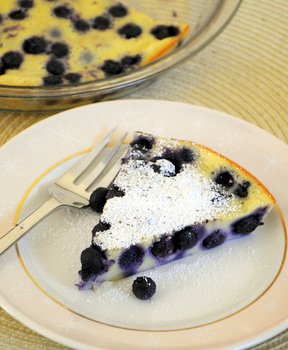
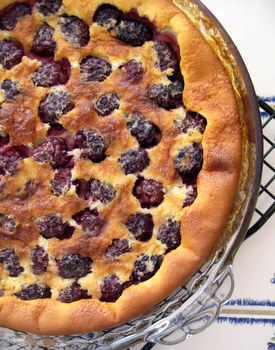
When you have fresh berries around, a clafoutis is a great way to showcase them. A clafoutis is a French dessert that is somewhere between a cake and a custard. It is just firm enough to slice easily, as cakes are, but it is based heavily in milk and egg, and has a lovely custard flavor and texture to it. The vanilla-scented batter is a great backdrop to all kinds of fruit. Pear Clafoutis is one of my favorite variations, but I’ve used blackberries for this batch.
Fresh blackberries go very well with the vanilla custard flavor of this dish. They’re bright and have a nice sweetness to them – and I have to admit that their beautiful purple color is offset very well by the pale clafoutis. You can use frozen berries, but your clafoutis will take a few minutes longer to bake and the berries might loose a little bit of their texture as the dish bakes. I think that fresh berries are your best bet, and you can easily mix in some blueberries or raspberries in this, too.
This clafoutis batter mixes up very easily in just one bowl (or in the food processor) in about 2 minutes. It has very simple ingredients, so as long as you have berries on hand, you can quite literally start putting this together on a moment’s notice. When you pull it out of the oven, you’ll notice that it rises like a souffle, thanks to the number of eggs in the batter. It will fall slightly as it cools, so don’t worry if yours doesn’t remain puffed up after it finishes cooking.
You can serve this dish warm or chilled, it is very tasty both ways. It can be made a day in advance, but it really looks and tastes its best within a day of making it, so I would try to make it the day you will be serving it if possible.
+Continue Reading

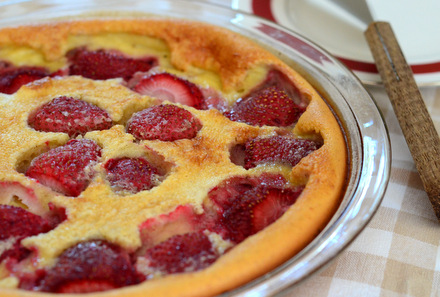
A clafoutis is somewhere between a cake and a custard. It’s a french dish, a baked dessert (although you can make savory clafoutis as well) that has lots of milk and eggs in it and is held together with a little flour for added stability. In general, clafoutis have a great eggy flavor to them and go well with a variety of different fruits. Pears are one of my favorites, but for a summer fruit, ripe strawberries work very well in the dish.
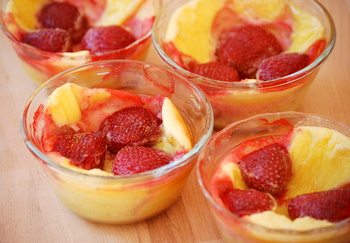
I usually make big clafoutis, using pie plates or quiche dishes, and cutting the clafoutis into slices for serving. This time around, I decided to make my clafoutis in individual dessert cups and produce single-serving sizes. I used whole strawberries – minus the green tops – and placed them in the bottom of each dish. I fit three into each and wrote the recipe that way, but if your strawberries are unusually large or unusually small, you might want to use one less or a few more. You basically want to cover the bottom of the cup with whole berries. I filled each dish with the custard mixture and baked.
The finished clafoutis were amazing when still warm from the oven. The custardy portion of the clafoutis was smooth, soft and had notes of both egg and vanilla. It also picked up a bit of strawberry juice that the berries released during baking. The berries were tender, but not mushy. The whole thing reminded me a bit of strawberry shortcake and a bit of the strawberry bread pudding I made not too long ago. This dish doesn’t take long to make and works well for breakfast, dessert and an afternoon snack.
+Continue Reading

Now that my tomatoes are starting to ripen left and right, I’m starting to look for more uses for them than just adding them to salads and making pasta sauces. And because I know that I haven’t even hit the peak of tomato season yet, I prefer that the recipes I end up with use more than just two or three tomatoes each. This recipe uses over a dozen tomatoes – all cherry tomatoes.
I decided on a clafoutis because the baked custard dish is traditionally made primarily with cherries, and I thought that doing a savory version with cherry tomatoes would be a fun way to showcase the ripe veggies. I started with my standard clafoutis batter, but omitted the sugar from the recipe and added more salt and some pepper to the mixture. I considered sauteing some onions at first, though I ultimately opted against it in an effort to keep the recipe as simple as possible. I added some fresh, chopped basil for extra flavor and a bit of cheese to make the overall dish more filling.
The flavors in the clafoutis were wonderful. Basil and tomato always work well together, and the hint of creaminess from the cheese was a nice touch. I’d personally opt for a fairly mild cheese, like cottage cheese or a mild goat cheese (I used cottage cheese here), but feta would work well for a stronger flavor. The only thing I didn’t like was the fact that the clafoutis needs to be cut carefully if you want to prevent it from becoming watery; those roasted tomatoes are only too happy to burst and leak all over the dish during serving.
This is a great thing to have alongside a salad for a first course and can even work as a light dinner on a hot summer night if you do big slices. Be careful with those tomatoes, though. They get quite hot inside when the dish first comes out of the oven, even after letting it rest for a while, and while biting into a juicy cherry tomato is a treat, burning your tongue is not.
+Continue Reading