Archive for: bread pudding

For many, panettone is a staple of Christmas celebrations. It is a lightly sweetened yeast bread that is traditionally served around Christmas in Italy. The bread is rich with butter and eggs, and is packed with dried fruits and candied citrus. The fluffy texture, as well as its sweetness, put it somewhere between a bread and a cake. The beautifully packaged breads also make popular gifts for friends and coworkers, and many people end up with two or three around the house in addition to one that they bought themselves. The breads can be sliced and eaten plain, but once you have more than one you’re going to start to wonder what else you can do with them. Here are five ideas that will let you use up that leftover Panettone:
- Toast – It may sound simple, but panettone makes wonderful slices of toast that make a great addition to any breakfast. The flavors in the already buttery bread are enhanced by toasting, and the sweetness is brought out of the dried fruits, too. Spread toasted slices generously with butter (and even sprinkle with sugar if you’re looking for a sweet treat) before serving.
- Panettone French Toast – Another take on toast, french toast is a good way to use up any extra bread that you might have in your kitchen. The rich bread makes an excellent base for the eggy batter and makes a very indulgent french toast recipe. I like to add a pinch of cinnamon to my batter, as it goes very well with the citrus in the panettone.
- Eggnog Bread Pudding – Eggnog is another common leftover from the Christmas holiday. Combining eggnog and panettone into this decadent dessert allows you to really clear out your kitchen. The bread pudding is easy to make, and with the vanilla-nutmeg flavor of eggnog and all those flavorful fruits from the panettone, you will get a lot of holiday flavor in each serving.
- Streusel-Topped Baked French Toast – This breakfast casserole dish is a cross between french toast, bread pudding and coffee cake. It’s great for serving a big crowd and will use up a lot of extra bread (panettone or otherwise). The dish is rich and custardy, but eggier than a regular bread pudding, and it is topped off with a sweet, buttery streusel before baking.
- Rum Cake – Some panettones are spiked with a bit of amaretto or other liqueurs. If you have a whole loaf of the stuff to use up, poke some holes in it with a long skewer and generously douse it with a rum-sugar syrup (amounts vary, but 1 cup rum with 1/3 cup sugar is a good place to start). Allow the bread to sit for a day or two – well-wrapped – to soak it all up, then serve slices of the extra-moist cake as a festive treat at New Year’s.

Bread puddings are one of those dishes that can be incredible versatile. Like a basic muffin recipe where you can incorporate all different kinds of fruits, nuts and other goodies to change the flavor completely, you can do the same thing with a bread pudding. A basic bread pudding gives you a rich, custardy base for both sweet and savory dishes – and this Fig and Goat Cheese Bread Pudding happens to have both sweet and savory in one dish.
Figs and goat cheese are a great combination any time they meet. I used dried figs in this recipe, which have a rich and intense sweetness to them. Mine were very moist, but you can rehydrate dried figs in a bit of hot water if yours are on the dry side. You can also use fresh figs in this recipe if you have them. The sweetness of the figs contrasts very well with the goat cheese, which has a rich, tangy cream cheese-like flavor with a slightly savory/salty finish to it. The cheese incorporates easily into the bread pudding, but holds its shape and doesn’t melt, so you get pockets of sweet fig and savory cheese in different bites as you eat. The custard for the bread pudding is made with buttermilk, milk and a little vanilla extract.
This bread pudding sounds very grown up, and while it will certainly appeal to adults looking for something a little different, it has a beautifully balanced flavor that almost anyone will enjoy. The dish is fantastic for breakfast or brunch, but also works very well when served for dessert. Serve it plain or dust it with a little bit of confectioners’ sugar to highlight the sweetness of the figs and the vanilla in the custard. It is good both warm and cold (and leftovers keep well in the refrigerator for a couple of days).
+Continue Reading

Many bread pudding recipes call for stale bread, or ask you to leave your bread out on the counter to dry it out a bit before using it in a recipe. This stems from the fact that bread pudding was originally intended to be a way to give new life to bread that was a little stale, soaking it in a flavorful custard and baking it until it was moist and tender. French toast is the same idea, actually. But do you need to use stale bread for a bread pudding? No, you can simply start with a fresh loaf of bread if you have one, even if the recipe tells you to use stale bread or to leave your bread out to “stale” on the counter for a few hours.
When bread becomes stale, the moisture inside of the bread is lost, causing the bread to become somewhat stiff and dry. In theory, this bread should be able to absorb more liquid than fresh bread – and this is often cited as the reason to try to “stale” your bread before using it. But when it comes down to it, only a very small amount of moisture is leaving your bread (you don’t want to use something so stale that it feels like an old sponge, after all!) and that isn’t enough to make a significant difference in a bread pudding recipe. Fresh bread will perform just as well as stale bread, no matter what the recipe calls for. It may even give you a better result, as fresher bread often as a fresher flavor that will carry into the bread pudding.
The bread pudding pictured above is Eggnog Bread Pudding with Bourbon Cranberries, and it’s a great recipe to try with some leftover holiday ‘nog!

Bread pudding is an easy to make, comfort food kind of dessert that is always a good choice on a cool day. The dish is basically just bread cubes soaked in a sweetened mixture of milk and eggs, then baked – not entirely unlike like a big dish of french toast, although it is usually served for dessert, not breakfast. The best thing about bread pudding is that it is very easy to create flavor variations on the recipe so you will never tire of having it for a treat. This time around, I wanted to give my bread pudding a warm winter flavor by incorporating apples, apple cider, brown sugar and spices.
I used fuji apples in this recipe. You can really use any kind of apple, although I wouldn’t recommend using something like red delicious, as they tend to turn mealy when baked. The dish isn’t too sweet, but if you like a tart apple flavor in general, use Granny Smith apples, or something similar. The overall flavor comes from the combination of spices – cinnamon, allspice, nutmeg and a hint of cardamom – and the cider, not just from the apples themselves. That said, having chunks of apple studding your bread pudding gives it more of a fresh apple pie feeling than a bread pudding made without them. It is not necessary to peel the apples, but you can if you wish to. I also added some raisins, for additional sweetness, and you can certainly throw in a half cup of chopped walnuts or pecans if you want a bit of crunch, too.
The finished bread pudding is very tasty. It’s not too sweet and all of the flavors that go into it come out nicely in the finished product. It’s at its very best when fresh and still slightly warm from the oven, but this dish can also be served chilled or at room temperature. Dress it up with a drizzle of caramel sauce or a small scoop of ice cream if you’re feeling a little adventurous.
+Continue Reading

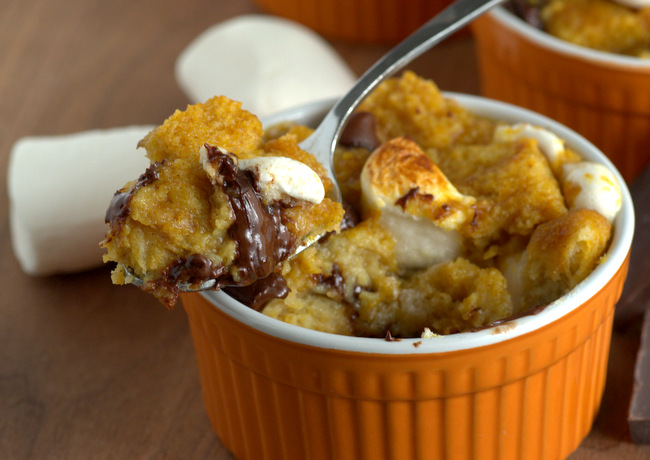
S’mores are – and probably always will be – a favorite summertime treat of mine. And I doubt that I will ever tire of coming up with creative new ways to combine s’more ingredients into new dishes. This time around, I looked at my bag of marshmallows, my package of Hershey’s bars (the classic chocolate, although other bars can be used) and a box of graham crackers and the idea of putting them all into a bread pudding slowly began to take shape.
This bread pudding starts off with a base recipe that I often use for bread pudding: a mixture of cubed sandwich bread, milk, half and half, eggs, sugar and vanilla. I stirred in the chopped Hershey’s bars, graham crackers and marshmallows to really put s’mores into my bread pudding. I used a little less sugar than I might ordinarily use because of the marshmallows that went into the mix, but another way to tone down the sweetness a little bit would be to used chopped dark chocolate instead of milk chocolate.
The marshmallows roast up perfectly in the oven, and when the bread pudding is still warm and the chocolate is still melty, it really does capture that s’more flavor in each slice! The only thing missing is the crunch of the graham crackers, which loose their shape (although not their flavor) while the bread pudding is in the oven. A few pieces of graham cracker as garnish will add that same crunch if you’re missing it. That said, I liked it plain, but it looked pretty with the crackers when it was plated.
When making a bread pudding at home, you don’t need to be precise with the amount of bread – or graham crackers, in this case – that you use. Estimate as you measure and err on the side of adding a little extra bread rather than too little, as a bread pudding will still be moist with a handful of extra bread cubes but might be too wet or set improperly when not enough are used.
+Continue Reading