
Biscuit Bliss

Biscuit BlissBiscuits are such a simple food. Small, quick-rising, buttery and tender, they don’t take the time or energy that a yeast bread does - or do they? Although biscuits seem simple, anyone who has tried their hand at making them will tell you that there is more to a little biscuit than meets the eye. James Villas’ Biscuit Bliss is all about crafting the perfect biscuit, and enhancing the already perfect plain biscuit into many equally tasty variations.

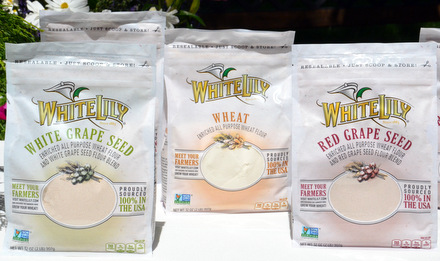
The cookbook covers the basic biscuit types - raised biscuits (plain/cut) and drop biscuits - and many sweet (e.g. scones) and savory variations of those basic recipes. But even before getting into the recipes, there is an introduction about what a biscuit is. To make a biscuit, you need three ingredients: flour, leavenings and fats. With such a simple base, it’s important to use good quality ingredients. Villas says that you can use all purpose flour, but for the best results be recommends using a soft wheat flour (more often sold in the South) that has a lower protein content, such as White Lily. A mixture of half cake flour and half all purpose is a pretty good substitute.

The recipes stick with the same or similar formulas throughout, so this book really is a good reference for biscuit making, as you’ll get more and more confident - and hopefully have ever-better results - as you cook with it. Hopefully, you’ll be baking biscuits like a skilled Southern grandmother by the time you finish the book. It has some lovely photos, but biscuits aren’t really a type of food that needs a lot of illustration, unlike some other baked goods, so the book doesn’t loose anything by not illustrating every recipe. There is also a chapter on cooking with biscuits, making dishes like Chicken Pot Pie and Fruit Cobblers to introduce a few extra ideas about how versatile biscuit dough can be.

What is self-rising flour?

Self-rising flour has an almost magical sound to it. And if you look at recipes that call for it, you’ll see that they do not call for the addition of salt or leavening agents, though biscuits, cakes and breads made with seem to rise up just fine. The reason for this is that self-rising flour is actually nothing of the sort. It is flour that has a leavening agent - baking powder - and salt added to it during packaging. Since the ingredients are evenly distributed throughout the flour, you will get the same nice lift to your baked goods every time you use it.

If you don’t have self-rising flour and you have a recipe that calls for it, you can make your own by combining 1 cup all purpose flour with 1 tsp baking powder and 1/4 tsp salt. Similarly, if you only have self-rising flour, you can reduce the baking powder and salt called for in a recipe that uses standard all purpose flour.

Now that being said, it is also worth noting that there are several brands of self-rising flour that have a lower protein content than all purpose flour (11% protein). They are effectively cake flours (8% protein). Wheat protein, or gluten, is what gives baked goods much of their structure, but it can also cause a bread to be too dense or tough. White Lily and Presto are two examples of self-rising brands that use a low-protein cake flour as their base, and if a recipe calls for one of them, you should use cake flour in place of all purpose in the conversion given above.

Adventures of an Italian Food Lover

Food Lover bookItaly is a country that tops the “places to visit” list of many a food lover. Food writers and chefs have been known to make pilgrimages there to study the finer points of prosciutto, bread and gelato. And while it would be lovely to take a multi-month journey to Italy to take in both the food and the countryside, it’s not the kind of thing that we can all take off to do at the drop of a hat.

Fortunately, there are many ways to get a taste of a country without traveling there. Reading through the new cookbook Adventures of an Italian Food Lover is one of them. The cookbook features recipes from restaurants all over the country and each is a specialty, or at least a particular favorite, of each place. The recipes are arranged by region, then by type. This means that you can read through the antipastos, mains and desserts of Northern Italy before moving southward, which is a successful way of continuing the traveling theme of the book.

The only drawback of the cookbook is that a few of the recipes call for specialty ingredients, ones that might be more widely available in Italy than the US. “Soft wheat flour” (Italian “00″) is one example of this, though the author has included notes on acceptable substitutions (White Lily flour, in this instance) when possible. If you encounter a recipe that doesn’t include straight substitution notes, you might have to play around a bit to get it perfect. All that said, since it only affects a few of the more than 250 recipes in the book, it certainly shouldn’t put you off if you’re searching for a good source of authentic Italian recipes because this book looks like a great one.

Southern Style Buttermilk Biscuits

Not being from the South, I will state that I am not an authority on biscuits. In fact, most of the biscuits I have eaten in my life have been the kind you might find in the refrigerated section of the market. I probably have never had an authentic Southern biscuit. They look tasty, though, so I set about to make some.

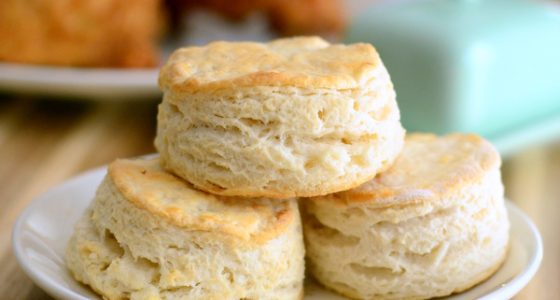
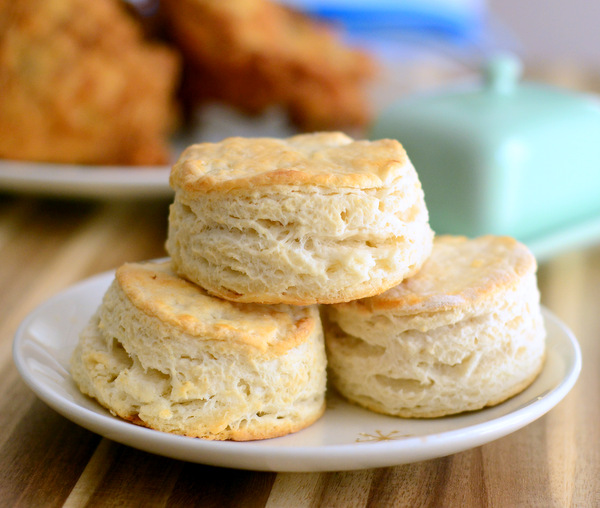
If you have no idea what I’m talking about, you’re probably not reading this from inside the US. Biscuits are small, round breads that have fat cut into the flour and are leavened with baking powder, similar to scones. They are flakey, light in both texture and color and have a golden brown top. Traditional biscuits are rarely sweetened prior to cooking and are served as a savory side dish or are eaten with butter and jam.

The ingredients are simple: flour, leavening, salt, fat and buttermilk. A more traditional southern recipe, as pointed out by Alton Brown’s recipe, calls for White Lily flour, low gluten, self rising flour originating in the southern US. All purpose flour, being more widely available, is what I used. I rubbed in the butter, leaving some the mixture looking fairly coarse, with chunks of butter as when I make pie crust, and stirred in the buttermilk. The dough was sticky. I used lots of flour when handling it as I rolled it, kneaded and folded it in half several times - 5 or 6 six. I was careful not to twist my biscuit cutter (flouring it liberally instead) so my biscuits would rise straight and high. The final biscuits were noticeably flakey. I think that the repeated rolling and folding of the dough that A.B. mentioned actually did help create a flakey final product. I was very pleased. I skimped a bit on the salt as I mixed my ingredients, but using salted butter when eating the finished biscuits made up for it.

My final recipe is a hybrid between Alton Brown’s recipe and a recipe from Southern Living magazine.

(more…)