January 1st is a good time to make new plans, set some goals and look ahead to the rest of the year. Of course, you could make resolutions any day, but it helps a little bit to use a firm date to get started and not procrastinate too much. My own resolutions are often food based, and this year is no exception. I’m keeping the list short, but I wanted to share them here:
- Work my way through a big pile of old cooking magazines and finally try some of the recipes that I bookmarked years ago but never got around to making. This resolution has the added bonus that it might help me to clean up my office a little bit.
- Learn more about wine. I already enjoy it and can pick out wines that I like without much difficultly, but I haven’t yet had a chance to put a lot of effort into wine education as I would like. Plus, tasting wines can be a lot of fun.
- Do a lot more roasting, since one of my favorite holiday gifts was a beautiful new Staub Dutch oven and I want to make the most of it.
- Make more videos for Baking Bites. I had a blast doing the handful of videos that I did in 2012 and want to make them a more regular feature of the site in 2013.
What are your foodie goals for this year? Baking more bread at home? Eating out at that Michelin-starred restaurant that you’ve been eyeing? Taking a foodie road trip? Leave a comment below and share your plans for the new year!

Vanilla beans are one of the most amazing ingredients a baker can have in the kitchen, perfect for adding a wonderfully floral vanilla flavor to anything from ice cream to pound cake. Vanilla beans can be quite expensive, however, so many bakers reach for vanilla extract instead of vanilla beans, preferring to save the beans for those special recipes. Vanilla beans can last for years without losing their potency, but it is important to store them correctly so that you always get the most out of them.
The best way to store vanilla beans in in an airtight glass container. The beans will retain their moisture and their potency when stored in glass, and you will never have to worry about the beans drying out when they are stored this way. Plastic containers are cheaper than glass and some packaging companies opt for those instead, though plastic is not as good at protecting the delicate flavor of the vanilla as glass. Some retailers occasionally opt for even cheaper packaging, and I’ve seen vented plastic bags. These are the worst storage option because the beans don’t need to “breathe” by being stored in the open air, and this is the fastest way to end up with dry and brittle beans that are difficult to use.
These guidelines are also true if you use a lot of vanilla beans and buy them in bulk (say, from Costco or a bulk spice company) to get a better deal. When you get them, depending on how the beans are packaged, you should transfer them to a glass container for longer term storage.

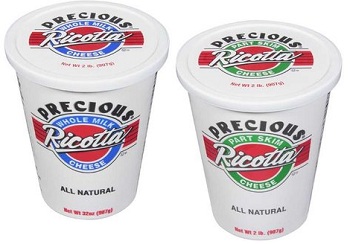
Ricotta cheese is a fresh cheese with creamy, fine textured curds that is very commonly used in many types of recipes, from savory pasta dishes to decadent cheesecakes. The name “ricotta” translates to “recooked.” The cheese gets its name because it is made with the whey leftover from other cheesemaking processes, which is recooked with an acid until the proteins left in the whey come together and fine curds form. It is most similar to cottage cheese, which has larger curds but can be used in similar ways to ricotta.
Ricotta cheese is very slightly sweet and has a pleasant, fresh cream flavor. It can be produced with cow, sheep or goat’s milk, but is most commonly made with cow’s milk (at least, in the US), and is available with with various fat contents. A full-fat ricotta contains only about 11-13% and it tends to be significantly creamier than fat free versions, which can become grainy in texture. Its slightly bland flavor is what makes it such a versatile ingredient, because it adds richness to a dish while adding a blank canvas on which to feature other flavors.

Vanilla extract is the most popular way to add vanilla flavoring to anything that you are baking or cooking. It is easy to use and less expensive than using whole vanilla beans. Vanilla bean seeds give baked goods a fantastic look, however, and you just can’t beat the flavor that a real vanilla bean can add when making something where that flavor can really stand out, like a batch of homemade vanilla ice cream. Many people find vanilla beans to be a little intimidating to work with, but they are not difficult to use and once you have started to use them, you’ll find that you want to use them even more often when looking to amp up the vanilla in a recipe.
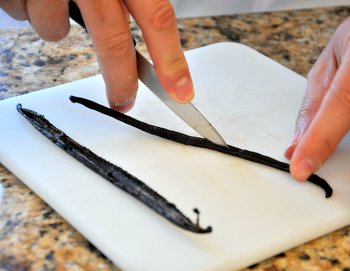
Start with a vanilla bean that is plump and flexible, and lay it out flat on a cutting board. Use a small knife – such as a paring knife – to make a long cut down the length of the vanilla bean, cutting only halfway through the bean, as pictured above.

Use your fingers, or the tip of the knife, to open up the vanilla bean down the cut you just made. Scrape the back of the knife down the cut, pressing firmly to scrape all of the seeds from the inside of the pod. Transfer your vanilla bean seeds to the recipe that you are preparing. Using the back of the knife will minimize the amount of vanilla bean fibers that you might scrape off the bean as you scrape the seeds out.
To make the vanilla bean a little easier to handle, you can cut the bean in half horizontally and just work with half a bean at a time (or save the second half in a jar for the next recipe).
Vanilla seeds can be scraped from the beans at the beginning of a recipe, or they can be scraped out after a whole vanilla bean has been used to flavor a custard or other dish. Often, recipes will call for a cut vanilla bean to be used when making an infusion, and then ask you to scrape the seeds out into the infused liquid afterward.


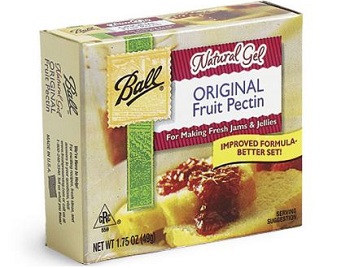
Pectin is a naturally-occurring thickening agent that is most often used by adding it to jams, jellies and similar products to help them gel and thicken. Pectin creates a thick, clear set when it gels. It is a carbohydrate (a polysaccharide) found in and around the cell walls of plants, and helps to bind those cells together. All fruit has pectin in it, but the amount varies widely. Apples and oranges contain the most pectin, and the pectin from both fruits is used commercially to thicken many different types of products. Pectin generally needs a high sugar content and some acid, such as citric acid, to activate, and some commercially available pectins include citric acid as an ingredient to help ensure that consumers get their desired result when working with their products. Pectin can be bought at the grocery store in both powder and liquid forms, and it can also be introduced to a recipe by adding fruit that has a high natural pectin content, such as apples or plums.
Gelatin and pectin both produce clear gels with a high sheen, but the products are not the same. Pectin is a water-soluble fiber, while gelatin is a protein derived from animals. Pectin is used almost exclusively in high-sugar products, like jams. Gelatin, on the other hand, is used in a much wider variety of foods, including mousses, marshmallows and frostings because gelatin sets in a cool environment and does not require that specific ingredients be included to activate it.