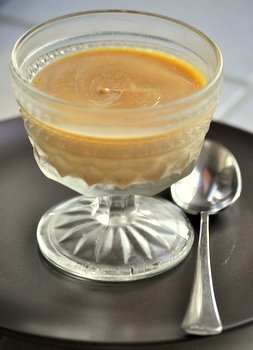
When I was a kid, I never really had butterscotch pudding. I liked vanilla and chocolate puddings and often campaigned to see pudding cups in the fridge or in my lunch. Butterscotch puddings seemed overly sweet, even to me, when I had them so it just wasn’t a go-to flavor for me. That said, the first time I had homemade butterscotch pudding, I was a convert. Silky smooth and not too sweet in spite of its rich brown sugar flavor, homemade butterscotch pudding had me hooked from the first bite.
This is my version of Classic Butterscotch Pudding, a recipe I’ve been making in one form or another for years now. It gets its butterscotch flavor from dark brown sugar and a small amount of butter that is added to it. There isn’t enough butter to make the pudding taste buttery, but there is enough to ensure a clear butterscotch flavor. The finished pudding is not too sweet and it has a very good balance of brown sugar, dairy and vanilla that makes it quite addictive. Fortunately, since the pudding is neither too sweet nor too heavy, there is nothing wrong with giving into the addiction and having a second serving. Dark brown sugar is going to give you the best finished product and the richest butterscotch flavor. That said, golden brown sugar and even light brown sugar will still work well and produce a tasty pudding.
I also really like the consistency of this pudding. It is not too thick and not too thin, but a silky smooth medium somewhere in between. If you do like your pudding on the thicker side, add an extra 1/2 tbsp cornstarch to thicken it up a bit more. When I make pudding, I’ll use any kind of milk I have in the fridge, whether it is whole or skim milk. Whole milk will always make a slightly richer pudding, but skim milk will actually work out just fine if that is all you have. I recommend using whole milk or at least reduced fat for a pudding that has the best balance and as creamy a texture as possible.
+Continue Reading

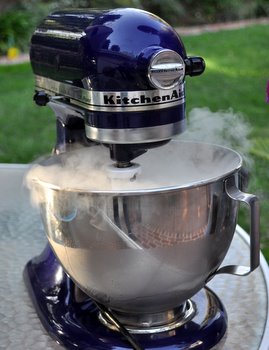
Homemade ice cream is a wonderful treat, but you really do need an ice cream maker for the best and most consistent results. There are many affordable ice cream makers out there (and plenty of more expensive ones!) that will pay for themselves if you make ice cream yourself regularly. If you don’t make ice cream on a regular basis, however, you probably don’t want another appliance taking up valuable room in your kitchen. So, is it possible to make great ice cream at home without an ice cream maker? Yes, and the secret is to use dry ice.
Dry ice is solid carbon dioxide and it has a temperature of -109.3F (78.5C). It is primarily used for preserving ice cream and other frozen foods at very cold temperatures. For instance, it may be used to chill the interior of an ice cream cart on a hot day at the park so the popsicles don’t melt before they’re sold. It is also often added to Halloween punch because of the fog-like clouds that it generates when put into water or other liquids.
But how can you make ice cream with it?
+Continue Reading

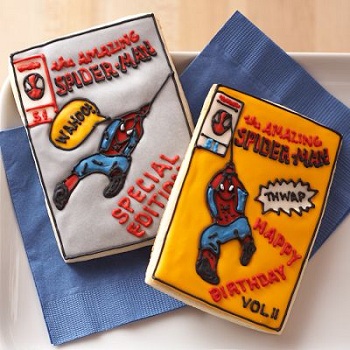
I haven’t had the urge to make my own comic book in some time – but I will admit that as a kid I spent countless hours (usually on family trips) illustrating my own comic series in journals and notebooks. I actually preferred to make my own rather than read other people’s comics, though looking back I would put money on the fact that my stories, given that I was still in grade school, were far from anything that would have attracted a group of fans at Comic-Con. When I saw a display set up with these Spider-Man Comic Book Cookie Cutters at Williams Sonoma, I was intrigued because of the level of detail on the cookies. But the cookie cutter set has an ingenious design that allows you to make your own comic books (well, the covers at least) on a cookie canvas in your own kitchen.
The cookie cutter set comes with a double sided rectangular cutter, that both cuts out the shape of the comics and stamps the cut-out with an authentic logo that says “The Amazing Spiderman.” It also comes with a variety of spidey-shapes – from villains to speech bubbles – that you can use to customize your covers by stamping them into the frame. Be sure to use a good butter cookie dough so that the dough doesn’t spread out during baking (this Best Butter Cookie recipe works well, and I add a few tablespoons of extra flour for a drier dough that really holds its shape), or you’ll loose a little clarity on the design. If you don’t want all Spiderman cookies, use other cookie cutters as stamps and keep the speech bubble stamps to keep the comic look. Once the cookies are cool, you can decorate them.
I suspect that these comics also have a big advantage over those I drew as a kid. Not only are the designs sharp and professional looking, but they’re edible and should be very tasty, too. Decorating might take a little practice, but small icing tips, a steady hand and a little patience will help your comic books come out looking like the real deal.


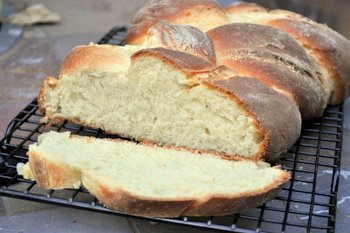
Onions have a sweet flavor and a wonderfully tender texture to them when they’re cooked. Onions are a big flavoring component of many dishes and sauces, but they’re not always included in something like a loaf of bread. This Braided Sweet Onion Bread is a soft yeast bread that is stuffed with sweet, buttery onions for a loaf that will give ever-popular garlic bread a real run for its money.
The bread is a lightly sweetened loaf that has a soft, fluffy crumb. The dough is divided into thirds, and each piece of dough is stuffed with an onion filling, then the pieces are braided together to form the finished loaf. It can be a little tricky getting the buttery onion mixture fully enclosed in the dough (your last section will probably be a little better than your first; practice helps a lot!), but a few stray pieces of onion is nothing to worry about and won’t impact the finished loaf.
The onion filling is made by gently sauteing some garlic in a little bit of butter and then tossing the mixture over some uncooked, diced onions. Sweet onions are sweet just as they are and don’t need to be precooked, while regular white and yellow onions are usually cooked to draw out their sweetness. In this recipe, the onions actually cook as the bread bakes, so there is no need to cook the onions in advance. Sweet Vidalia or Hawaiian onions are definitely my favorites for this recipe, but you can substitute other types of onion if you don’t have sweet onions. The onion flavor will be a little more potent with other onions (not that there is anything wrong with that!) and the bread will be a touch more savory overall.
The bread has a real wow factor to it. This is partly because the large, braided loaf is very pretty, but also because the moist, flavorful fulling makes a great contrast to the slightly sweet bread surrounding it. I originally made it to accompany some homemade tomato soup, but the bread goes well with just about everything. Include it in breakfast alongside eggs and bacon, slice it for a sandwich or just spread a little bit of butter on top and enjoy it on its own.
+Continue Reading